

















US to stop billions in aid to Israel by year’s end
Fox News senior White House correspondent Jacqui Heinrich joins ‘America Reports’ to report on President Donald Trump’s announcement that the U.S. will halt aid to Israel at the end of the year and his closing push as midterm voting gets underway.
TEL AVIV, Israel: Prime Minister Benjamin Netanyahu’s hold on power in Israel will be tested Wednesday as President Isaac Herzog begins consultations with leaders of all parties elected to the 26th Knesset before deciding which lawmaker to task with forming the next government.
The final vote count, published last Friday by Israel's Central Elections Committee, gave Netanyahu's bloc 53 seats in the 120-member Knesset, compared with 48 for the opposition alliance led by Gadi Eisenkot — 61 seats are needed to form a government.
On Monday, Netanyahu posted to X that "the public in Israel does not want a government that depends on Ra'am and the Joint List—parties that support terrorism and reject the existence of the Jewish state."
NETANYAHU DEFIES EXIT POLLS AS VOTE SHIFTS IN HIS FAVOR, BUT MAJORITY REMAINS ELUSIVE
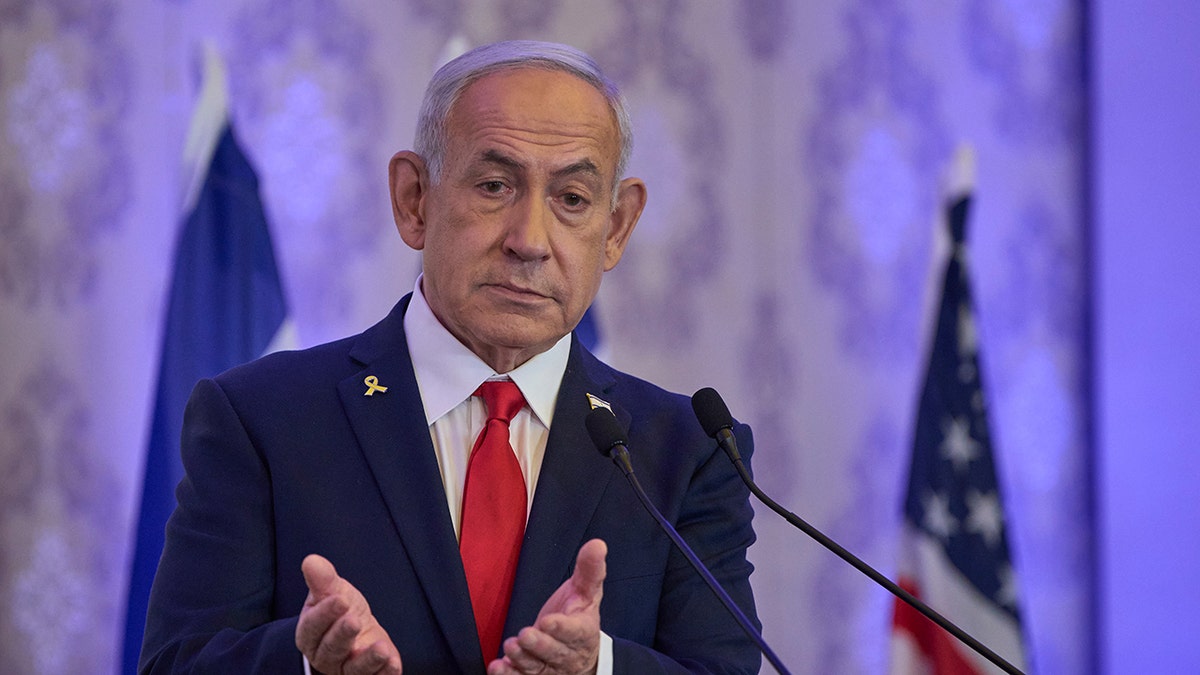
Israeli Prime Minister Benjamin Netanyahu speaks to the audience at a conference in Jerusalem, Sunday, July 27, 2025. (AP Photo/Ohad Zwigenberg)
"A clear majority in the Jewish public chose the Likud as the largest party and me, as prime minister, to lead the next government. We aspire to form a broad government with our partners and with any party that wishes to do so and does not support terrorism. I am open to holding discussions on the matter," he added.
The two predominantly Arab parties he pointed his criticism at are the Joint List and Ra'am who secured a historic combined total of 19 seats, potentially positioning them as kingmakers in the government formation process.
A Joint List source told Fox News Digital that the alliance is likely to endorse Eisenkot to be the first lawmaker tasked with forming a government. If both predominantly Arab parties were to back him, he would receive recommendations from parties representing more than the 61 seats needed.
The lawmaker tasked with forming a government will have 28 days to do so, with the president authorized to grant an extension of up to 14 additional days.
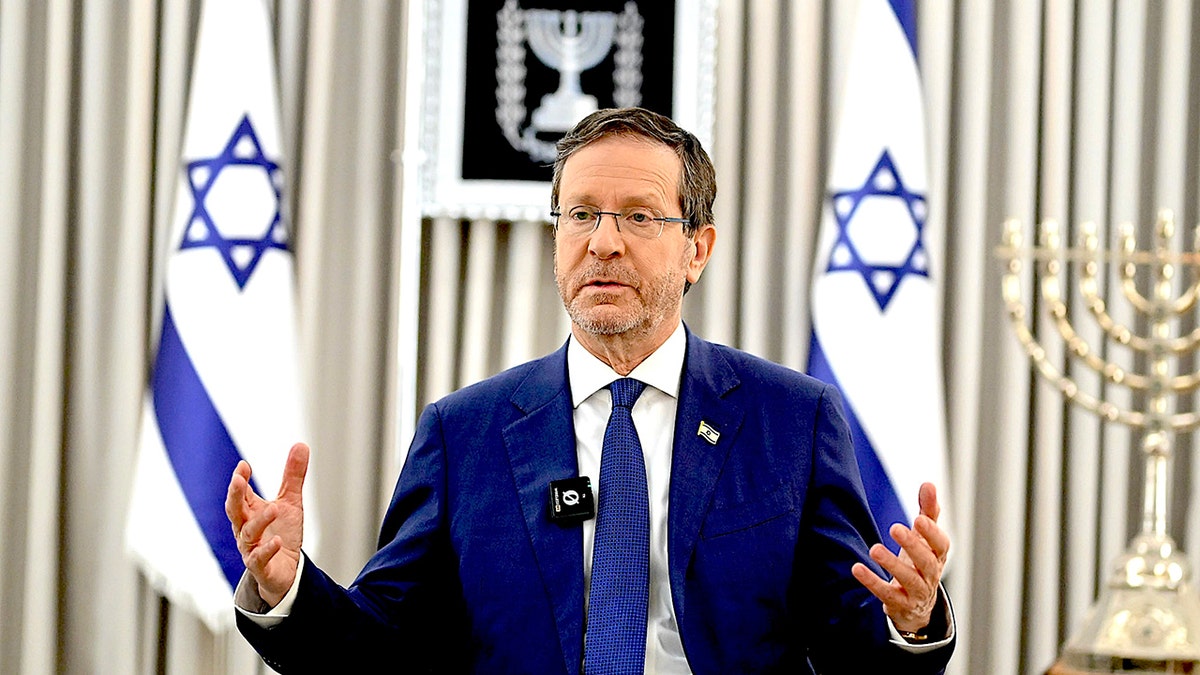
Israeli President Isaac Herzog during an interview with Fox News Digital in Jerusalem, Israel. (Yoav Dudkevitch/TPS-IL for Fox News Digital)
Consultations will be held in ascending order of seat count, beginning with Religious Zionism-Zehut and Shas, which each won six seats, followed by Yisrael Beiteinu, which secured seven.
On Thursday, Herzog will meet with the leaders of United Torah Judaism and Otzma Yehudit, which each won seven seats, followed by The Democrats and Ra'am, which each won eight, the Joint List (11), BeYachad (12), Yashar (21) and Likud (27).
Defense and government affairs commentator Amir Oren told Fox News Digital that while Herzog is formally free to choose whom to task with forming a government, he would be inclined to select the candidate whose nomination is backed by parties representing a majority of Knesset seats.
FORMER ISRAELI PM EMERGES AS WILD CARD IN HIGH-STAKES ELECTION WITH MIDDLE EAST'S FUTURE AT STAKE
"He must then task Eisenkot with forming the next government. That does not mean Eisenkot will succeed. If he fails, he will have to return the mandate to the president," Oren said.
Eisenkot may, in fact, struggle to assemble a 61-seat governing coalition, given competing interests within the opposition bloc. BeYachad leader Naftali Bennett and Yisrael Beiteinu chief Avigdor Liberman are unlikely to agree to serve in a government reliant on the Joint List, given the latter’s pro-Palestinian positions and opposition to Zionism.
It is theoretically possible, however, that the opposition bloc could agree to form a minority government with the Arab parties providing support from outside the coalition.
While Israel has no precedent for forming a minority government immediately following an election, such arrangements have occurred during a Knesset term. Most recently, during Netanyahu’s current term, one of the ultra-Orthodox parties withdrew from the coalition over a dispute related to military conscription but continued to support the government from outside.
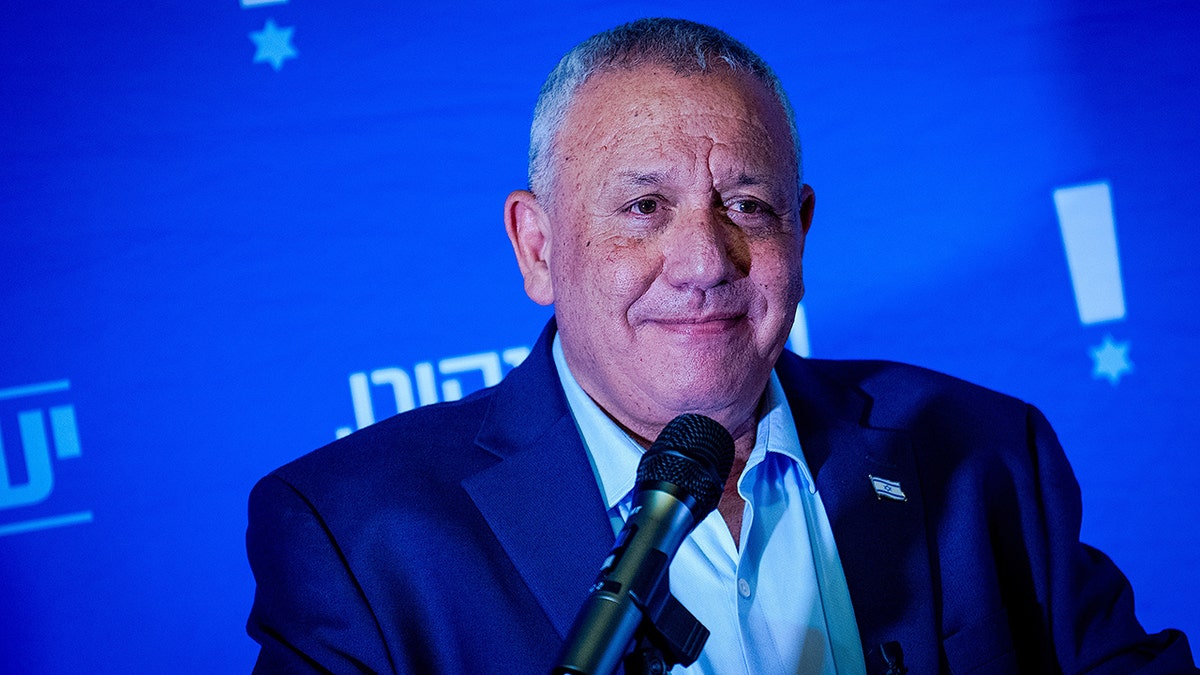
Yashar party leader Gadi Eisenkot attends the Jerusalem Residents Conference on Aug. 12, 2026, in Jerusalem. Gadi Eisenkot, a retired chief of the Israel Defense Forces and current leader of the Yashar Party, has emerged as the foremost challenger to Benjamin Netanyahu ahead of October's general election. (Erik Marmor/Getty Images)
Religious Zionism-Zehut, Otzma Yehudit and Shas each confirmed to Fox News Digital on Tuesday night that they would recommend Netanyahu to Herzog during consultations on forming a government.
Dan Diker, president of the Jerusalem Center for Security and Foreign Affairs, told Fox News Digital that Bennett and Liberman’s recent endorsement of Eisenkot suggests they are moving away from the prospect of a national unity government.
"I think it would behoove Netanyahu, Eisenkot, former Prime Minister Bennett and former Defense Minister Liberman to find a way to work together now, given the imminent clash between the apocalyptic death cult known as the Iranian regime, Israel and, by extension, the rest of the Western world," he said.
Complicating matters for Netanyahu, the 26th Knesset is scheduled to be sworn in on Nov. 10. Its newly elected members are expected to begin forming committees and advancing legislation, while the current prime minister and ministers remain in office and continue carrying out their duties under the oversight of the new parliament, ensuring continuity of government.
WHO IS ITAMAR BEN-GVIR, THE ISRAELI FIREBRAND RISING WITH THE POPULIST RIGHT ACROSS THE GLOBE?

A supporter of former military chief Gadi Eisenkot, leader of the Yashar Party, reacts to the exit poll at his party headquarters, on the evening of Israel's national election, in Tel Aviv, Israel, October 27, 2026. (Shir Torem/Reuters)
"They are doing everything they can to push Netanyahu out of office, and we are seeing that now with discussions about replacing the Knesset speaker. They can then begin trying to advance legislation in a Knesset with 19 seats held by Arab parties that would be very uncomfortable for Netanyahu," Diker said.
Oren highlighted another potential challenge, suggesting that the caretaker government's ability to launch military operations could face political constraints, potentially complicating any resumption of hostilities with Iran, even if U.S. President Donald Trump were to initiate such action.
Former Knesset member Dov Lipman told Fox News Digital that Eisenkot appears likely to be the first lawmaker tasked with forming a government, but suggested that most Israelis favor a national unity government built around Likud, Yashar and BeYachad, with one or more smaller parties also joining.
"As a first step, Eisenkot may approach Likud and ask it to join a government under his leadership, which Likud will reject. Eisenkot will then have to make a decision, as Liberman is unlikely to agree to serve in a government alongside Arab parties," Lipman said.
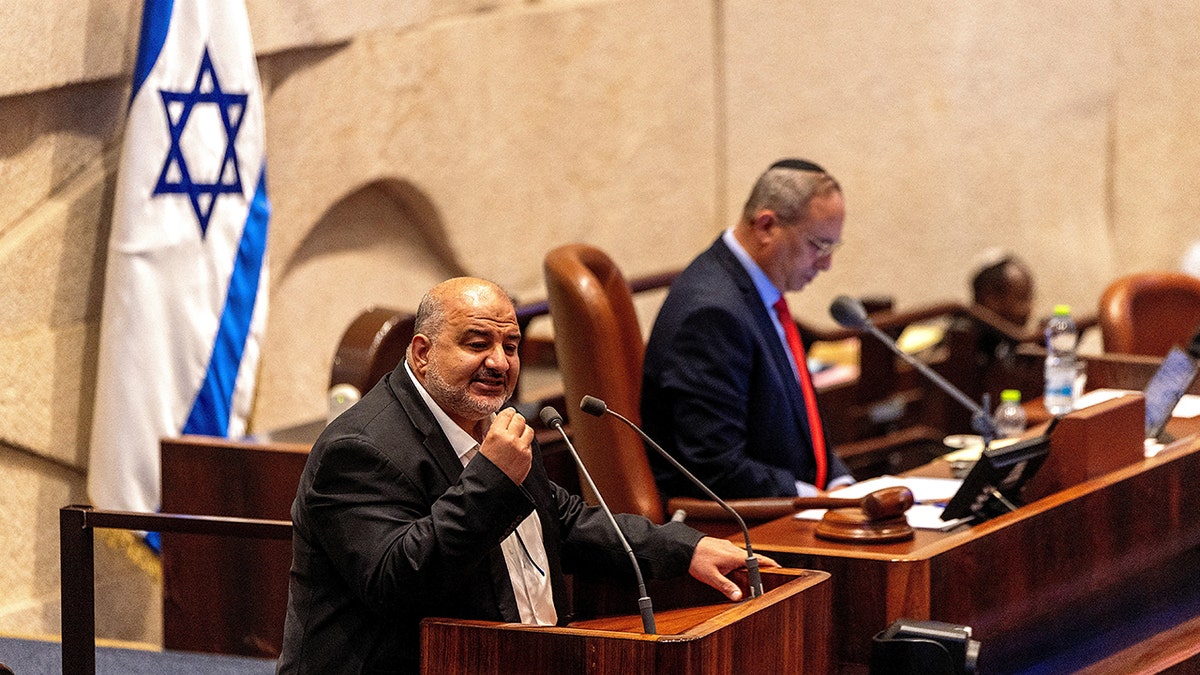
Mansour Abbas, leader of the Ra'am Party, speaks at the plenum at the Knesset, Israel's parliament, in Jerusalem, July 13, 2026. (Ronen Zvulun/Reuters)
"Eisenkot will likely fail to form a government, after which the mandate will pass to Netanyahu, who will also likely fail."
That would trigger a 21-day period during which any Knesset member could attempt to form a government with the backing of at least 61 lawmakers. If the process reaches that stage, Eisenkot might agree to serve under Netanyahu for two years to avoid sending the country to another election, Lipman said.
Prof. Gideon Rahat, a senior fellow at the Israel Democracy Institute, told Fox News Digital that Netanyahu would need to make concessions to persuade opposition leaders that he would honor his commitments, given their experience with the 2020 power-sharing agreement with then-Blue and White party leader Benny Gantz.
NETANYAHU REVEALS HE WANTS AMERICAN FINANCIAL SUPPORT FOR ISRAEL TO 'DRAW DOWN TO ZERO'
Under the agreement, Netanyahu was to serve as prime minister for the first 18 months, with Gantz serving as alternate prime minister and defense minister before taking over as premier on Nov. 17, 2021. However, the arrangement unraveled after the government failed to pass a state budget by the December 2020 deadline, triggering the Knesset's automatic dissolution and new elections. Gantz never assumed the premiership.
Rahat pointed to Israel’s 1984-1988 national unity government as a precedent, saying a similar arrangement could work.
"At the time, Israel was still embroiled in the Lebanon War, with IDF forces deployed in the country, while the economy was facing a severe crisis, with annual inflation exceeding 400%. Against that backdrop, Likud and Labor formed a national unity government under a rotation agreement, with Shimon Peres serving as prime minister for the first two years, followed by Yitzhak Shamir for the next two," he said.
While large parts of the public would likely support it, Rahat said, there are still issues that may create tension.
CLICK HERE TO DOWNLOAD THE FOX NEWS APP
"They will have to freeze the judicial overhaul launched by Netanyahu’s government, find a way to investigate Oct. 7, as demanded by opposition parties and agree on a mechanism for Netanyahu to leave office when the time comes. But when it comes to major issues of security and the economy, unity governments can be quite effective," Rahat said.
"Once they resolve the major challenges, however, they start fighting among themselves and the magic is over."
