





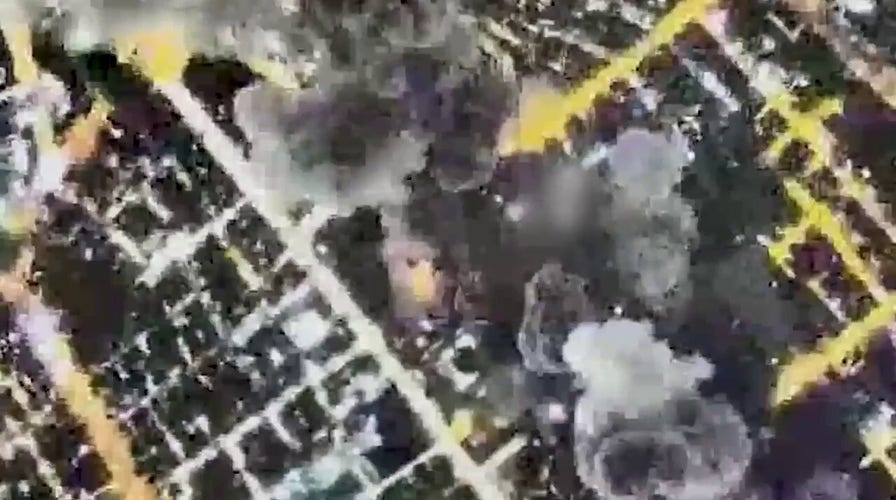
Israel strikes Khamenei underground bunker, a key military command center
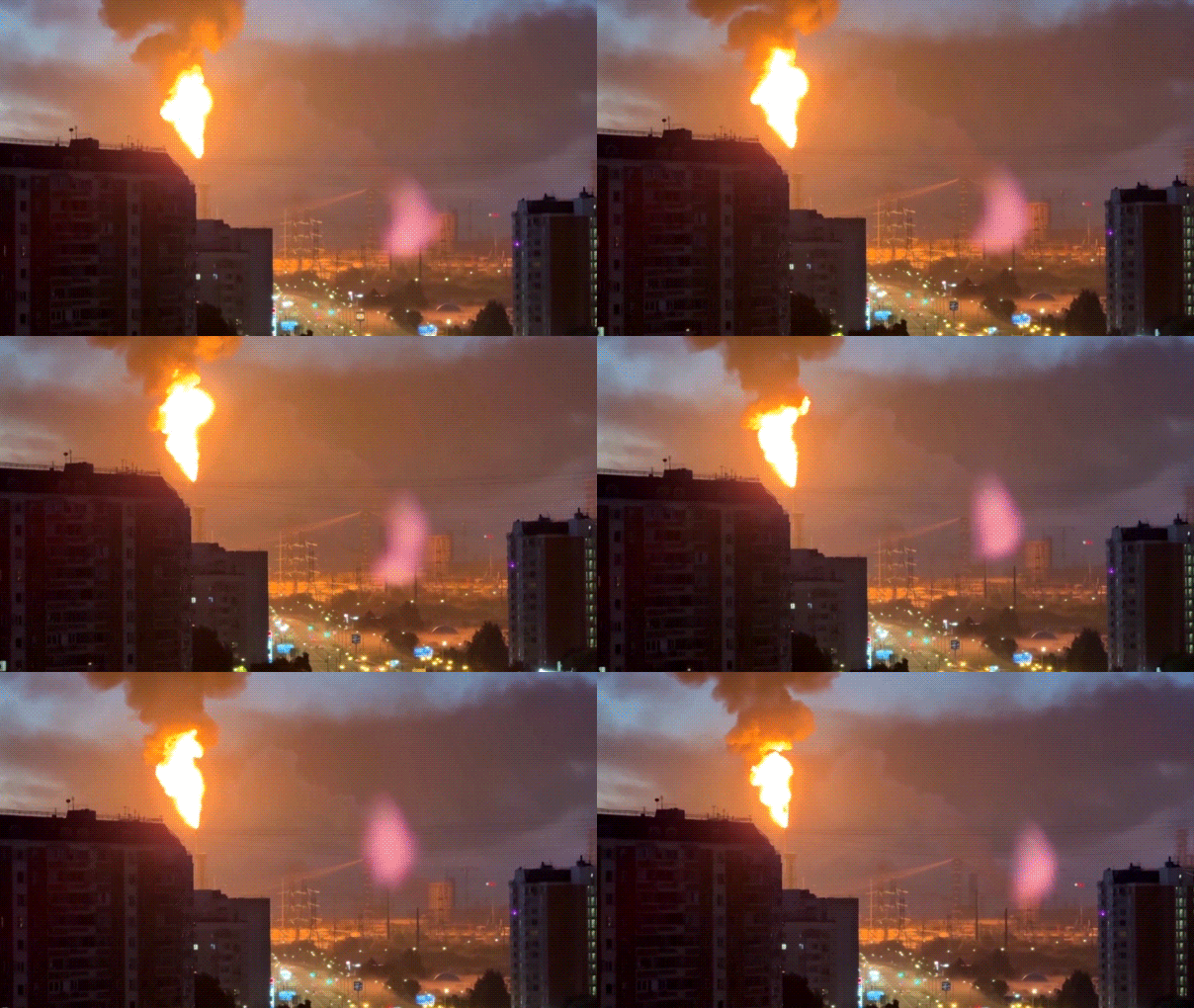
Israeli Defense Forces released video Friday showing strikes on what it said was former Ayatollah Khamenei's underground bunker, "one of the Iranian leadership's most important military command centers." (Credit: @IDF/X)
Tehran is preparing for the July 9 burial of Supreme Leader Ali Khamenei, more than four months after his death, as authorities mobilize the Basij militia and mount a massive security operation ahead of what is expected to be a "historic" turnout.
The lengthy delay to the funeral has raised questions about how Khamenei's remains have been preserved, as Islamic tradition, analysts say, generally calls for prompt burial and discourages chemical embalming.
"The mechanism is almost certainly refrigerated cold storage, not embalming, as Islam bars chemical embalming," counterterrorism expert Dr. Omar Mohammed told Fox News Digital.
"Shia law allows delayed burial and preservation by cold in exceptional cases, and a clerical exemption for a Supreme Leader is easy to get," he added.
MOJTABA KHAMENEI USING ‘BIN LADEN TEMPLATE’ TO SURVIVE, LEARNED FROM ABBOTTABAD: ANALYST
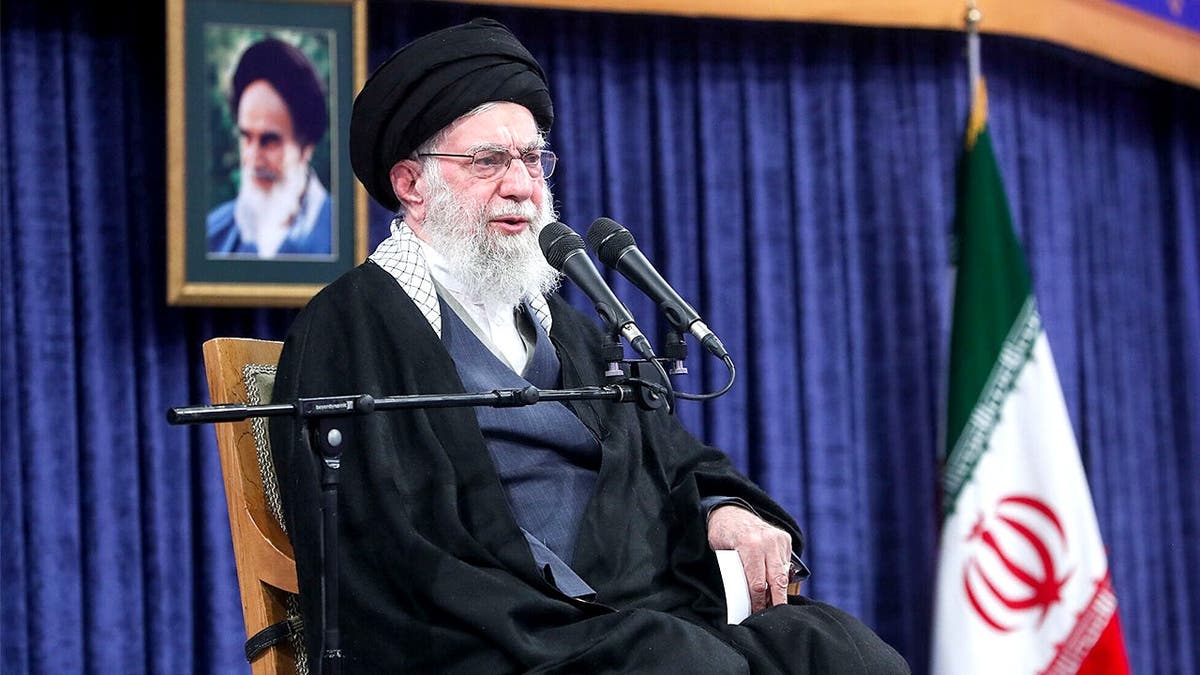
Iran’s Supreme Leader Ali Khamenei speaks in Tehran, Iran, on Jan 3. (Iranian Leader Press Office/Anadolu via Getty Images)
"Iran's forensic morgues already hold bodies for months, so four months in freezing is not exotic. That is what 'religious and legal standards' cover," Mohammed said.
Operation Epic Fury began on Feb. 28 with a targeted U.S. strike that killed Khamenei at his compound in Tehran. He had ruled the Islamic Republic for 36 years.
"There may not be much of a body to present. Khamenei was killed by a bunker-penetration strike, and others killed with him were recovered weeks later and identified by DNA," Mohammed explained.
"A regime holding an intact body does not cancel the farewell, shift the burial site repeatedly, and confirm that he can be buried only days out.
"It reads less like reverence and more like remains they could preserve but not display," he said.
With that, Iranian authorities are portraying the funeral as both a farewell to the leader and a show of strength under the slogan "We Must Avenge."
According to Iranian state media, Yaqoub Soleimani, deputy for cultural and educational affairs at the Martyrs Foundation and one of the funeral's organizers, said Wednesday the ceremony would be conducted "with full grandeur."
WAVE OF ATTACKS ON IRAN'S IRGC RAISES QUESTIONS ABOUT RENEWED KURDISH INSURGENCY
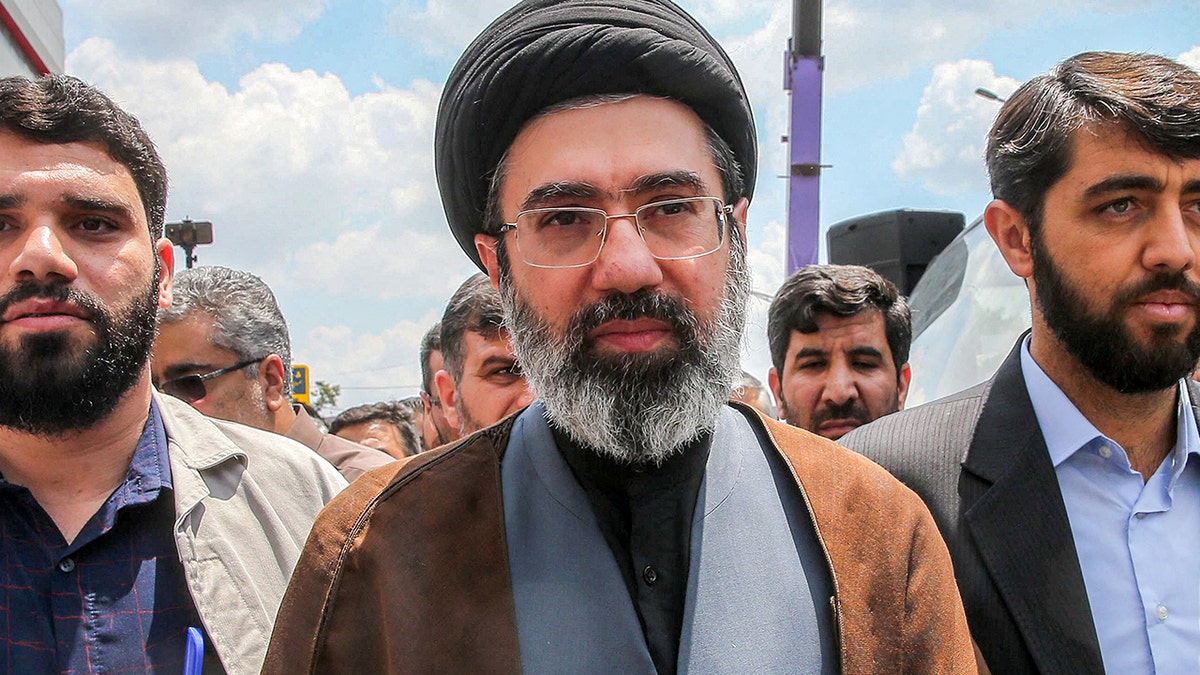
In this picture obtained from Iran's ISNA news agency, Mojtaba Khamenei (C), son of Iran's supreme leader Ayatollah Ali Khamenei, walks along a street in Tehran on May 31, 2019. (Hamid FOROUTAN / ISNA / AFP via Getty Images)
Soleimani said a turnout of a million people would make the event "a historical occasion" and "a national epic in the memory of the Islamic Republic of Iran."
The schedule starts with public viewings Saturday and Sunday in Tehran. A funeral procession is scheduled for July 6, where local authorities estimate 15 million to 20 million people could attend.
Another procession is planned the following day in Qom, one of Shiite Islam's holiest cities.
"The numbers the regime is putting out — up to 20 million mourners in Tehran, 35 million nationwide, more than 90 countries represented, 14,000 journalists credentialed — are not logistics," Mohammed, of The George Washington University Program on Extremism, said.
"They are the message. Tehran is spending everything it has to project continuity and strength because, after the war, both are in question."
According to Iran International, Tehran is also preparing a massive security operation for the funeral.
"The Basij and the IRGC running this is the story, not a detail," Mohammed said.
"The Basij is coordinating logistics — highways turned into parking, each Tehran district assigned a province, five public holidays declared — and the Guard has crowd control.
IRAN'S UNPRECEDENTED 'WHOLE-REGIME' DELEGATION AT US DEAL TALKS SIGNALS ONE GOAL: EXPERT
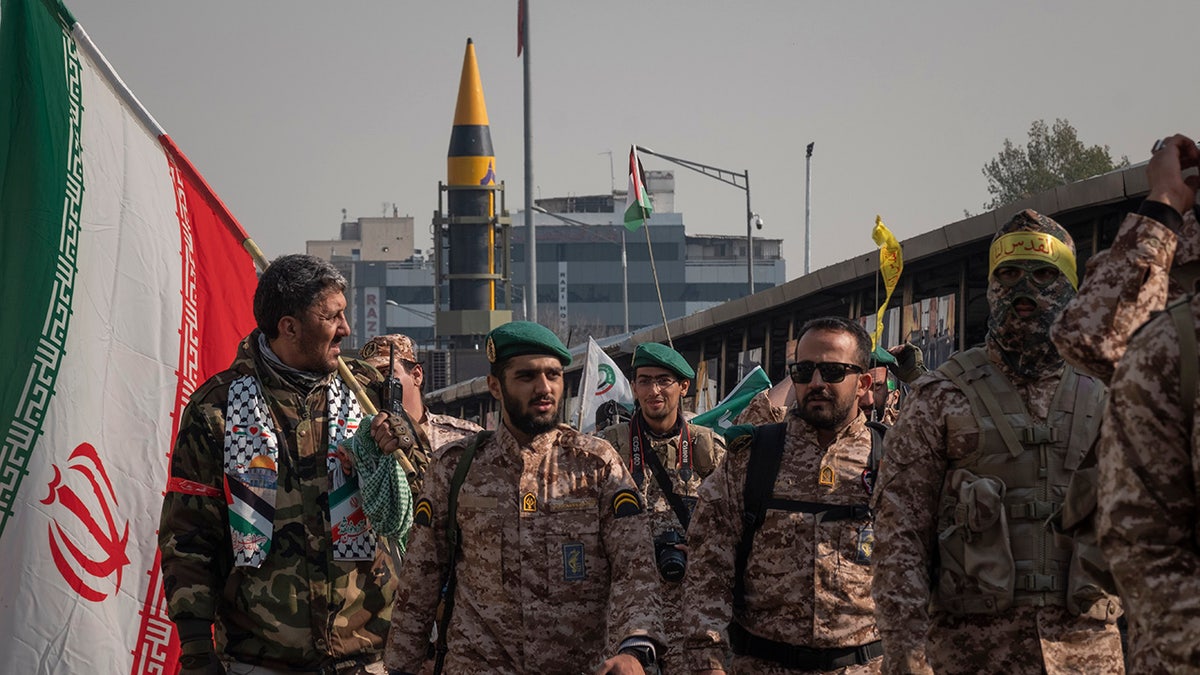
Islamic Revolutionary Guard Corps (IRGC) military personnel are walking along Enghelab (Revolution) Avenue as an Iranian Kheibar Surface-to-Surface missile is being unveiled during the Ela Beit Al-Moghaddas (Al-Aqsa Mosque) military rally in Tehran, Iran, on November 24, 2023. The IRGC is unveiling two new missiles during the rally. (Morteza Nikoubazl/NurPhoto via Getty Images)
"This is a mobilization dressed as a funeral. The same apparatus organizing the grief this week is the apparatus that put down the January protests and denied funerals to the families of the people it killed then. American readers should hold those two facts next to each other," he added.
While senior Iraqi officials will attend the funeral, representation from other major powers will be limited.
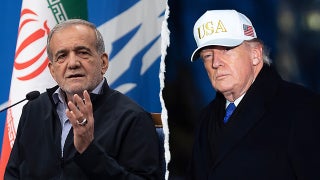
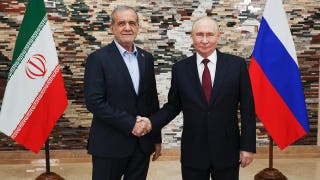
Although Iranian President Masoud Pezeshkian personally invited Indian Prime Minister Narendra Modi, India will instead send a lower-level official delegation.
Reports on June 30 also confirmed that Georgian President Mikheil Kavelashvili will attend the ceremony.
"No major power is sending its top leader," Mohammed said.
CLICK HERE TO DOWNLOAD THE FOX NEWS APP
"For a regime that claims to lead a front stretching from Beirut to Sanaa, a regional turnout at its founder-successor's funeral is the isolation showing through the pageantry.
"For Washington, it is a useful readout: the war left Tehran's axis smaller and more regional than the regime advertises," he added.
