






























US-China trade: Nvidia chips, auto market, IP theft underscore complex relationship
President Trump's administration debates U.S.-China trade, including Nvidia chip sales, electric vehicle market access and intellectual property theft. Eric Eggers, Taylor Riggs and Rebecca Grant react.
One of the goals of President Donald Trump’s trip to China is to help ensure continued American tech dominance. One worry is that China steals our technology.
But sometimes we foolishly handicap our tech companies with bad policies here at home.
An example is export controls, which are a threat to U.S. dominance and limit markets for American-made tech products. The politicians and bureaucrats have decided that they, and not the free market, are best equipped to manage the global semiconductor trade. It's not going well.
We’re still winning the chip war against China, but not by much.
TRUMP'S GREEN LIGHT FOR NVIDIA SALES TO CHINA SPARKS ALARM ON CAPITOL HILL
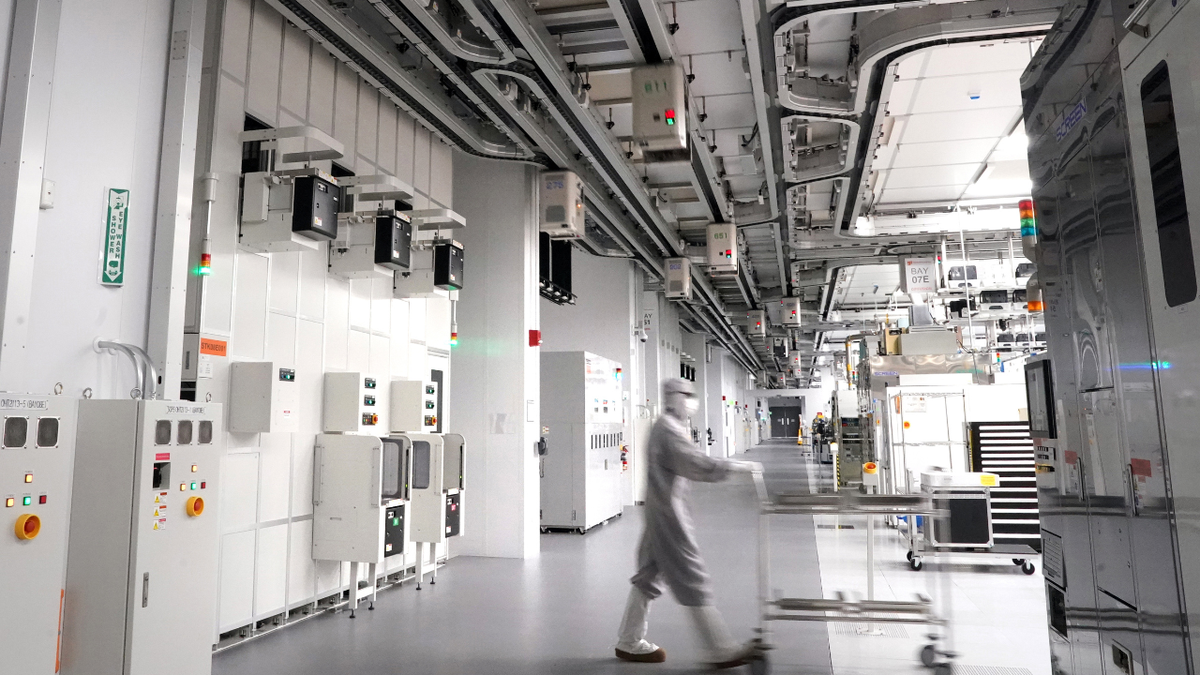
An employee wearing a cleanroom suit walks inside the GlobalFoundries semiconductor manufacturing facility in Malta, New York, on Tuesday, June 18, 2024. (Cindy Schultz/Bloomberg/Getty Images)
Even after years of stringent export controls that have crushed NVIDIA and AMD's sales into China, recent tracking shows that the U.S. lead over China in AI has almost completely evaporated. Instead of slowing Beijing down, we have effectively subsidized the development of their domestic chip manufacturing by blocking and/or taxing their American competitors. As a result, the Chinese government has poured $47.5 billion into a state-backed semiconductor fund.
We know from global experience that government is a terrible investor, so a lot of China’s industrial policy money will be misdirected.
The question is, as a matter of economic and national security, how do we maintain our tech lead?
KEVIN O'LEARY WARNS CHINA 'KICKING OUR HEINIES' IN AI RACE AS REGULATORY ROADBLOCKS STALL US
By cutting off our most successful chipmakers from a huge foreign market, Washington is imposing what I call the "Doomer Tax." American chipmakers lose $50 billion in annual sales, which, at their healthy 70% margins, equates to $35 billion in lost profits. That means about a $7.5 billion loss of corporate tax revenue to the U.S. Treasury every year. It also means that these AI companies have less to invest in the next generation of chips.

A simple metaphor illustrates the absurdity of the current strategy. Imagine an American airline lobbying the federal government to ban Boeing from selling aircraft to a foreign carrier, simply because they didn't want the competition. I hope we would laugh them out of the room.
Yet, that is exactly what is happening in AI. A handful of AI software players, led by Anthropic, which fears Chinese AI competition, lobby Washington to block those companies from getting American chips. But if Anthropic wants to block the sales of its own chips, they’re welcome to do that – particularly if they are, with some merit, worried about intellectual property theft.
AMERICA MUST WIN THE AI RACE — AND PREPARE FOR THE WORST
But when our government prohibits these sales, in practice, this incentivizes China to accelerate the production of its own chips.
American tech know-how and business acumen are unrivaled in the world – as we learned in the Internet age. That happened with very limited government subsidy and interference. And it happened by selling Apple iPhones and Google search capabilities and microchips across the globe.
The question is, as a matter of economic and national security, how do we maintain our tech lead?
Yes, there are times, as a matter of national security, that export controls make sense.
CLICK HERE FOR MORE FOX NEWS OPINION
But in this case, it’s more likely that we are closing off markets. Chinese chip giant Huawei is preparing mass shipments of their Ascend AI chips to fill the vacuum we created, while America's best companies are buried in a mountain of red tape and shifting definitions of what constitutes "restricted technology."
That’s why legislation like the MATCH Act and the GAIN Act, pushed by Florida Republican Rep. Brian Mast and Michigan Republican Rep. John Moolenaar, respectively, are likely to hamstring U.S. companies, not our Chinese competitors. They ignore the basic reality of innovation: R&D requires capital. To recoup the now $700 billion of investment flowing into the next-generation chips, American firms must have access to the largest possible global markets.
CLICK HERE TO DOWNLOAD THE FOX NEWS APP
There’s a good reason that eight of the 10 largest and most profitable tech companies in the world are located in the USA. We use markets. Our key European and Asian competitors rely more on central planning models. We have the most superior chip technologies in the world. They can compete and win in the market – just as they have for the past four decades.
By making our hardware a tool of geopolitics, we've signaled to the world that American technology may no longer be a reliable supply chain source. We are begging our customers to replace us, and they may well do so. Instead, let our products be sold around the world. Export controls are like a tariff we impose on our products.
