



























Supreme Court redistricting shake-up could hand GOP major House gains ahead of midterms
Rep. Chip Roy, R-Texas, joins 'Mornings with Maria' to discuss Supreme Court redistricting rulings, ending race-based maps, and how Republicans aim to gain seats and shift momentum ahead of the midterms.
Last week, the Supreme Court correctly put an end to DEI districts that had existed thanks to an erroneous interpretation of the Voting Rights Act of 1965 (VRA). On Monday, the justices again acted correctly, immediately issuing the judgment of the court and thus permitting Louisiana to redraw its congressional map that, in its current form, is unconstitutional. Justice Ketanji Brown Jackson, however, refused to join the issuance of the judgment, instead writing a laughable dissent that attacked her colleagues’ integrity. Justice Jackson is a gift to judicial conservatives, uniting the six Republican-appointed justices more than anyone or anything, and we should hope for many more years of her presence (and presents).
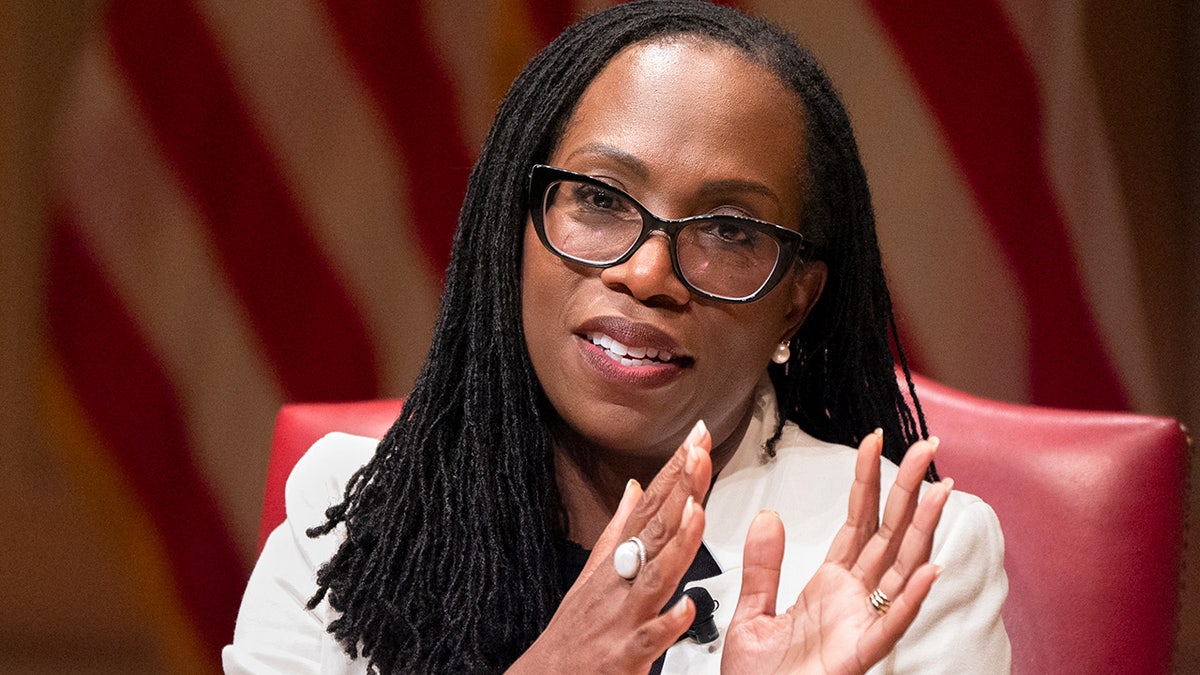
Justice Ketanji Brown Jackson speaks to the Supreme Court fellows program, on Feb. 13, 2025, at the Library of Congress in Washington, D.C. (Jacquelyn Martin/Pool/AFP via Getty Images)
In the 1960s, there was a serious problem in that segregationist states racially redistricted to disenfranchise minority voters. In response, Congress passed the VRA, which it amended and extended in 1982 and 2007. Section 2 of the VRA requires that minority voters be given the opportunity to have the representation of their choice. For decades, in large part thanks to the Supreme Court’s awful decision in Thornburg v. Gingles (1986), courts interpreted Section 2 to require majority-minority districts no matter what and to require proportional minority representation. So, for instance, if Louisiana has approximately a 30% African American population, then it must have two majority-minority districts out of six (a third) rather than none or one. Under this erroneous interpretation of the VRA, legislators must use race to carve out these districts, even in states where one party has an overwhelming advantage; for instance, the South is overwhelmingly Republican but has many solidly blue districts.
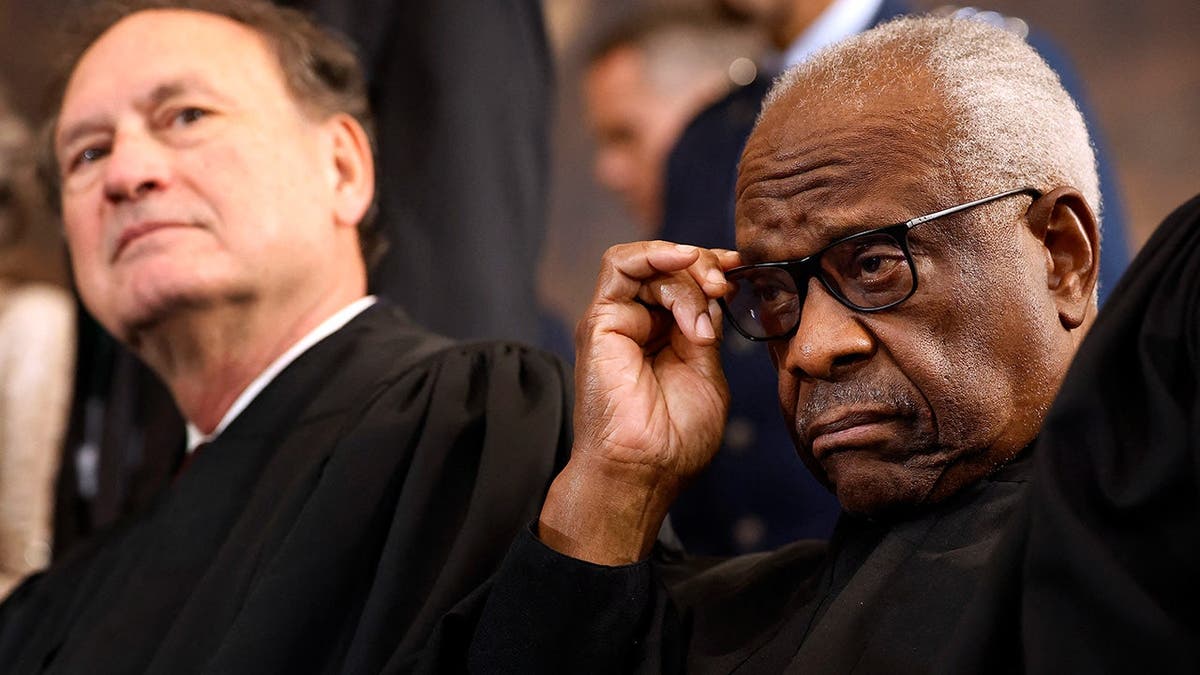
Justices Samuel Alito and Clarence Thomas waited to leave the stage at the conclusion of inauguration ceremonies in the Rotunda of the U.S. Capitol on Jan. 20, 2025, in Washington, D.C. (Chip Somodevilla/Pool/AFP via Getty Images)
Callais righted an egregious wrong. Writing for the court, Justice Samuel Alito held that the VRA requires racial remedies only to combat intentional racial discrimination. In other words, if states revert to the behavior of the 1960s, the VRA allows for the drawing of districts to ensure minority representation. The VRA does not, however, allow for such drawing simply because states, for example, engage in partisan gerrymandering, a constitutional practice that the Supreme Court upheld in Rucho v. Common Cause (2019). Justice Clarence Thomas, joined by Justice Neil Gorsuch, would have gone even further, effectively putting an end entirely to Section 2 of the VRA.
In light of Callais, Louisiana’s congressional map is plainly unconstitutional. The Louisiana primaries are coming up; indeed, early voting has begun. As such, it is essential that Louisiana be allowed to redraw its map immediately to comport with the U.S. Constitution. The justices thus granted a commonsense motion to expedite issuance of the judgment in Callais. This procedure seems formal, but it is simple. Under Supreme Court Rule 45, the court generally waits 32 days after it announces the opinion in a case to issue its judgment; this delay gives the losing party the opportunity to seek rehearing. The court has discretion to expedite issuance of the judgment, as it did in Trump v. Anderson (2024), the case in which leftists absurdly used Section 3 of the 14th Amendment in a pathetic attempt to throw President Donald Trump off of state ballots because, they pretended, he was an insurrectionist. (How many insurrectionists go into a Capitol unarmed?)
The decision to issue the judgment on Monday was a no-brainer. A lower court had ordered Louisiana immediately to brief how the state would comply with Callais. Louisiana Gov. Jeff Landry has suspended the primary election, but time is needed to redraw the map and reschedule the primary. Waiting nearly a month for a formality—the issuance of the judgment according to the normal schedule as prescribed by Rule 45—would have been an utter waste of time. Leftist Justices Sonia Sotomayor and Elena Kagan, both of whom dissented in Callais, indicated no opposition to the issuance of the judgment. Jackson, however, could not resist writing another absurd dissent. She could not articulate a substantive reason to withhold issuance of the judgment; rather, she claimed that doing so would make the court appear partisan. Alito issued a blistering concurrence, characterizing Jackson’s attack as "insulting." Does Jackson believe that her fellow leftist justices, who declined to join her opinion, are somehow partisan against Democrats? The only plausible meaning of her use of the term "partisan" is that she believes that the court’s decision would be viewed as partisan against one party. In light of the other leftist justices’ apparent assent to the court’s decision, however, no reasonable person could draw this conclusion.
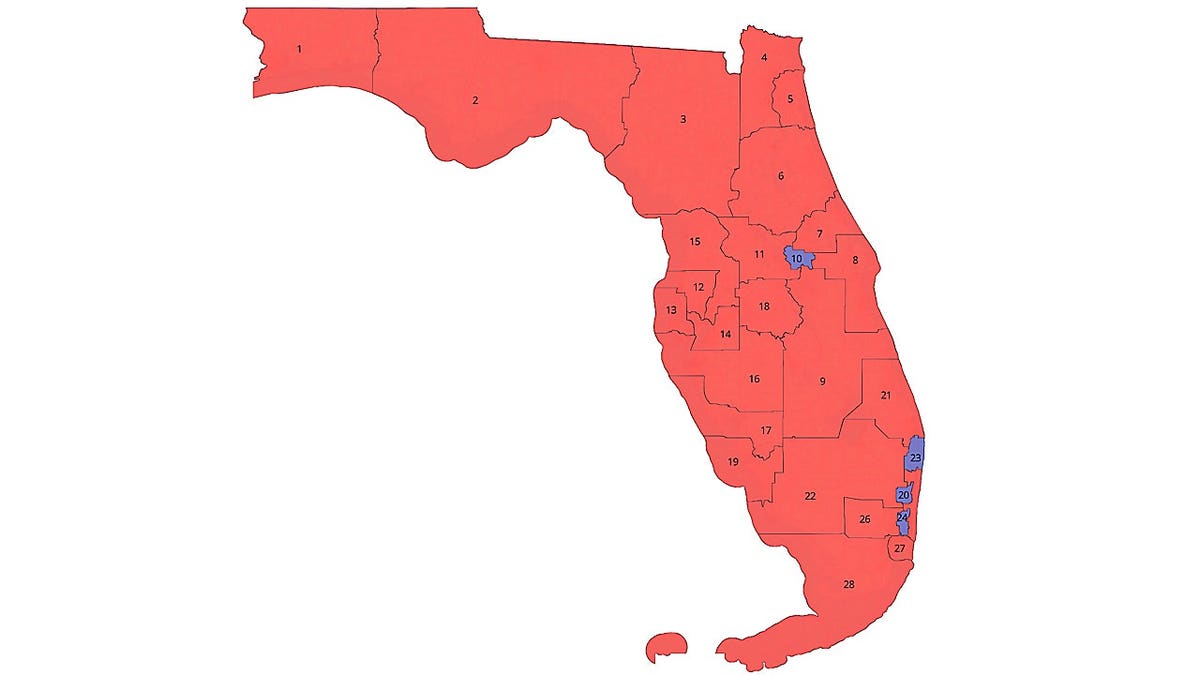
The proposed map redraws Florida’s congressional districts to reflect population shifts, consolidating GOP-leaning areas and creating four additional Republican-favored seats. (Office of Governor Ron DeSantis)
Alito—as well as Thomas and Gorsuch, who joined his concurrence—obviously has had enough of Jackson’s smears. Justice Amy Coney Barrett seemed to reach that point last term in Trump v. CASA, the case in which the Supreme Court reined in out-of-control inferior court injunctions. Sotomayor’s dissent in CASA was wrong, but it stayed within normal legal bounds. Jackson’s dissent, by contrast, ignored centuries of precedent in favor of an imperial judiciary, as Barrett correctly characterized it.
CLICK HERE TO DOWNLOAD THE FOX NEWS APP
President Joe Biden promised to fill Justice Stephen Breyer’s seat with our first Black woman justice. The president had three options: California Supreme Court Justice Leondra Kruger; Judge Michelle Childs, then a federal judge in the U.S. District of South Carolina and now a judge on the DC U.S. Circuit Court of Appeals; and Jackson. As usual, Biden chose unwisely. Kruger and Childs, while liberal, are more in the mold of Kagan. They are not flame-throwers and try to reach consensus where they can. When they cannot persuade colleagues to vote with them, they work diligently to minimize the reach of decisions. Jackson is a different type of justice. She writes dissents, some of which the other leftists will not join, that burn bridges. She has little prospect of picking off conservative justices to eke out occasional liberal victories. She would rather attack her colleagues, and this approach has alienated potentially persuadable justices. As judicial conservatives, we should pray that Jackson never mellows. Her vitriol will only lead to more conservative victories.
