














Tech troubles mount as outages disrupt services across US
Fox News correspondents Nate Foy and Mike Emanuel and cybersecurity expert Morgan Wright join ‘The Faulkner Focus’ to discuss outages disrupting email, air travel, banking services and more.
When Microsoft 365 went down on Thursday, Nov. 12, the public explanation arrived in pieces: "elevated load," then servers "unexpectedly unavailable," then an overwhelmed process for "establishing secure connections." Each update was accurate. None of them, on its own, told the story.
Charles Lamanna, an executive vice president at Microsoft, has since shared a summary of what his teams saw from the inside. It describes one of the hardest problems in large-scale computing: not breaking, but coming back.
A bad week for the systems we can’t see
DHS CHIEF TELLS AMERICANS TO 'BREATHE' AMID TECH OUTAGES, INSISTS HOMELAND IS 'SECURE'
Microsoft’s outage turned out to be the start of a bad week. On Friday, Nov. 12, the FAA halted departures nationwide. That evening, Workday, the payroll platform for more than 11,500 organizations, went down after a backup test went wrong. On Monday, Nov. 16, a software bug at JPMorgan Chase slowed transactions, and customers at other banks felt it too.
The week wasn’t over. On Tuesday, Nov. 17, the National Security Agency’s classified internal network, NSA Net, suffered an intermittent outage. Sources said there was no sign of a cyberattack and that critical communications stayed intact, and the agency staggered employee arrival times so tens of thousands of people wouldn’t all try to log in at once. Around midday, Apple confirmed problems with iCloud sign-in, the App Store and Apple Music, and users reported Apple Pay trouble too. Thousands of Gmail users reported that messages weren’t arriving, though Google said it saw no evidence of a broad disruption.
DUFFY VOWS TO MODERNIZE AGING AIR TRAFFIC SYSTEM AFTER NATIONWIDE GROUND STOP
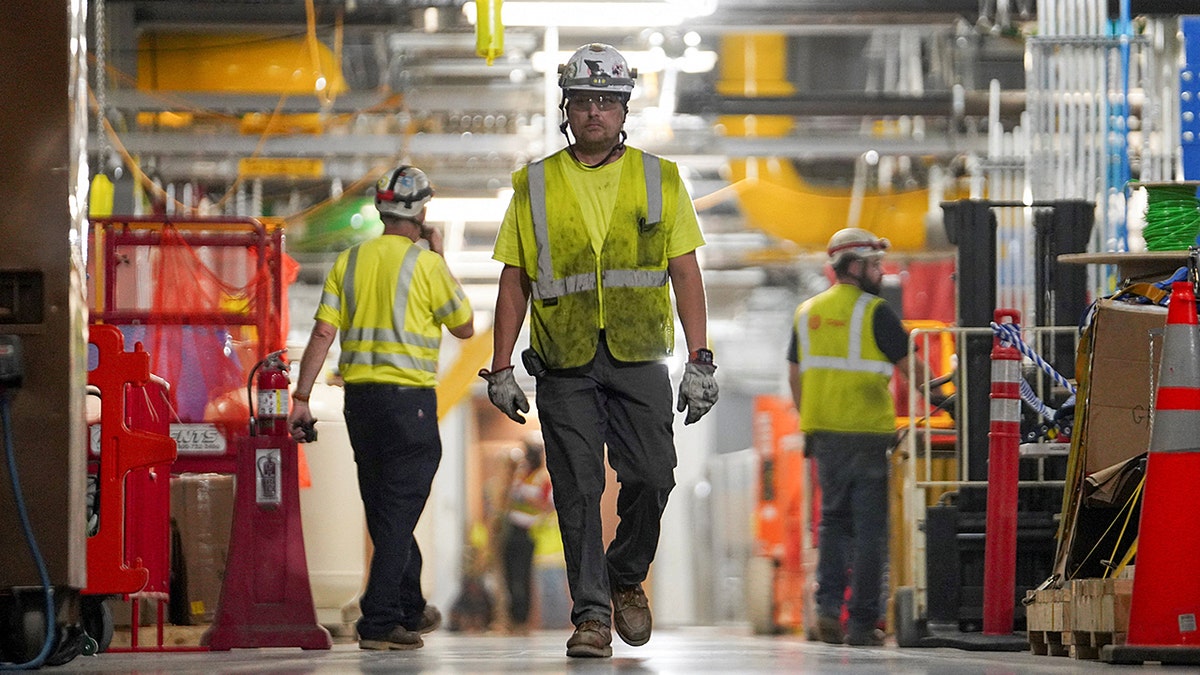
People work inside the Microsoft data center campus' Graphical Processing Unit after Microsoft's Vice Chair and President Brad Smith announced a plan to spend $4 billion on an additional artificial intelligence data center, in Mount Pleasant, Wisconsin, Sept. 18, 2025. (REUTERS/Audrey Richardson)
Different organizations, different causes, no sign they were connected. But together they made one point: how an organization recovers matters as much as why it failed. Microsoft’s recovery is a model of getting that part right.
What happened at Microsoft
Start with what didn’t happen. No email was lost, and it wasn’t an attack. What did happen was a cascading failure inside Exchange Online, the service behind Microsoft 365 email. At its worst, roughly 80% of the affected servers were unhealthy. And here is the part most people missed: engineers had a fix before service came back. The hardest work was the restart.
A cascade works like this. When one server fails, its users don’t disappear. Their mail apps reconnect, and the load lands on the neighbors. If those neighbors were already near their limits, they tip over too. Lamanna described it plainly: one server fell, its load moved to a second, which fell, then a third. Each reconnection also demands a costly encrypted "handshake," so the survivors spent their strength letting people in instead of delivering mail.
The strain wasn’t caused by more traffic. The same worldwide demand was simply squeezed onto fewer and fewer healthy machines. The demand never changed. The number of machines left to carry it did.

The restart problem
So why didn’t service come straight back once engineers had a fix?
Utility crews could tell you. After a long blackout, every furnace and refrigerator on a circuit tries to start at once, and the surge can trip the line again. So, crews restore power section by section. They call it cold load pickup.
Microsoft faced the digital version. As Lamanna put it, bring back only 20% of the servers, and they go right back down, because the whole world is trying to reach them. Thursday proved it: servers returned that afternoon failed again once evening traffic found them.
Thursday night, it looked as though nothing was happening. In fact, the most delicate work of the incident was underway. Engineers took one region at a time, held it fully offline, then brought it from zero to 100% in a single step, so full capacity was ready before full demand arrived. Japan came first, then Europe, the United States and the rest of the world, roughly following the business day around the globe. By Friday morning, email queues were nearly back to normal.
What went right
Outages at this scale are rare. Responses this disciplined are rarer. Within about three hours, Microsoft froze all deployments and configuration changes so no one could make things worse. It tested its fix on a few servers before rolling it out, and it kept revising its public explanation as the evidence changed instead of defending a first guess.

The most important result never made a headline. Email that couldn’t be delivered Thursday waited in queues and arrived Friday. Not a single message was lost. That is the payoff of design decisions made years before anyone needed them.
CLICK HERE FOR MORE FOX NEWS OPINION
The lesson isn’t that the cloud is fragile. It’s that at a planetary scale, problems don’t stay small and recovery can’t be rushed. The engineers in Redmond respected that. They resisted the urge to flip every switch at once and brought the world back one region at a time.
CLICK HERE TO DOWNLOAD THE FOX NEWS APP
That isn’t luck. That’s engineering.
