

















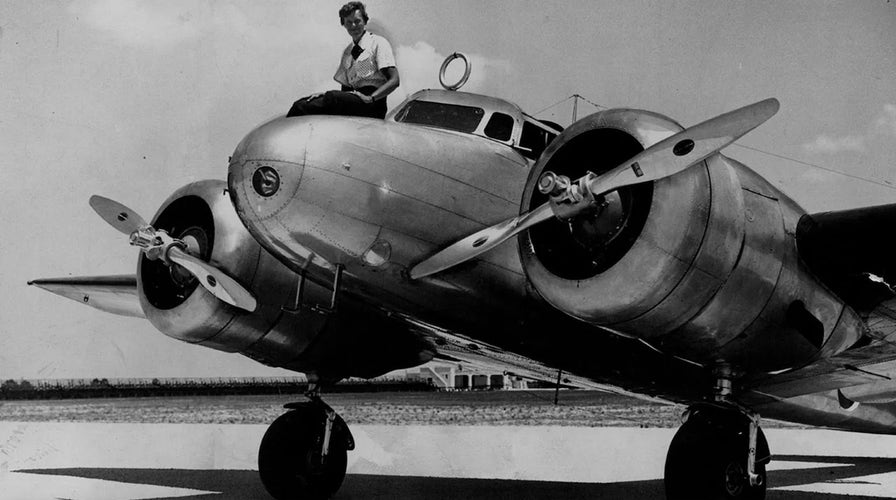
Amelia Earhart expert says ‘no real mystery’ behind disappearance ahead of declassification
Air and Space Museum’s Amelia Earhart expert Dorothy Cochrane speaks with Fox News Digital about the theories surrounding the famed aviator's disappearance.
The National Archives recently released the second batch of records related to famed American aviator Amelia Earhart — offering an in-depth look into her mysterious 1937 disappearance.
Over 3,700 pages were published on Nov. 25, with 56 PDF files providing information to the public.
Among the documents was a memo detailing a conversation between then-Secretary of State Cordell Hull and Japanese Ambassador Hiroshi Saito on July 13, 1937.
AMELIA EARHART MYSTERY EXPEDITION HALTED AS RESEARCHERS SEEK ANSWERS ON MISSING PLANE
Though it was public information that Japan participated in the search effort, the memo details the resources shared and highlights the specific cooperation between the two countries.
"Japan had two ships taking part in the search for Amelia Earhart … Their officials at Hawaii and other points had been instructed to keep closely posted on the search in the hope of being of some help," the document says, in part.
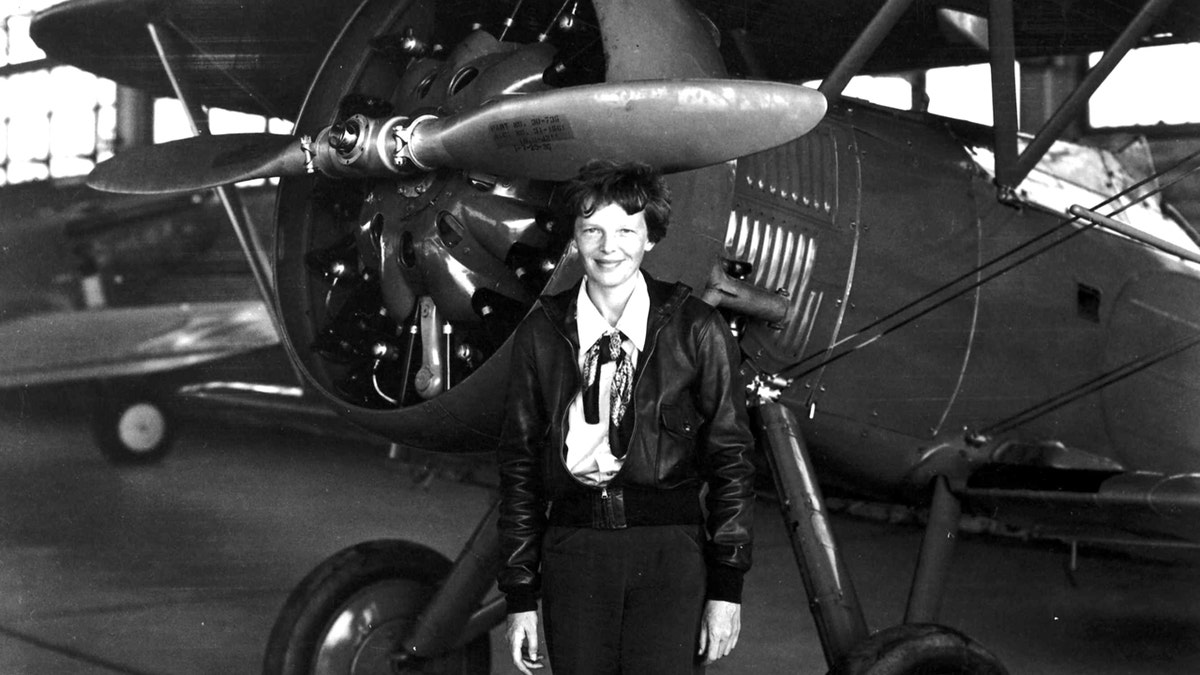
The National Archives has released a second batch of Amelia Earhart documents. The famed aviator vanished in 1937 and has been a topic of curiosity and fascination ever since. (U.S. National Archives)
Also included in the document drop is a press transcript between President Franklin D. Roosevelt and a reporter.
The specific exchange from July 20, 1937, adds context to the justification of the investigation's costs.
CLICK HERE TO SIGN UP FOR OUR LIFESTYLE NEWSLETTER
Roosevelt shared a dispatch from Honolulu, claiming the search was costing $4 million.
He also said Navy planes were required to log a certain number of hours per year and that the search counted toward it.
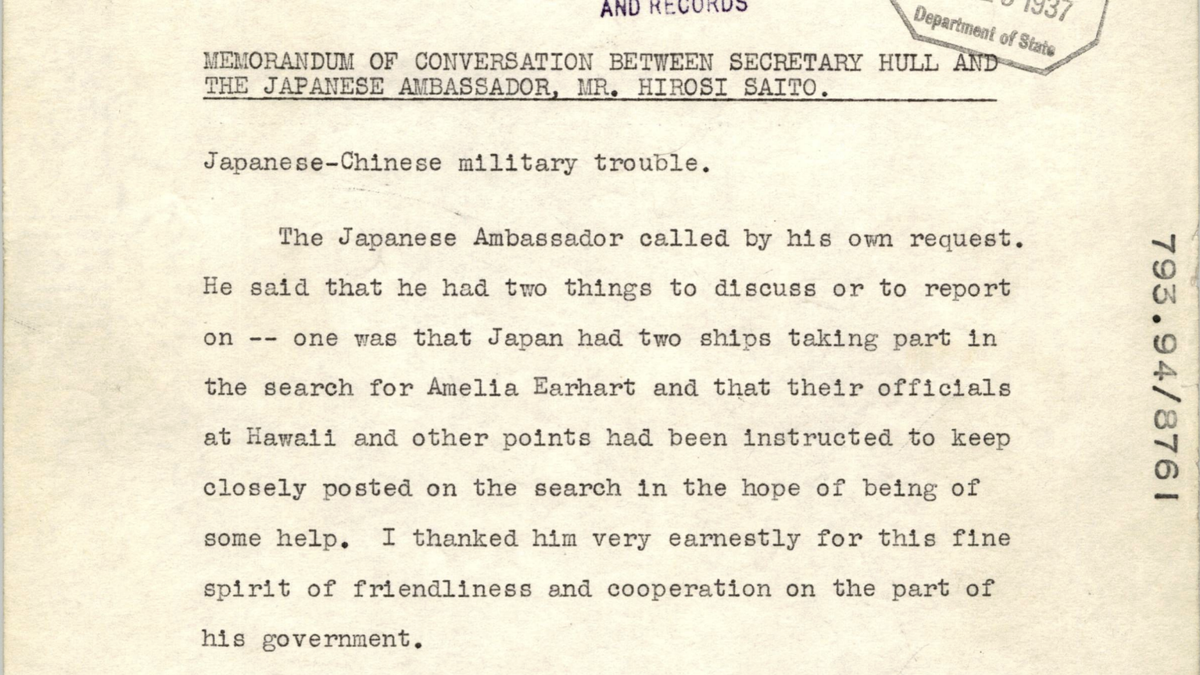
Memorandum of the conversation between Secretary Cordell Hull and Japanese Ambassador Mr. Hiroshi Saito regarding Earhart's missing flight. (U.S. National Archives)
"There is no additional cost … whether they were [handling] a search problem of this kind or whether they were doing a maneuver," said Roosevelt.
First lady Eleanor Roosevelt was also involved in details related to the search for Earhart, helping to request an important radio log for pilot Paul Mantz.
CLICK HERE FOR MORE LIFESTYLE STORIES
Mrs. Roosevelt penned a letter to then-Secretary of the Treasury Henry Morgenthau Jr., thanking him for helping her obtain copies for Mantz of the Itasca radio logs — the only records of the last contact with Earhart's flight.
Also included in the file is a newspaper clipping of a statement from Earhart’s mother, Amy Otis Earhart, from July 24, 1949.
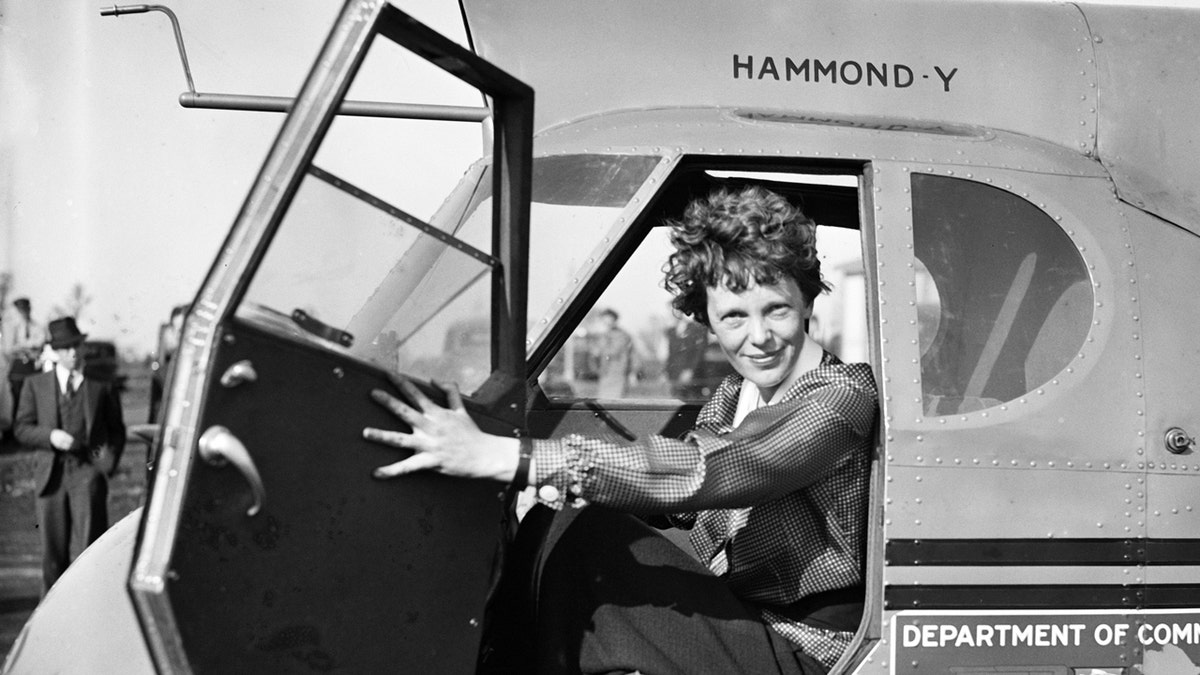
Pilot Earhart is pictured posing for a portrait, circa 1936. (Library of Congress/Getty Images)
Amy Earthart stated that she believed her daughter "died in Japan" on "a United States government mission, probably on verbal orders" — and "not in the Pacific Ocean."
TEST YOURSELF WITH OUR LATEST LIFESTYLE QUIZ
Many of the conspiracy theories that are floated to this day regarding Earhart's story cite Japan as playing a role in her disappearance.
"I am equally sure she did not make a forced landing in the sea," Amy Earhart added.
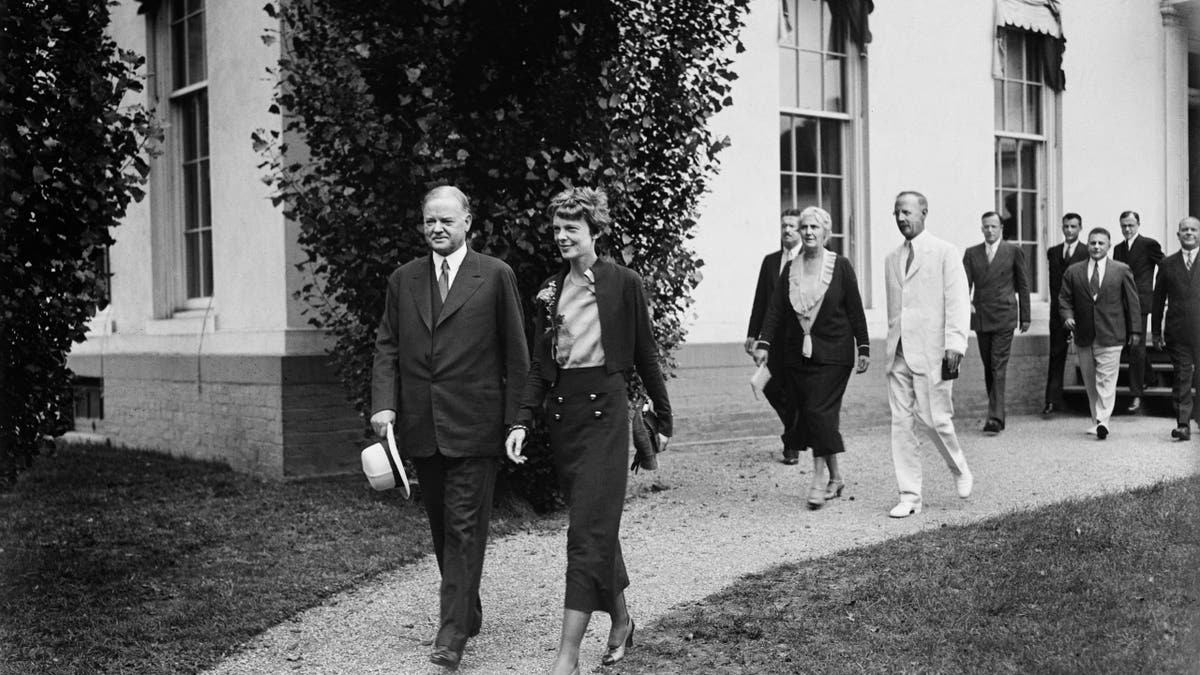
Earthart is shown strolling with then-President Herbert Hoover at the White House in Washington, D.C., in June 1932. (Universal History Archive/Universal Images Group via Getty Images)
Many researchers also hypothesize that aviation trailblazer Earhart did not crash her plane at sea, but instead landed and was stranded on Nikumaroro Island, later perishing there.
Purdue University recently delayed an expedition to search for Earhart's missing plane in Nikumaroro to next year, due to issues with permits, as well as hurricane season concerns.
CLICK HERE TO DOWNLOAD THE FOX NEWS APP
Earhart was the first woman to fly nonstop solo across the U.S. on Aug. 24, 1932.
"Her flying feats spurred her into the international spotlight, where she lectured widely, wrote several books and advocated for causes she cared about," the Smithsonian Institution notes.
