 Print
Print
 Close
Close

NASA captures imploding star in gorgeous 3D
Published January 06, 2020
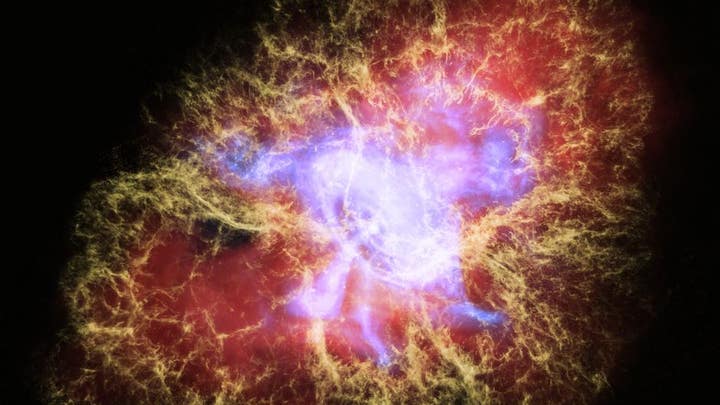
NASA released a dazzling 3D image of the Crab Nebula on Sunday.
Astronomers and visualization specialists from NASA have combined the visible, infrared, and X-ray vision of the space agency's Great Observatories to create a three-dimensional representation of the dynamic Crab Nebula, the tattered remains of an exploded star.
The multiwavelength computer graphics visualization is based on images from the Chandra X-ray Observatory and the Hubble and Spitzer space telescopes.
"Seeing two-dimensional images of an object, especially of a complex structure like the Crab Nebula, doesn't give you a good idea of its three-dimensional nature," explained STScI's visualization scientist Frank Summers, who led the team that developed the movie. "With this scientific interpretation, we want to help people understand the Crab Nebula's nested and interconnected geometry. The interplay of the multiwavelength observations illuminate all of these structures. Without combining X-ray, infrared, and visible light, you don't get the full picture."
FIRST METEOR SHOWER OF 2020 SEEN IN STUNNING NASA IMAGE FROM SPACE
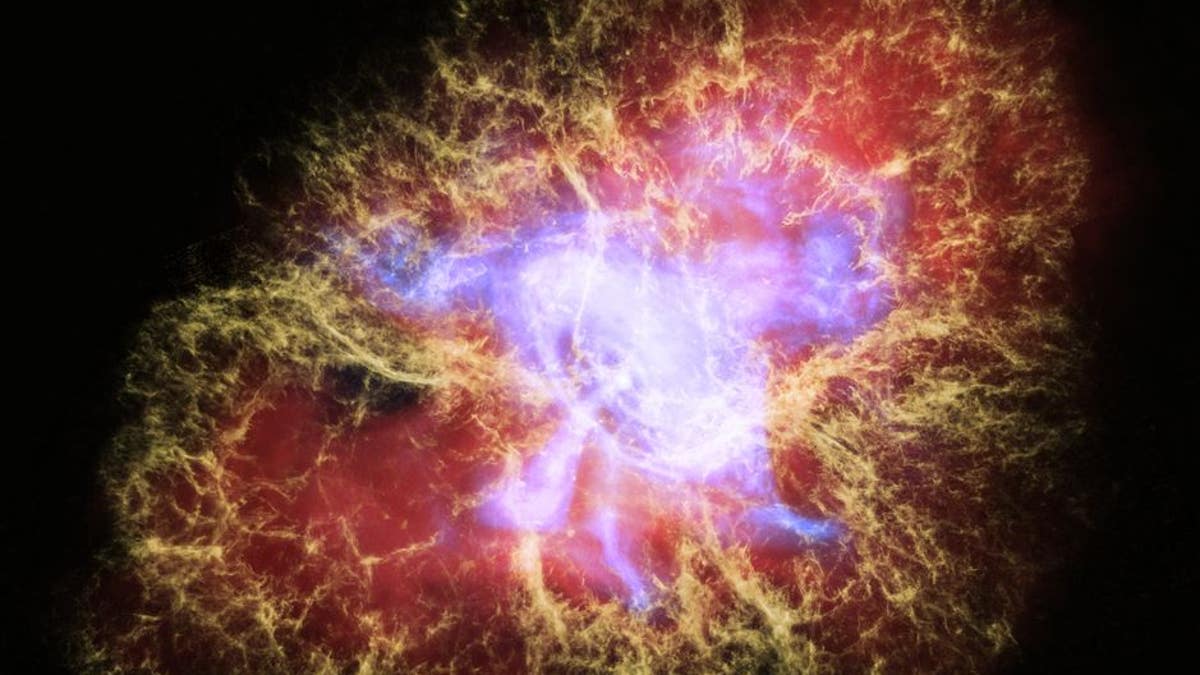
This new multiwavelength image of the Crab Nebula combines X-ray light from the Chandra X-ray Observatory (in blue) with visible light from the Hubble Space Telescope (in yellow) and infrared light seen by the Spitzer Space Telescope (in red). (NASA, ESA, J. DePasquale (STScI), and R. Hurt (Caltech/IPAC))
The approximately four-minute video unwraps the nested structure that makes up the nebula, giving viewers a better understanding of the mysterious and complex processes powering the nebula.
The Crab Nebula was first identified in 1731 the English astronomer John Bevis.
"The powerhouse 'engine' energizing the entire system is a pulsar, a rapidly spinning neutron star, the super-dense crushed core of the exploded star," NASA explained in a press statement. "The tiny dynamo is blasting out blistering pulses of radiation 30 times a second with unbelievable clockwork precision."
NASA's visualization can be seen below:
The visualization is one of a new generation of products and experiences being developed by the NASA's Universe of Learning program.
https://www.foxnews.com/science/nasa-hubble-chandra-imploding-star-gorgeous