US military strikes 3 Iranian oil tankers after IRGC launched missiles at US Navy warships
U.S. Central Command said it hit the Iranian oil tankers M/T Downy, M/T Stark 1 and M/T Kylo on Saturday near Kharg Island and in the Gulf of Oman after Iran’s Islamic Revolutionary Guard Corps (IRGC) “launched ballistic missiles toward two U.S. Navy warships patrolling regional waters.”
Coverage for this event has ended.
Netanyahu says Israel has completed '80-90%' of campaign against Iran
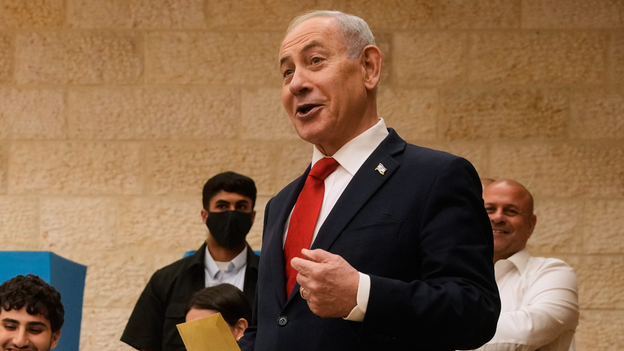
Israeli Prime Minister Benjamin Netanyahu said Saturday that Israel has completed "80-90%" of its campaign against Iran's nuclear threat but argued more action is still needed.
In an interview with i24NEWS, Netanyahu said Iran's nuclear ambitions had posed an existential threat to Israel.
"We have done 80-90% of the work. We need to complete what remains," Netanyahu said.
Netanyahu also said Israel's military retains the ability to carry out additional operations against Iran, saying Israeli pilots "were there and can be there at any moment."
He added that his goal has been to confront Iran directly after targeting its regional proxy network, describing Tehran as "the head of the octopus."
CENTCOM says Iranian oil tanker M/T Kylo has sunk
U.S. Central Command said Saturday that the Iranian oil tanker M/T Kylo sank in the Gulf of Oman after it was struck by American forces earlier in the day.
In a post on X, CENTCOM shared a video appearing to show the vessel taking on water before slipping beneath the surface.
"Thanks to the precision and professionalism of American service members, the M/T Kylo sank in the Gulf of Oman today and joined Iran's navy at the bottom of the sea," CENTCOM wrote.
Earlier Saturday, CENTCOM said U.S. forces struck the M/T Kylo and two other Iranian oil tankers after Iran's Islamic Revolutionary Guard Corps launched ballistic missiles toward two U.S. Navy warships patrolling regional waters.
The M/T Kylo was one of three vessels targeted in the operation, though CENTCOM said it was the only tanker that was completely destroyed.
Iran conflict sends Labor Day gas prices to record high
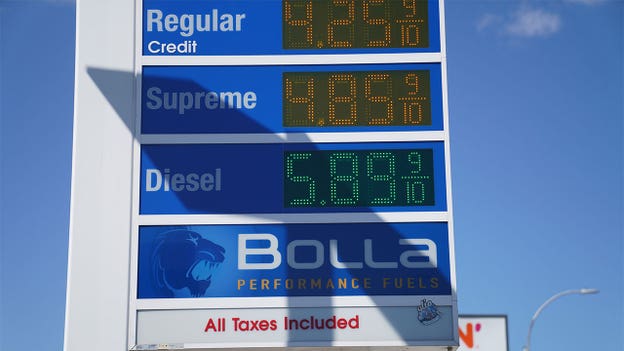
The renewed conflict between the United States and Iran is driving up fuel costs for Americans, with gasoline prices reaching record levels over Labor Day weekend, according to Reuters.
The national average price is projected to reach $4.03 per gallon on Labor Day, surpassing the previous holiday record set in 2012, GasBuddy analyst Patrick De Haan told Reuters.
Analysts say concerns about oil shipments through the Strait of Hormuz have helped push crude prices back above $90 a barrel as fighting between Washington and Tehran continues.
The tighter energy market has also left little room to boost fuel supplies, with U.S. refinery utilization already running at about 98%, Reuters reported.
The higher energy costs are extending beyond the pump, with diesel prices also reaching a record this week and Labor Day airfares expected to be 20% higher than a year ago, according to Reuters.
Iranian media says US warned tanker crews before strikes
Iranian state media aired what it said was audio of the U.S. Navy warning one of the Iranian oil tankers to evacuate before it was struck, according to Fox News chief foreign correspondent Trey Yingst.
Reporting from the Gulf region on "Fox Report," Yingst said the reported communication instructed those aboard to evacuate part of the vessel before the attack.
Yingst said the reported warning suggested the U.S. military sought to avoid civilian casualties while still delivering what he described as "a very clear message of force" to Iran.
"It's an indication that the U.S. military wants to send a very clear message of force to the Iranians, but they're not looking to kill civilians in the process," Yingst said.
The United States has not publicly confirmed the reported communication.
US sanctions continue squeezing Iran's economy as pressure campaign intensifies
The Trump administration says its economic pressure campaign is continuing to weaken Iran's economy as sanctions and a blockade on the country's oil exports squeeze the regime's primary source of revenue.
Reporting on "Fox Report," Fox News chief Washington correspondent Mike Emanuel said Iran's currency has lost roughly half its value against the U.S. dollar over the past year as the campaign intensifies.
Treasury Secretary Scott Bessent has said the administration is applying sanctions "like have never been seen before" that are intended to "asphyxiate the regime."
Even as the conflict enters its sixth month, White House officials have continued to characterize the strategy as sustained economic pressure rather than large-scale combat operations.
The economic campaign has become a central pillar of the administration's effort to pressure Tehran, with officials arguing that cutting off oil revenue is key to weakening the Iranian regime.
Crawford says US tanker strikes send 'strong signal' to Iran
House Intelligence Committee Chairman Rick Crawford, R-Ark., said Saturday that U.S. strikes on three Iranian oil tankers reinforce the Trump administration's economic pressure campaign against Tehran.
Speaking on "Fox News Live," Crawford described the military action as "the kinetic component" of the administration's sanctions strategy, arguing economic measures must be backed by force to be effective.
"This should bring them to a position of recognizing that their position currently is untenable," Crawford said. "They're going to have to change their ways. This should be a pretty strong signal."
Crawford also said President Donald Trump has made clear that "all options are on the table" as the administration responds to Iran's actions.
The Arkansas Republican said he believes the recent military moves should make clear to Iran's leadership that the United States is prepared to increase pressure if Tehran continues attacking American forces.
Craig Morgan performs for US troops during Middle East USO tour
Country music star and U.S. Army Reserve soldier Craig Morgan visited American troops deployed in the Middle East this week as part of a USO tour, U.S. Central Command said Saturday.
In a post on X, CENTCOM said the tour made several stops across the region, bringing "a piece of home" to service members stationed overseas.
Photos shared by CENTCOM showed Morgan performing for troops gathered at a military facility and posing alongside fellow performers during the visit.
Morgan has long supported the military through USO tours and continues to serve in the U.S. Army Reserve while maintaining his country music career.
CENTCOM did not disclose where the performances took place.
Sanders calls for end to Iran conflict as gas prices climb
Sen. Bernie Sanders, I-Vt., called Saturday for an end to the conflict with Iran, arguing the fighting is driving up gas prices and hurting the U.S. economy.
In a post on X, Sanders said President Donald Trump's "illegal and disastrous war in Iran" had resulted in "thousands of casualties" and was "wreaking havoc on the economy."
Sanders also pointed to rising fuel costs, saying the national average price for gasoline had reached $4.15 per gallon over Labor Day weekend.
"We must end this war NOW," Sanders wrote.
Tehran accuses US of 'war crime' after strikes on Iranian oil tankers
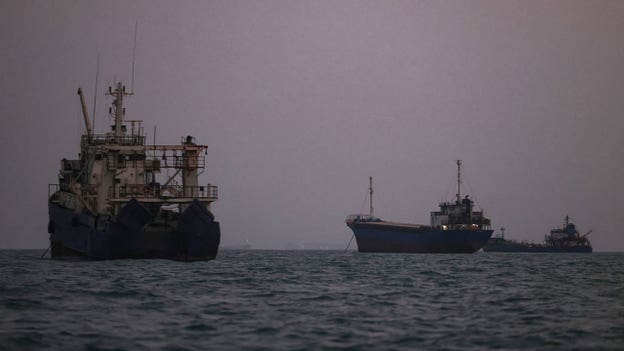
Iran's Foreign Ministry on Saturday condemned the U.S. strikes on three Iranian oil tankers as a "war crime," warning Washington and its allies they would bear responsibility for any further escalation.
The statement came hours after U.S. Central Command said American forces struck the tankers in response to what it said was an Iranian missile attack targeting two U.S. Navy warships patrolling regional waters.
In its statement, the ministry accused the United States of carrying out a broader campaign of military and economic pressure against Iran and claimed the strikes violated Article 2(4) of the U.N. Charter.
The ministry also said Iran would continue defending its sovereignty and national interests against what it characterized as U.S. aggression.
Retired general says Trump's Iran strategy could take months after US tanker strikes
Retired Air Force Brig. Gen. John Teichert said Saturday that President Donald Trump's strategy of using economic pressure against Iran is unlikely to produce quick results following U.S. strikes on three Iranian oil tankers.
Speaking on Fox News' "Saturday in America," Teichert said Trump appears committed to an "economic asphyxiation" strategy designed to force Iran's regime "either to capitulate or to crumble."
"The first one is that there's no evident way where we can know what the timeline would be before we achieve our objectives, which means it could be months and not weeks to see success," Teichert said.
He also said the strategy carries an opportunity cost because the U.S. must keep roughly 50,000 troops in the region to enforce the blockade, escort commercial shipping and protect American forces.
His comments came after U.S. Central Command announced Saturday that American forces struck three Iranian oil tankers in response to what it said was an Iranian missile attack targeting two U.S. Navy warships patrolling regional waters.
UKMTO ‘unable to confirm’ casualties, environmental impact after CENTCOM strikes Iranian tankers
The United Kingdom Maritime Trade Operations Centre (UKMTO) said Saturday that it is “unable to confirm if any casualties or environmental impact has occurred” following U.S. Central Command’s strikes on Iranian oil tankers.
The U.K. maritime agency said it “received a report involving several merchant vessels in the Northern Arabian Gulf and the Gulf of Oman.”
“Reports indicate the vessels were subject to disabling fire as part of ongoing military activity in the region,” it added.
CENTCOM said earlier Saturday that its forces “struck three Iranian crude oil carriers, Sept. 5, after the Islamic Revolutionary Guard Corps (IRGC) launched ballistic missiles toward two U.S. Navy warships patrolling regional waters.”
Trump is using ‘economic asphyxiation’ in bid to make Iranian regime 'crumble': retired general
Retired Air Force Brig. Gen. John Teichert told Fox News’ “Saturday in America” that President Donald Trump “has settled into the idea that this strategy of economic asphyxiation is the right one to cause the [Iranian] regime either to capitulate or to crumble.”
However, he said there are two “downsides” to this strategy as the U.S. ramps up pressure against Iran through Operation Economic Outcast.
"The first one is that there's no evident way where we can know what the timeline would be before we achieve our objectives, which means it could be months and not weeks to see success,” Teichert said. “And related to that as number two, in that there is an opportunity cost for the U.S. military, because during the execution of this strategy, we need to maintain those 50,000 brave Americans in the area of responsibility in order to enforce the blockade and escort friendly ships filled with oil and to make sure we're defended well."
Teichert spoke to Fox News after U.S. Central Command struck three Iranian oil tankers Saturday in response to an attempted Iranian attack against U.S. Navy warships.
"One of the greatest things that we did with our military instrument of power during the six weeks of active combat operations was not just to destroy Iran's current military, but to destroy their military related industrial capacity so that they couldn't resurrect their military capability," Teichert said about resumed military activity between the U.S. and Iran.
"And we're starting to see, no doubt, that Iran is limited in their ability to strike. We haven't driven the threat to zero, but we certainly are seeing that Iran is far less potent in projecting power than they were six months ago," he added.
Teichert also said Trump should get “huge credit” for carrying out Operation Midnight Hammer against Iran in June 2025, “which effectively destroyed Iran's nuclear program.”
“Unless the regime is gone, we can never quite know that our interests are going to be safe in the region and around the world,” Teichert said. “And so by strangling the regime economically, we're hoping for one of those mechanisms of regime change to take place, while we also acknowledge that we took care of their nuclear program 14 months ago."
Hegseth says if Iran fires at US ships, 'we will destroy (and sink) their oil tankers'
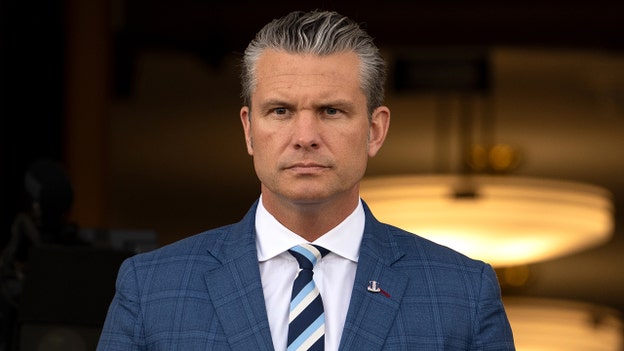
Secretary of War Pete Hegseth warned Iran on Saturday about the U.S. military's capabilities after U.S. Central Command said "a U.S. aircraft carrier and guided-missile destroyer successfully evaded multiple unprovoked Iranian attacks."
"It’s simple: if Iran shoots at U.S. ships, we will destroy (and sink) their oil tankers. All they have to do is not shoot at [the] U.S. Navy," Hegseth wrote on X.
CENTCOM said American forces struck three Iranian oil tankers in response to Saturday's attacks by the Islamic Revolutionary Guard Corps (IRGC).
"Iran’s oil tanker fleet is defenseless — Iran has no navy or air force. Our planes, ships and subs can strike them all, in U.S. Central Command and U.S. Pacific Command" areas of responsibility, Hegseth added.
US Embassy in Bahrain urges 'heightened vigilance' amid possible 'unforeseen escalation'
The U.S. Embassy in Bahrain issued a security alert Saturday reminding Americans in the Middle East that they “should exercise heightened vigilance,” as the Iran war escalates.
The warning came hours before U.S. Central Command announced it had struck three Iranian oil tankers in response to an attempted attack on U.S. Navy warships.
“Due to tensions in the Middle East, the security environment remains complex with the potential for unforeseen escalation. The U.S. Embassy reminds American citizens that Iran has previously targeted civilian infrastructure in Bahrain, including hotels in Manama,” the embassy said.
"U.S. diplomatic facilities, including outside the Middle East, have been targeted. Iran and groups supportive of Iran may target other U.S. interests overseas or at locations associated with the United States and Americans throughout the world, including U.S. businesses and other institutions,” it added.
US forces struck 3 Iranian oil tankers after IRGC launched missiles at American warships: CENTCOM
U.S. Central Command announced Saturday that American forces struck three Iranian crude oil tankers after Iran’s Islamic Revolutionary Guard Corps (IRGC) “launched ballistic missiles toward two U.S. Navy warships patrolling regional waters.”
“A U.S. aircraft carrier and guided-missile destroyer successfully evaded multiple unprovoked Iranian attacks. No American personnel were harmed,” CENTCOM said in a statement.
“Following Iran’s failed attacks, CENTCOM permanently disabled the IRGC crude oil carriers M/T Downy off the coast of Kharg Island and M/T Stark 1 near Jask. American forces also completely destroyed the unladen crude oil carrier M/T Kylo (also known as the “Noxen”) in the Gulf of Oman, striking the vessel in multiple critical locations to render it inoperable after the crew was directed to abandon ship,” CENTCOM also said.
It released a video showing each vessel suffering explosions. CENTCOM described the ships as “part of a multibillion-dollar shadow network that funds the IRGC and its regional proxies.”
“Let the message to the IRGC be clear: If you shoot at two of our ships, we will impose an even higher economic cost -- taking out three of yours," Adm. Brad Cooper, CENTCOM’s commander, said in a statement. “We will not hesitate to defend American forces, and if necessary, destroy Iran’s limited and exposed oil fleet.”
A U.S. official told Fox News following the strikes that IRGC can’t build more tankers, which are at the heart of Iran's economy. The moves put Iran in a tougher position, the official added.
Fox News' Jennifer Griffin contributed to this post.
Egypt pushes US, Iran to return to the negotiating table
Egyptian Foreign Minister Badr Abdelatty called on the U.S. and Iran to return to negotiations Saturday to de-escalate tensions in the Middle East.
The matter surfaced in a phone call between Abdelatty and his Omani counterpart, according to Egypt’s foreign ministry.
“Minister Abdelatty stressed the priority of de-escalation and avoiding any steps that could fuel tensions and threaten the security and stability of the region, emphasizing the need to allow space for diplomatic efforts as the best way to address the root causes of the crisis. In this context, he emphasized the importance of returning to negotiations between the United States and Iran, in accordance with the Islamabad Memorandum of Understanding, and building upon it as a framework for addressing outstanding issues through dialogue and negotiation,” the ministry said in a statement.
“The call also touched on developments in the Strait of Hormuz and their implications for regional security and the global economy, with both ministers stressing the need to maintain the security and safety of maritime navigation and ensure the smooth flow of trade and energy supplies,” it added.
Iran has just two months of gasoline left as war, sanctions take a toll: report
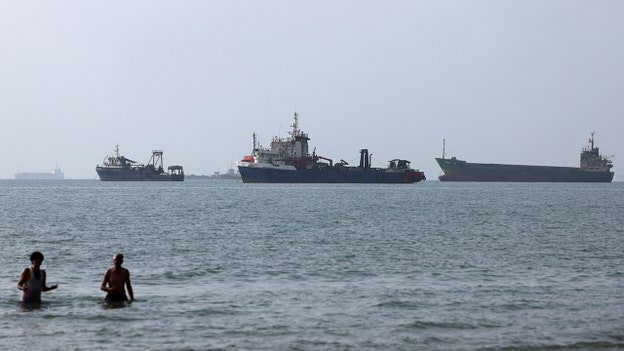
A senior Iranian source told Reuters that Iran only has about two months’ worth of gasoline left in its supply as the U.S. war and economic sanctions are imposing a heavy toll.
The U.S. military’s ongoing blockade of Iranian ports has cut off oil exports, which is the regime’s main source of revenue, according to Reuters.
The source also said Iran has to import gasoline because of limited refining capacity.
The Treasury Department launched Operation Economic Outcast against Iran last week, which aims to "tighten the noose and block every potential source of revenue that funds the Islamic Revolutionary Guard Corps (IRGC) and the Iranian regime," according to Treasury Secretary Scott Bessent.
Three Iranian sources told Reuters that the moves have left Iran with few remaining channels to obtain currency and goods.
Trump describes war against Iran as ‘small potatoes,’ says he calls it a ‘military conflict’
President Donald Trump said Friday that he characterizes the fight against Iran as a “military conflict” because “it's small potatoes for us.”
Trump made the remark at the White House after Vice President JD Vance said a day earlier that "I wouldn't call it a war” as there was "no active shooting" at the time.
“Well, I'll tell you what. A lot of people don't call it a war. I call it a military conflict because it's small potatoes for us. It's not a big thing,” the president said when asked about Vance’s comments.
“We did Venezuela and we did this in Venezuela. We lost nobody. And this we lost 18 people. And in Vietnam, you lost 100,000 people. And in other conflicts, you lost tens of thousands of people,” Trump continued. “I would say that it's intermittent. You know, we do intermittent strikes.”
“So I heard what he said, and it was interesting because I think that there's a lot of truth that we're not fighting right now. There's no fighting,” Trump added. “We're taking out a lot of oil. We control the Hormuz Strait, and we control it very strongly. We did a hit on certain areas around the Hormuz Strait. We took out their radar, as you know. You know that very well. We took out some aircraft. We took out some other things that protect for them, used to protect the Hormuz Strait when they had it under very tight control.”
“So I can understand what he's saying. It's a military conflict, but it's very intermittent. I could see somebody not calling it a war,” Trump concluded.
Israel strikes Hezbollah terrorists, weapons storage facilities after drone launched at troops
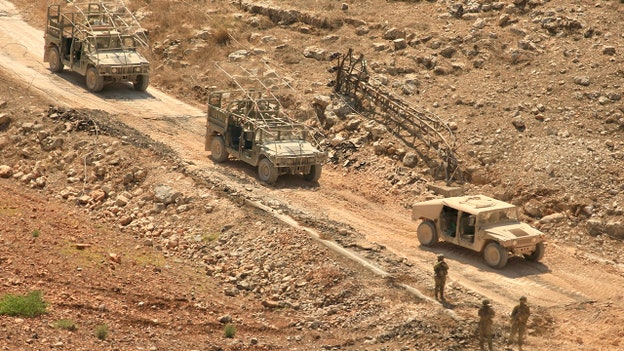
The Israel Defense Forces announced Saturday that it stuck Hezbollah targets in Lebanon after the Iran-backed terrorist group launched a drone at soldiers that were positioned in a border area.
“Hezbollah terrorists launched a drone towards IDF soldiers operating in the Security Zone in southern Lebanon. IDF soldiers opened fire and downed the drone. No IDF injuries were reported,” Israel’s military wrote on X.
The IDF later said it hit “Hezbollah terrorists and weapon storage facilities intended to plan and direct terror attacks against IDF soldiers in the Security Zone and Israeli civilians."
“The strikes were carried out to remove an immediate threat,” according to the IDF.
Trump says new energy routes could reduce world's reliance on Strait of Hormuz
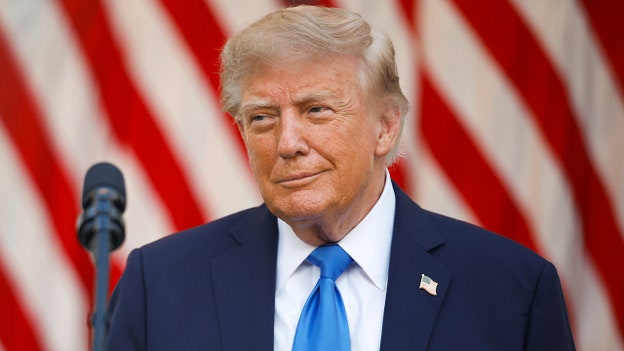
President Donald Trump said Friday that new pipelines and overland transportation routes across the Middle East could reduce the world's reliance on the Strait of Hormuz, arguing the strategic waterway is becoming less critical to global energy supplies.
"A lot of alternatives are being made to the Hormuz Strait. The Hormuz Strait is not what it used to be," Trump told reporters after signing executive orders at the White House.
Trump said new pipelines are being developed across the region to move oil without relying on the strait and pointed to an overland route through Syria that he said is already being used by trucks transporting crude.
"Iran is going to end up, if they don't get smart, really smart, with a Hormuz Strait that's not very necessary anymore," Trump said.
His comments come as governments and energy companies explore alternative export routes that could bypass the strategic waterway amid ongoing tensions with Iran.
Yesterday's Fox News Digital live blog offers additional coverage of the conflict with Iran.
Live Coverage begins here