Vance says Iran has told US it has 'no plans to toll Strait of Hormuz'
Vice President JD Vance told Fox News' "Saturday in America" that the “Iranians have told us they have no plans to toll the Strait of Hormuz," as negotiations -- with President Donald Trump's direct involvement -- remain ongoing to reopen the key waterway.
Coverage for this event has ended.
Iran lays out 6 demands for US 'behavior correction' before Strait of Hormuz reopens
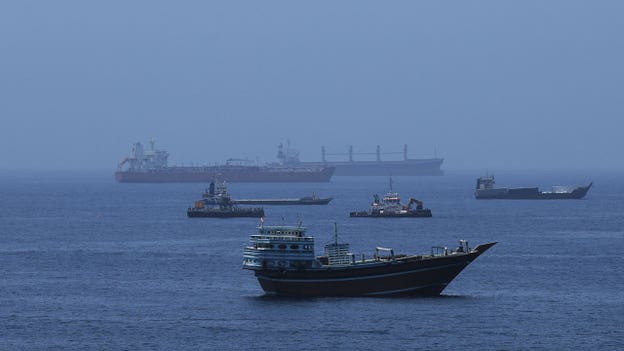
Iran laid out six demands Saturday for what it called U.S. "behavior correction" before the Strait of Hormuz can reopen, according to the country's state-run IRNA news agency.
Mohammad Baqer Zulqader, secretary of Iran's Supreme National Security Council, said “until America corrects its behavior, The Strait of Hormuz will not open.”
Zulqader said the U.S. must stop threatening Iran and insulting what he described as the country's sanctities, end military action against Iran and its allies in Lebanon, the Palestinian territories, Yemen and Iraq, and lift the naval blockade.
His remaining demands call for U.S. sea and air forces to withdraw from Iran, compensation for damages from two wars, the removal of sanctions against Iran and the unconditional release of frozen Iranian assets.
The demands come as negotiations over reopening the Strait of Hormuz remain ongoing. Vice President JD Vance told Fox News earlier Saturday that Iranian officials have told the U.S. they have no plans to toll the critical waterway.
Zulqader also said the Supreme National Security Council would maintain its position in both military and diplomatic talks, according to IRNA.
Houthi official puts Turkey on notice after new Saudi defense pact
A senior Houthi figure issued a warning to Turkey on Saturday, days after Ankara entered a new mutual defense pact with Saudi Arabia and Pakistan.
Hizam al-Asad, a member of the Iran-backed group, directed the message at Ankara in a post on X while invoking the decade-long conflict between the Houthis and Saudi Arabia.
Al-Asad characterized Saudi Arabia's involvement in Yemen as an “aggression and siege” and suggested Turkey should consider the history between Riyadh and the Houthis before becoming further involved.
He added that countries seeking to side with Saudi Arabia were welcome to “try,” invoking the waters separating Yemen from the kingdom.
The warning comes one day after Saudi Arabia, Turkey and Pakistan signed a collective defense agreement in Mecca stipulating that an armed attack against one of the three countries would be treated as an attack against all of them.
Fighting flares between Yemen government forces, Iran-backed Houthis after 2022 truce
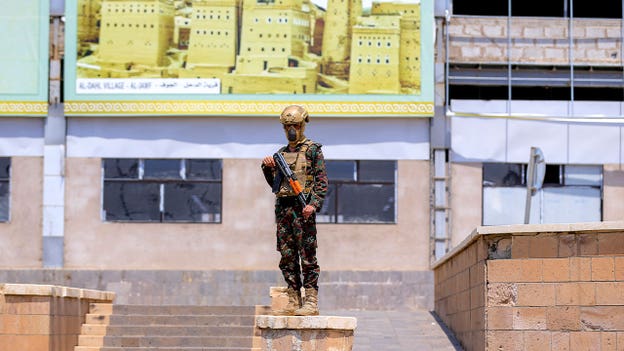
Yemeni government forces struck positions held by the Iran-backed Houthis following a series of rebel attacks in central and eastern Yemen, raising concerns about renewed fighting between the longtime adversaries.
Col. Majed al-Nazili, a spokesperson for Yemen's military, said the strikes targeted Houthi “sites and capabilities” across several front lines. He did not provide additional details about the operation.
The military action came in response to recent Houthi strikes against forces aligned with Yemen's internationally recognized government.
The latest escalation threatens the relative calm that has held between the Houthis and Yemen's government since a 2022 truce significantly reduced fighting in the country's civil war.
Yemen's internationally recognized government is backed by a Saudi-supported coalition, while the Houthis receive support from Iran.
Vance says US has made 'some progress' in Iran negotiations in recent days
Vice President JD Vance said Saturday that the U.S. has made progress in negotiations with Iran over the past several days, while cautioning that Tehran has not yet delivered everything the Trump administration is seeking.
“The question is whether they're able, their system is able to give the things that are necessary for us to be happy, for us to feel like we've gotten what we need out of this particular engagement. That is still to be determined, but I do think that we've made some progress over the last few days,” Vance said on Fox News.
The vice president said the administration is talking with Iran as it works to maximize the amount of oil and gas moving through the Strait of Hormuz.
Vance said the U.S. remains focused on determining whether Tehran is willing to make longer-term changes that could lead to an improved relationship with Washington.
The comments come as Iran says its negotiations with Oman over arrangements for traffic through the Strait of Hormuz are close to an agreement, while Tehran maintains that fully reopening the waterway remains subject to additional conditions.
Former CIA station chief says Iran wants to become 'gatekeeper' of Strait of Hormuz
Iran wants to emerge from negotiations over the Strait of Hormuz with greater control over the critical waterway, former CIA station chief Dan Hoffman said Saturday.
Hoffman, a Fox News contributor, told "Fox Report" that he does not expect the U.S. to cede control of traffic through the strait to Tehran, but said Iran is seeking leverage over the waterway as negotiations continue.
“I think Iran wants that to be a casualty of the war for the United States. Iran wants to be a gatekeeper for the Strait of Hormuz now, whether that involves receiving some revenue, imposing tolls-that's another question," he said.
Hoffman said Tehran's demands for the U.S. to lift its blockade, release frozen Iranian funds and withdraw American military forces from the region are "very maximalist demands" that reflect an effort to gain negotiating leverage.
He also argued that Iran wants negotiations over its nuclear program pushed to the sidelines while talks remain focused on the Strait of Hormuz, which he described as the "center of gravity" in the conflict.
Hoffman said Iran has hardened its negotiating position despite suffering extensive military damage during the war, pointing to the influence of hardliners within the Iranian government.
His comments came as Vice President JD Vance said Saturday that negotiations are focused on establishing a safe traffic system through the Strait, including demining the waterway and securing a commitment from Iran not to attack commercial vessels.
Saudi Arabia backs UN Security Council condemnation of Houthi missile, shipping attacks
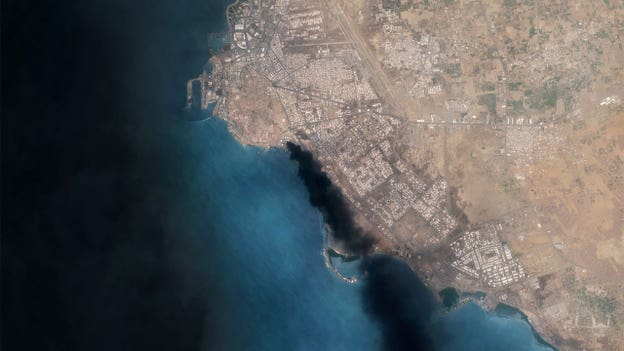
Saudi Arabia threw its support behind a U.N. Security Council condemnation of a series of Houthi attacks targeting the kingdom and commercial shipping in recent weeks.
The council condemned missile attacks against Saudi Arabia dating back to July 13 as well as attacks on commercial vessels that began July 22, according to a statement Saturday from the Saudi Foreign Ministry.
Riyadh welcomed the move, saying the Security Council's response reflected growing concern over threats to international shipping and security in the region.
The country also called for the international community to enforce relevant Security Council resolutions and take a firmer stance against actions threatening maritime security and international trade.
Saudi Arabia said continued attacks also risk disrupting efforts to secure peace in Yemen and elsewhere in the region.
CENTCOM says 53 commercial vessels redirected under US blockade against Iran
U.S. Central Command said Saturday that American forces have redirected 53 commercial vessels while enforcing the U.S. military blockade against Iran.
CENTCOM announced the updated figures in a post on X showing U.S. sailors conducting maintenance on F/A-18E Super Hornets aboard the aircraft carrier USS Abraham Lincoln.
“U.S. Sailors conduct maintenance on F/A-18E Super Hornets on the flight deck of aircraft carrier USS Abraham Lincoln (CVN 72) to ensure carrier strike group assets remain mission ready to enforce the U.S. blockade against Iran," the post read. "As of Aug. 8, CENTCOM redirected 53 commercial vessels, disabled 2, and boarded 2. The U.S. military has also permitted more than 30 ships to pass through the blockade for humanitarian aid.”
The latest count marks an increase from Friday, when CENTCOM said U.S. forces had redirected 51 commercial vessels while disabling two and boarding two as part of the blockade.
CENTCOM said more than 30 ships have also been allowed to pass through the blockade to deliver humanitarian aid.
GOP lawmaker says Mideast defense pact shows Iran increasingly 'isolated
Rep. Joe Wilson, R-S.C., praised the mutual defense pact between Saudi Arabia, Turkey and Pakistan on Saturday, arguing that growing regional cooperation shows Iran is increasingly isolated.
Wilson credited President Donald Trump with the development, calling the agreement “another achievement of @POTUS promoting stability, peace, and prosperity in the Middle East.”
“The mutual defense pact of Saudi Arabia, Türkiye, and Pakistan is another achievement of @POTUS promoting stability, peace, and prosperity in the Middle East," Wilson wrote in an X post Saturday. "With our prosperous Gulf allies, a liberated Syria, and Lebanese-Israeli negotiations, it is clear the murderous regime in Iran is isolated and the people of Iran can regain a new government worthy of Iran’s rich history.”
The South Carolina Republican pointed to U.S. allies in the Gulf, developments in Syria and negotiations between Lebanon and Israel as evidence for his assessment of Tehran's position in the region.
Wilson also suggested the regional changes could create an opening for political change inside Iran, saying the Iranian people could eventually form a new government
Turkey eyes expanding NATO-style Mideast defense pact, with Egypt potentially next
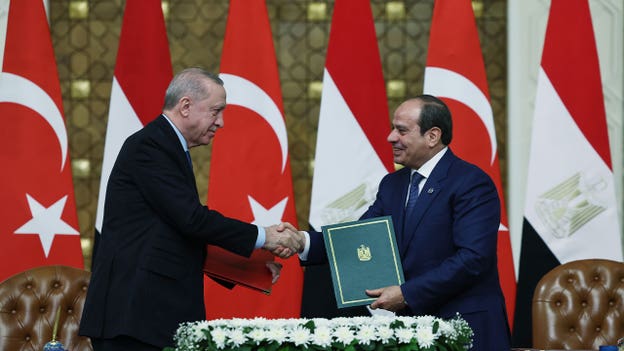
Egypt could join a mutual defense agreement between Saudi Arabia, Turkey and Pakistan in its next phase as the three countries look to potentially expand the alliance, Turkish Foreign Minister Hakan Fidan said Saturday.
Fidan told Turkey's state-run Anadolu Agency that he believes Egypt will eventually become part of the Mecca Joint Defense Agreement.
The Turkish foreign minister described the pact as technically equivalent to NATO's Article 5 collective defense provision and said it does not identify a specific country as a common threat.
Fidan said countries that do not attack members of the pact would not become targets under the agreement, adding that Saudi Arabia, Turkey and Pakistan do not have expansionist ambitions.
Turkish President Recep Tayyip Erdoğan's vision is to eventually expand the agreement beyond the three founding countries and potentially bring other countries in the region under its framework, according to Fidan.
Fidan also said the countries will conduct military exercises and training under the agreement to demonstrate their ability to operate together.
Oman condemns ‘repeated attacks’ on ships in Strait of Hormuz during talks with Iran
Oman’s Foreign Ministry condemned Saturday what it described as “repeated attacks” on ships in the Strait of Hormuz, while it tries to negotiate with Iran a maritime route through the waterway.
“In this context, the Sultanate of Oman affirms that the ongoing negotiations regarding arrangements related to navigation in the Strait of Hormuz are proceeding in a positive and constructive atmosphere, and emphasizes the importance of avoiding any actions that could affect these negotiations and the progress achieved, which takes into account the interests of all parties,” the ministry said.
The U.K. Maritime Trade Operations Center said earlier Saturday that a ship was struck by an “unknown projectile” while traveling in the Strait of Hormuz, off the coast of Oman.
Iranian regime will likely ‘not fully comply’ with any deal they sign, Keane says
Fox News senior strategic analyst and retired Gen. Jack Keane said Saturday that it’s likely the Iranian regime “will not fully comply” with any deal they sign regarding the Strait of Hormuz.
“I think we all understand clearly looking at the Iranians, even if they sign a deal -- and the last time they had their president sign it -- it is likely they will not fully comply with it,” Keane told Fox News’ “Saturday in America.”
“Maybe comply with it initially, but eventually they will not. Why is that? Because the Straits of Hormuz is a strategic asset that they believe they have ownership and control of, and it gives them influence in the region in a way that they've never had before February 28th,” he continued, referencing the beginning of Operation Epic Fury against Iran.
“That is the reality of what we're facing and their mindset,” Keane said.
Vance says US deploying ‘host of tools’ in Iran talks, still in ‘middle of the game’
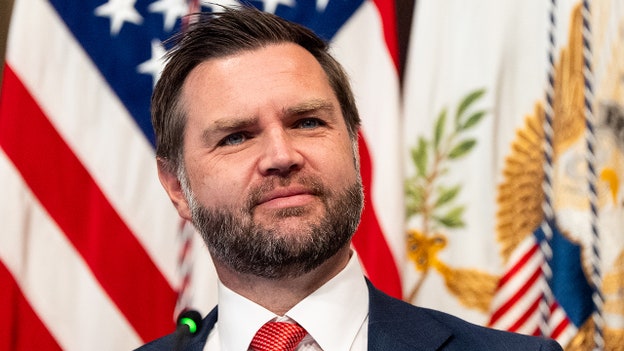
Vice President JD Vance told Fox News' "Saturday in America" that the U.S. is currently in the “middle of the game” when it comes to resolving the war against Iran.
“We're talking to the Iranians of course. We're trying to maximize the amount of oil and gas that are coming out of the Strait of Hormuz. That's the thing that we're most focused on right now,” Vance said.
“If you go back and remember what it is that we've done here, we've destroyed their nuclear program, we've destroyed their conventional military, we've radically reduced their, what you might call their asymmetric military abilities. And right now we're trying to see if they're willing to make the kind of long-term changes that would be necessary to have a better relationship with the United States,” he added.
“And if not, that's fine, too. We're just going to keep on applying the pressure that we can apply and getting as much oil and gas out of the Middle East so that Americans can enjoy lower gas and energy prices. So that's the delicate dance,” Vance said.
“The final thing I'll say about this... is I try to remind people that we're really in the middle of the game here. This thing is not over. It's obviously not at the beginning, we're in the middle of the game and we're applying a whole host of tools -- diplomatic, economic, military tools to ensure that we get the best outcome for the American people,” Vance also said. “I feel quite confident we will get there, but we're still a bit in the middle of the game.”
Vance says ‘Iranians have told us they have no plans to toll the Strait of Hormuz’
Vice President JD Vance told Fox News' "Saturday in America" that the “Iranians have told us they have no plans to toll the Strait of Hormuz.”
He made the remark after being asked by host Kayleigh McEnany about what an acceptable outcome for the Strait of Hormuz would look like.
“Well, our expectation is you're going to see the same amount of oil and gas come out of the Gulf that you saw before the conflict started. That is what the Iranians have told us that they are going to do. That's what the entire Gulf coalition wants to do as well. But, you know, we don't trust, we verify. We actually look not at people's words, but people's deeds,” Vance said.
“You see, some people within the Iranian system, of course, talk about tolling. The Iranians have told us they have no plans to toll the Strait of Hormuz. But again, we're going to see what actions actually happen,” Vance continued.
“What's been going on for the past week or so is that the Iranians and the Gulf countries, particularly Oman, have been talking about how to ensure the safe flow of traffic. The one problem, of course, is the Iranians laid a large number of mines at the beginning of the war. And so what we're really working through now is how you can actually set up a traffic scheme so that the ships that pass can pass through safely. That includes, of course, demining,” Vance also said.
The vice president said the U.S. wants “a commitment from the Iranians that they're not going to fire at commercial vessels.”
“They're hurting in a big way. They want this thing to be over,” Vance said about Operation Epic Fury. “The question is whether they're able their system is able to give the things that are necessary for us to be happy, for us to feel like we've gotten what we need out of this particular engagement. That is still to be determined. But I do think that we've made some progress over the last few days.”
CENTCOM releases photo of military helicopter taking off from warship enforcing Iranian blockade
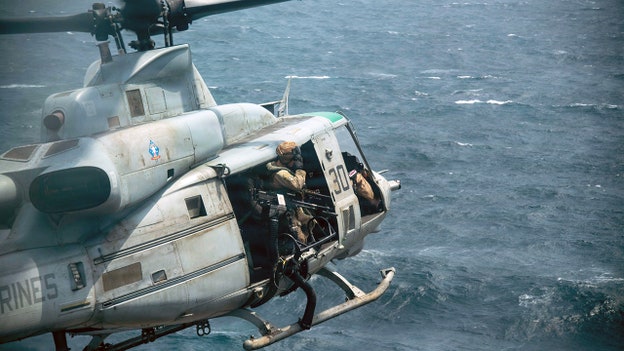
U.S. Central Command released a new photo Saturday of a UH-1Y Venom utility helicopter taking off from the flight deck of the USS Boxer, one of the American warships currently enforcing a military blockade on Iranian ports.
CENTCOM said the blockade, as of Friday, has “redirected 51 commercial vessels, disabled 2, and boarded 2 to ensure compliance.”
U.S. Marine Corps aircraft and personnel are stationed onboard the USS Boxer in support of the mission, according to CENTCOM.
Iran says it’s ‘very close’ to reaching deal with Oman on Strait of Hormuz traffic
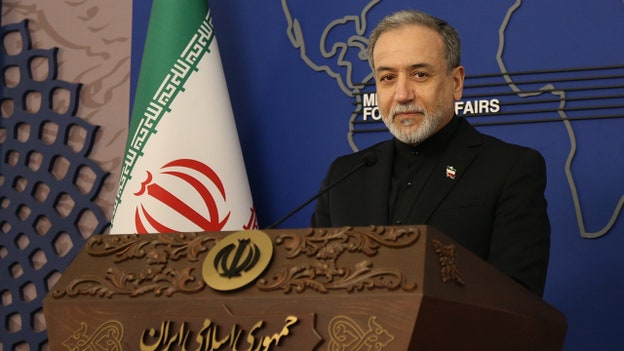
Iranian Foreign Minister Seyed Abbas Araghchi said Saturday that “Negotiations with Oman regarding the legal mechanism and management of the Strait of Hormuz regarding determining the route of traffic through the Strait of Hormuz are underway, and we are very close to an agreement.”
However, Araghchi added in a Telegram post that “the opening of the Strait of Hormuz is subject to other conditions, including compensation for violations of the Islamabad Memorandum of Understanding by the United States.”
Under the MOU, President Donald Trump and Iranian President Masoud Pezeshkian agreed to end the war, while calling for the Strait of Hormuz to be reopened and launching 60 days of nuclear negotiations.
But Iran has continued attacking commercial shipping in the waterway. U.S. Central Command in July also carried out more than a dozen consecutive days of strikes on Iranian military targets as part of a campaign to weaken Iran’s ability to threaten maritime traffic.
Fox News Digital’s Julia Bonavita contributed to this post.
Bahrain calls on international community to ‘compel Iran to reopen the Strait of Hormuz’
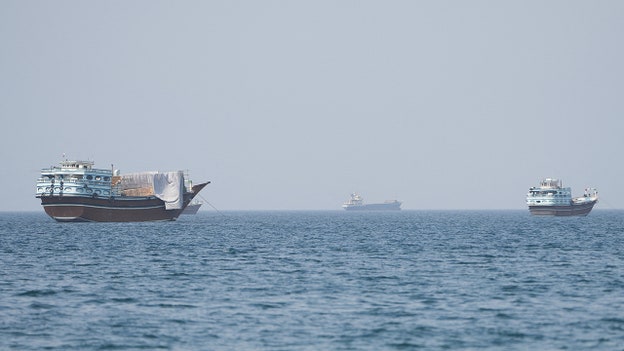
Bahrain demanded the United Nations Security Council step up to “compel Iran to reopen the Strait of Hormuz and cease attacks on commercial shipping to preserve regional and global security” after a ship was targeted in the Strait of Hormuz, the state-run Bahrain News Agency said.
“The Kingdom of Bahrain strongly condemned and denounced the attack on an Abu Dhabi National Oil Company (ADNOC) tanker by a missile while transiting the Strait of Hormuz, describing it as a blatant violation of international law, the United Nations Convention on the Law of the Sea, and UN Security Council Resolution 2817, as well as a grave threat to maritime navigation and global energy supply,” the Bahrain News Agency said.
“The Ministry urged the UN Security Council to uphold its responsibilities and implement decisive measures to protect maritime navigation in the Strait of Hormuz and key international waterways,” a report added.
Ship hit by 'unknown projectile' in Strait of Hormuz, UK maritime agency says
A ship was hit by an "unknown projectile" Saturday while traveling through the Strait of Hormuz, according to the U.K. Maritime Trade Operations Center.
The incident happened 18 nautical miles east of Khasab, Oman.
"A verified source has reported that a vessel was struck by an unknown projectile which caused a fire that has been extinguished. There is no reported environmental impact,” UKMTO said.
“The vessel and crew are reported as safe,” it added.
Qatar warns Iran against using Strait of Hormuz as a ‘bargaining chip’
Qatar’s Foreign Ministry said Saturday that Qatar rejects “using the Strait of Hormuz as a bargaining chip” following an Iranian attack on a ship affiliated with Abu Dhabi National Oil Company.
“The State of Qatar strongly condemns the Iranian attack that targeted an Emirati tanker affiliated with ADNOC company with a missile while it was passing through the Strait of Hormuz, and considers it a flagrant violation of the rules of international law and freedom of maritime navigation, and a blatant breach of UN Security Council Resolution 2817,” the ministry said.
“The Ministry of Foreign Affairs renews the State of Qatar's categorical rejection of using the Strait of Hormuz as a bargaining chip, and its call for reopening it without conditions, and its affirmation that freedom of navigation in this vital passage is a firmly established principle that admits no compromise, and that the continued closure of the strait exposes the vital interests of the region's countries and the global economy to danger,” it added.
UAE condemns ‘hostile Iranian attack’ targeting ship linked to Abu Dhabi National Oil Company
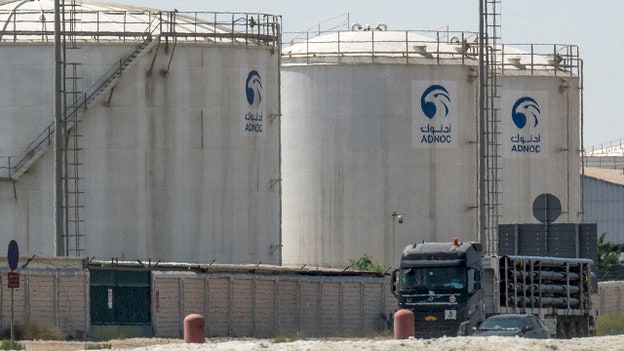
The United Arab Emirates’ Ministry of Foreign Affairs said Saturday that a ship affiliated with the Abu Dhabi National Oil Company was targeted by Iran as it traveled through the Strait of Hormuz.
"The United Arab Emirates has strongly condemned and denounced the hostile Iranian attack involving a missile that targeted a carrier affiliated with ADNOC as it transited through the Strait of Hormuz, with no injuries reported,” the ministry said.
“The Ministry emphasized that targeting commercial shipping and using the Strait of Hormuz as a tool of economic coercion or blackmail represents acts of piracy by Iran’s Revolutionary Guard Corps, and constitutes a direct threat to the stability of the region, its peoples, and global energy security,” it added.
ADNOC said Friday that 15 of its ships have been attacked by missiles and drones while traveling through the Strait of Hormuz since the conflict with Iran began in late February, according to Reuters.
Three of those ships reportedly were attacked this week, and overall, the attacks have left one crew member dead and 20 injured.
Iranian general vows US must accept Tehran's conditions to reopen Strait of Hormuz: report
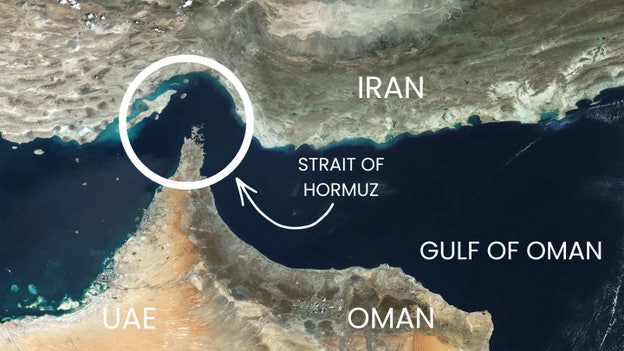
Iranian Gen. Hossein Mohebbi, a spokesperson for Iran’s Islamic Revolution Guards Corps, claimed Saturday that the Strait of Hormuz will only reopen if the United States accepts Iran’s terms.
“Whenever the American side accepts the conditions of the Islamic Republic of Iran and abandons its interventionist approach, the conditions for reopening the Strait of Hormuz will certainly be provided,” Mohebbi was quoted as saying by Iran’s state-run Tasnim News Agency.
Mohebbi reportedly added that the Strait of Hormuz is not just an economic passage, it’s a symbol of Iran’s geopolitical power.
He also said the reopening is “completely independent” of ongoing talks between Iran and Oman, according to the Tasnim News Agency.
Israel, Lebanon agree on countries that could send troops to verify Hezbollah disarmament: report
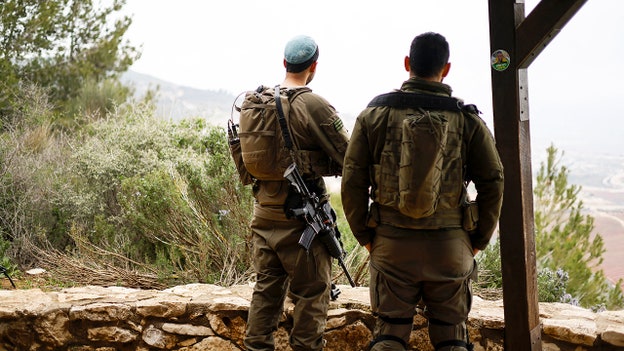
Israel and Lebanon have reached an agreement on a shortlist of countries that could send troops to the Middle East to verify the disarmament of the terrorist group Hezbollah under a U.S.-mediated peace framework, a report said.
The list was generated during meetings between both sides at the U.S. embassy in Rome this week, where the latest negotiations were held on how to implement the June 26 deal that ties Israel’s withdrawal of troops from southern Lebanon to the disarmament of Hezbollah, which would be overseen by a third party, according to Reuters.
"We have reached a short list of countries. We decided which parties were impossible for each and set the potential actors," a Lebanese official told Reuters. "The Americans will now decide, and could pick more than one country."
Israeli Prime Minister Benjamin Netanyahu and Israel Defense Minister Israel Katz said in a joint statement in late July that “The IDF will remain in the security zone in southern Lebanon and will continue to destroy any terror infrastructure in order to prevent any attempt by Hezbollah to rebuild its capabilities.”
Former Defense Secretary Esper warns Iran-Oman Hormuz arrangement could be ‘very bad outcome’ for US
Former Defense Secretary Mark Esper warned Friday that a potential arrangement giving Iran and Oman roles in administering traffic through the Strait of Hormuz could be a “very bad outcome” for the United States.
Speaking on Fox News' “America Reports,” Esper said reports indicate Tehran and Muscat are nearing an agreement that could divide passage through the strategic waterway, with a northern route into the Persian Gulf and a southern route along Oman’s coast.
“They may or may not charge a fee, but they would administer and control it in one way, shape, or form, which would be a very bad outcome for us,” Esper said.
Esper noted that President Donald Trump has said he is personally involved in negotiations, while Iranian officials have publicly disputed direct U.S. participation.
“I think what we’re waiting for now is to find out, is there a deal between Oman and Iran, and to what degree did the United States play a role or has a role in it,” Esper said.
Yesterday's Fox News Digital live blog offers additional coverage of the conflict with Iran.
Live Coverage begins here