Trump ‘low keying it’ on Iran tensions as Tehran feels economic squeeze: ‘They have no money’
President Donald Trump says the US is ‘only semi-negotiating’ with Iran, while Iranian Foreign Minister Abbas Araghchi says talks with Oman over new maritime routes through the Strait of Hormuz are in the ‘final stages’
Coverage for this event has ended.
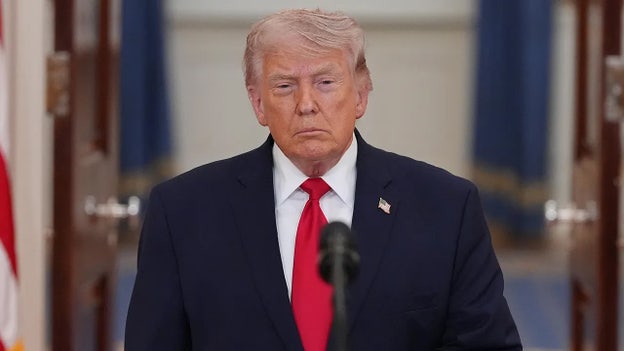
President Donald Trump / Alex Brandon-Pool / Getty Images
President Donald Trump is signaling he is in no rush to launch new military strikes against Iran, insisting instead that growing economic pressure will push Tehran to negotiate, Axios reported Sunday.
“We are low keying it,” Trump said in an interview with the outlet. “We are only semi-negotiating with them. We are just watching Iran with its huge inflation and the fact they have no money.”
Trump’s remarks came Sunday as Tehran said that a deal with Oman defining new shipping lanes in the Strait of Hormuz was in its final stages but reiterated that the waterway would only reopen once the United States met other conditions, Reuters reported.
Trump also told Axios Iran was “in very bad shape” economically and lacked money to pay its troops, arguing that the U.S. naval blockade had further intensified Tehran’s economic crisis.
“It will work out. It always works out. It’s like a chess game,” Trump said.
Meanwhile, Iran’s demands to reopen the Strait of Hormuz have been sent to the United States, Foreign Minister Abbas Araghchi said Sunday, according to state news agency IRNA.
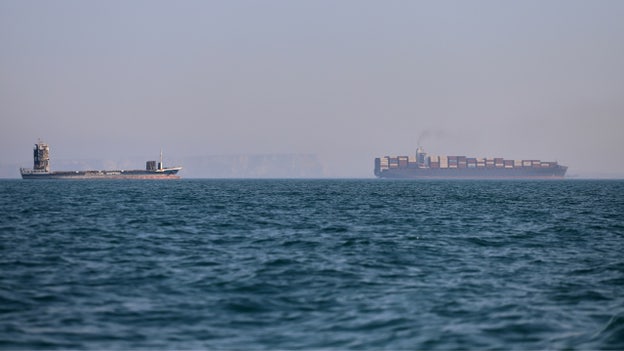
Hormuz / Amirhosein Khorgooi / ISNA via AP
Oil prices climbed in early trading Monday as uncertainty swirled over when the Strait of Hormuz could fully reopen, according to Reuters.
Brent crude futures rose $1.20, or 1.4%, to $84.79 a barrel by 10:06 p.m. GMT. U.S. West Texas Intermediate crude gained $1.12, or 1.1%, to $79.29 a barrel, the outlet said.
The gains came after Iran said an agreement with Oman outlining new shipping lanes through the waterway was in its final stages.
Tehran also indicated that the United States would still need to meet additional conditions before the strait could fully reopen, with President Donald Trump citing Washington's “low-key” position: “We are only semi-negotiating with them," he told Axios on Sunday.
Signing off on an Iran deal without securing a nuclear agreement could deal a major blow to President Donald Trump’s legacy and his party’s midterm prospects, combat veteran and Fox News host Johnny “Joey” Jones warned Sunday.
Jones spoke amid reports that Trump is considering an off-ramp from the conflict with Iran without securing a nuclear agreement.
“It may be a good off-ramp, but it'd be absolutely detrimental for his legacy and for the midterms and for anything they want to get done with military funding,” Jones said on “The Big Weekend Show.”
“It'd be held over their heads. I don't know if it's viable. I mean, what do you do when you do that? You try to sell that the nuclear threat is already taken care of, and then that just becomes a big circle. Back to then, why did we start Epic Fury to begin with?”
“I think it would be difficult, but I think that he's wise to look for an off-ramp here,” co-host Tomi Lahren said.
President Donald Trump / Kenny Holston / The New York Times via AP
The hosts spoke after The Wall Street Journal reported Sunday that Trump is focused on reopening the Strait of Hormuz and has been “laying the groundwork to declare victory” on Iran, potentially without securing a nuclear deal.
Citing officials, the outlet reported that Trump told advisers he believes Iran would struggle to rebuild its nuclear program after the U.S. bombed the country’s three main nuclear sites.
Trump has also argued that U.S. intelligence would detect any attempt by Tehran to build a nuclear bomb and has been “floating the idea … that he’s willing to walk away without a nuclear deal,” the report said.
U.S. forces have redirected 55 commercial ships and disabled two in the Strait of Hormuz during the blockade against Iran, CENTCOM said Sunday.
“U.S. Sailors stand watch on the bridge of USS Ross (DDG 71),” the command said in a post shared on X.
“Ross is one of over 20 U.S. warships deployed to the Middle East supporting military missions, including strict enforcement of the U.S. blockade against Iran.”
CENTCOM also confirmed that as of Aug. 9, it had redirected 55 commercial vessels, disabled two and boarded two to ensure compliance.
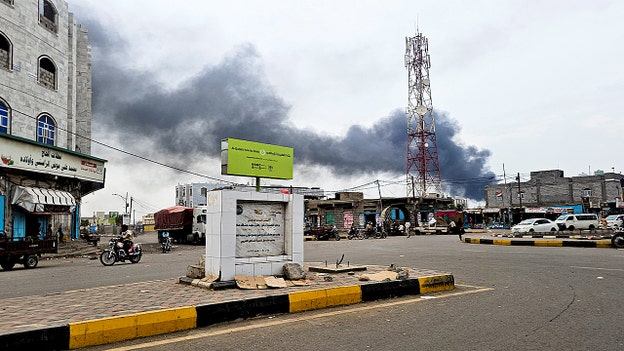
Houthi attack / Red Sea port city of Mocha, Yemen, August 9, 2026. REUTERS / Stringer
The Houthis in Yemen have restarted their attacks on the Red Sea port city of Mocha, a Yemeni military spokesperson told Reuters on Sunday.
Footage shown by Houthi-affiliated Al Masirah TV also showed the launch of several ballistic missiles and drones, which Houthi military spokesperson Yahya Saree said targeted Saudi troop concentrations and weapons depots, the outlet said.
The Yemeni military also said on X that air defenses were intercepting drones, adding that Houthi attacks targeted residential areas.
"A new wave of Iranian-backed Houthis militia’s terrorist attack featuring ballistic missiles & drones targets residential neighborhoods in Mukha, while air defense systems managed to intercept a number of drones," the military said.
According to The Jerusalem Post, the militant group had attacked "mobilization centers, weapons depots, and operations rooms" in the city.
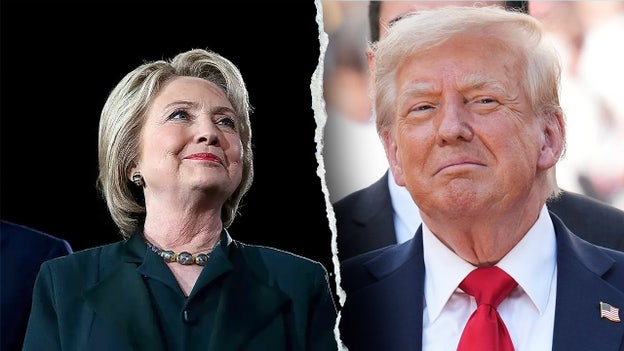
Hilary Clinton / Donald Trump / Justin Sullivan / Getty Images and AP Photo / Jacquelyn Martin
President Donald Trump on Sunday showcased rare support from his longtime political rival Hillary Clinton for his Gaza peace plan, sharing excerpts from an article in which she argued that the international community has no credible alternative.
“The world may not like Trump’s Gaza plan — but there is no alternative,” read the headline of the article shared by Trump on Truth Social. “If even I, an implacable opponent of the president, can accept this as the best option, then surely others can too?” she wrote.
The former U.S. secretary of state urged the international community to support Trump’s plan for Gaza, warning that rejecting the administration’s 20-point framework and Board of Peace initiative without a viable alternative risks creating dangerous “diplomatic paralysis.”
Trump’s plan sets out a phased framework for ending the Gaza conflict, including a cease-fire and eventual reconstruction.
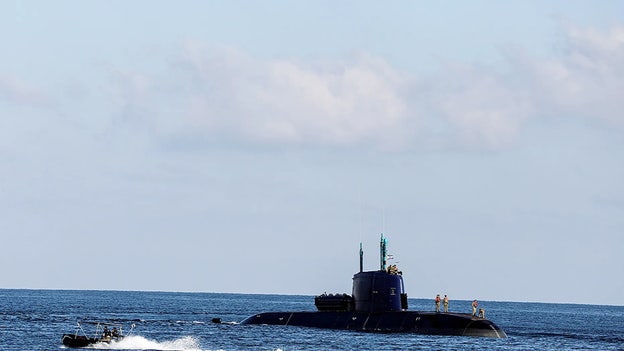
Israeli military submarine near the coast of Haifa at the Mediterranean sea (REUTERS/Nir Elias)
Israel has taken delivery of its most advanced and expensive submarine from Germany, expanding its fleet amid escalating regional threats, according to reports.
The handover of the INS Drakon is expected to significantly bolster Israel's underwater strike and reconnaissance capabilities, The Algemeiner reported. The warship had been scheduled to be delivered in 2025.
A statement following the submarine's naming ceremony in Kiel in 2024 said the INS Drakon is of the Dolphin AIP class and "equipped with unique systems, including groundbreaking technologies that expand the range of the IDF's capabilities across various arenas."
Built specifically for the Israeli Navy by Germany's ThyssenKrupp Marine Systems (TKMS), the submarine is said to provide a vital sea-based layer of "deterrence and retribution," amid the war with Iran, defense analysts say.
Ehud Eilam, an Israeli national security expert and former researcher for Israel’s Ministry of Defense, told Fox News Digital that maintaining a continuous undersea presence is paramount for the nation's national survival.
"Some of them would have to be at sea, on high alert, around the clock, if Iran suddenly attacked Israel in such a way that would cripple the IDF, including its strategic capabilities," Eilam said.
"In such a drastic scenario, Israel’s submarine/s that would be at sea could respond," he added.
"Israel’s other submarines might be in Haifa harbor at the time. They might be attacked and unable to operate. This demonstrates how important it is to always have submarines at sea."
TKMS reportedly handed over the INS Drakon —the sixth Dolphin-class vessel and third modified Dolphin II-class submarine in Israel's fleet—at its shipyard in Kiel, Germany, in late July.
This is an excerpt of a report by Fox News Digital's Emma Bussey.
Pressure on Tehran from the U.S. blockade of Iranian ports has emerged as the most effective diplomatic tool of the conflict so far, a national security analyst said Sunday.
The assessment came as Washington continues to squeeze Iran’s ability to export oil while diplomatic efforts focus on reopening the Strait of Hormuz.
"It's the U.S. Navy and the rest of the Joint Force that's in control there," national security analyst Rebecca Grant told "Fox News Live."
"The blockade that has gone back on is really squeezing Iran, and you can see that in their list of outrageous and unacceptable demands," Grant said, adding that the U.S. Navy could maintain the blockade as long as necessary.
"Two aircraft carriers there, the USS Boxer amphibious ship, all kinds of land-based air, and this is the squeeze that is going to make the difference," she said.
"I think there's no question that we have to have military options ready to go. But what the past several weeks have shown us is that Iran can't take the squeeze of not being able to sell oil.
"Their primary terminal at Kharg Island that we all know so well, where they load 90% of their oil. That is basically dark at this point.
"It is this pressure of the blockade that has been the single most effective diplomatic measure in this conflict so far, and that's why it's still there," she said.
Grant's remarks came as Vice President JD Vance told Fox News that Washington was "just going to keep on applying the pressure that we can apply and getting as much oil and gas out of the Middle East."
"We're applying a whole host of tools — diplomatic, economic, military tools — to ensure that we get the best outcome for the American people," Vance added.
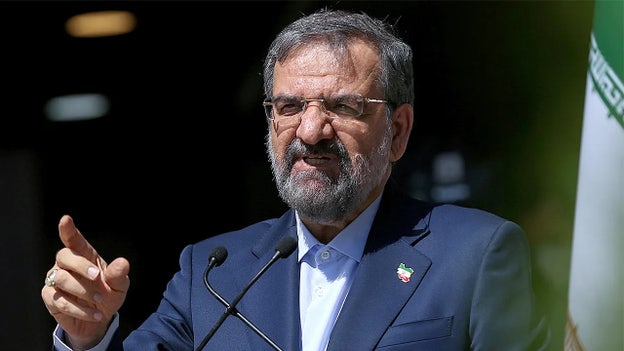
Mohsen Rezaei / Ayoub Ghaderi / YJC / WANA (West Asia News Agency) via REUTERS
Former Revolutionary Guard commander Mohsen Rezaei — wanted internationally for a deadly 1994 antisemitic bombing — was appointed Sunday to Iran’s top security body, regional analysts warned.
The appointment was announced Sunday in a post on X by Iran's Supreme Leader, Mojtaba Khamenei.
Rezaei, who led the IRGC for 16 years, is subject to an active Interpol red notice over his alleged role in the 1994 bombing of a Jewish community center in Argentina.
“The Supreme National Security Council is where decisions are made about the nuclear program, the missile force, and the militia network Iran runs across the Middle East, from Hezbollah in Lebanon to the groups that have attacked American forces in Iraq and Syria,” Dr. Omar Mohammed, director of the Antisemitism Research Initiative at George Washington University’s Program on Extremism, told Fox News Digital.
“Whoever holds those seats shapes every decision that matters.”
Rezaei has been wanted by Argentina since Interpol approved red notices for him and five others in 2007 in connection with the suicide bombing of the AMIA Jewish community center in Buenos Aires.
“Eighty-five people were killed in the deadliest antisemitic attack in the Western Hemisphere’s modern history and the deadliest terror attack in the hemisphere before 9/11,” Mohammed said. “He has never faced trial.”
Mohammed added that the promotion highlights the regime’s priorities.
“This week, the new Supreme Leader made him his personal representative on Iran’s most powerful security body,” Mohammed said.
“In most countries, an Interpol Red Notice ends a career. In the Islamic Republic, it is a credential.”
Iran claimed Sunday that Supreme Leader Ayatollah Mojtaba Khamenei met with Iranian President Masoud Pezeshkian to discuss the country's economy, military and ongoing war, as questions persist over Khamenei's prolonged absence from public view.
Khamenei met and spoke with Pezeshkian as the president began the third year of his term, according to a post to an X account associated with the elusive supreme leader.
“In this meeting, the country’s issues, meeting the people’s basic needs in particular, the current situation of the Third Imposed War with a look to the future, developments in the military, and measures for securing resources and managing spending in terms of ‘domestic currency, foreign currency, and energy’ were discussed,” the post read.
Khamenei and Pezeshkian also exchanged views on Iran's economic relations with international partners, according to the post.
Iran's claim comes as scrutiny continues over Khamenei's whereabouts and condition. The supreme leader has not been seen publicly since being appointed to the position in March.
Earlier Sunday, an Iranian official said footage showing Khamenei in public and meeting with armed forces commanders would be released in the future, according to Reuters.
Separately, Iran's semiofficial Mehr news agency released undated footage Sunday apparently showing Khamenei, The Associated Press reported. The AP said it could not independently verify when or where that video was recorded.
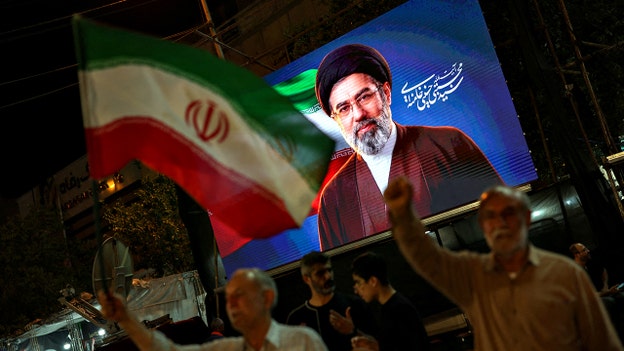
People shout slogans as an image of Iran's Supreme Leader Ayatollah Mojtaba Khamenei is displayed on a screen, as preparations are underway ahead of a farewell ceremony for Iran's late Supreme Leader Ayatollah Ali Khamenei, during a rally at Revolution Square in Tehran, Iran, July 2, 2026. (Reuters/Murad Sezer)
An Iranian official said footage of Supreme Leader Ayatollah Mojtaba Khamenei appearing in public and meeting with military commanders will be released, according to a report, as separate undated video apparently showing the elusive leader surfaced Sunday.
Basij Organization deputy Qasem Qoraishi said footage showing Khamenei “among the people and out in streets” and in meetings with armed forces commanders would be released in the future, Reuters reported, citing Iran's judiciary-linked Mizan news outlet.
The report appeared aimed at quashing speculation about Khamenei's health, according to Reuters. Khamenei, who was appointed supreme leader in March, has not been seen publicly since taking the position.
Separately, Iran's semiofficial Mehr news agency shared an undated video Sunday apparently showing Khamenei, according to The Associated Press.
The AP said it could not independently verify when or where the footage was recorded. Mehr previously shared a video in March that appeared to have been recorded at the same event, apparently a jurisprudence class.
It remains unclear why Mehr released the footage Sunday or whether it is connected to the video Qoraishi said would be released.
Khamenei reportedly sustained serious injuries during the opening stages of the U.S.-Iran war. Senior Iranian sources have said he suffered facial disfigurement and other injuries in the Feb. 28 strike that killed his father, Ayatollah Ali Khamenei, Reuters reported.
The AP reported that Khamenei is understood to have stopped publicly teaching in 2024.
Iran-backed Houthi rebels killed at least seven people and injured more than a dozen others in an attack Sunday on the crucial Red Sea port of Mokha, Yemen's National Resistance Forces said.
The group, which is allied with Yemen's internationally recognized government, said four troops and three civilians were killed, while 15 civilians were injured in the attack on the Red Sea port.
Fayed al-Noman, an official with Yemen's information ministry, said the Houthis fired missiles and drones at Mokha, severely damaging buildings and a pier as well as commercial goods and food supplies stored at the facility.
The Houthis later claimed responsibility, saying they launched “a large number of ballistic missiles and drones” targeting military forces and warehouses in the area.
Mokha is one of the main ports controlled by Yemen's internationally recognized government and has been renovated in recent years to accommodate shipping that avoids Houthi-held ports in Hodeida.
The deadly attack came as the Houthis also claimed a drone strike on a Saudi Aramco refinery in Jazan, Saudi Arabia. Houthi military spokesperson Yahya Saree said that attack was in response to Saudi drones allegedly breaching Yemeni airspace over Hajjah and Saada.
Saudi Arabia's Energy Ministry reported a fire at the Aramco facility early Sunday but did not identify its cause. The ministry said the fire was extinguished and there were no casualties.
The Associated Press contributed to this report.
Israel is rejecting a 15-point Gaza proposal put forward by the Board of Peace, Israeli Prime Minister Benjamin Netanyahu said Sunday, declaring that Israeli forces will not withdraw from the enclave until Hamas fully gives up its weapons.
"Israel rejects the 15-point Gaza document proposed by the Board of Peace," Netanyahu said at Sunday's Cabinet meeting. "The IDF will not carry out any withdrawal until Hamas is genuinely disarmed."
Israel remains in discussions with the United States over the disarmament of Hamas but insisted any agreement would have to result in the terror group surrendering its entire arsenal, according to Netanyahu.
"It needs to be genuine disarmament, not fictitious disarmament," Netanyahu said.
"When I say Hamas is disarmed, that means the heavy weapons, the less heavy weapons, all the weapons," he added.
Hamas remains committed to a Gaza roadmap agreed with mediators and representatives of the Board of Peace in Cairo 10 days ago, senior Hamas official Basem Naim told Reuters.
Hamas expects mediators and the United States to "press Netanyahu and his government to adhere to the roadmap," he added.
This is an excerpt from an article by Fox News Digital's Eric Mack.
U.S. Ambassador to Israel Mike Huckabee on Sunday appeared on “Fox & Friends Weekend” was asked about the Pentagon’s expected upcoming test of the Golden Dome defense system while discussing Iran's growing ballistic missile capabilities.
Iran’s ballistic missiles can reach ranges of 4,100 kilometers, which Huckabee said puts putting cities across most of Europe — such as London, Paris, Berlin and Rome — in Tehran’s sights.
“How long will it be before they can launch one toward the United States? That’s why we have to take them seriously,” Huckabee said.
Huckabee was then asked about the Pentagon’s expected test of the Golden Dome, the planned layered missile shield intended to detect, track and intercept ballistic missiles, cruise missiles, hypersonic weapons and drones before they can strike the United States.
“The U.S. recognizes that the ultimate long-term, futuristic threat that we face is in perhaps the types of missiles that I’ve been running from ever since I’ve been [in Israel] — been in the shelter more times than I’d like to tell you, I’ve heard the explosion overhead. But it’s a successful program over here,” Huckabee said, referring to Israel’s defense systems.
In just over six weeks, Huckabee said that the Israeli defense systems intercepted 92% of incoming ballistic missiles, while those that penetrated did “minimal damage.”
“The United States, under President Trump, is quite smart in recognizing we’ve got folks pointing weapons at us, and we need to be in a defensive posture where they can’t be effective in it,” he said.
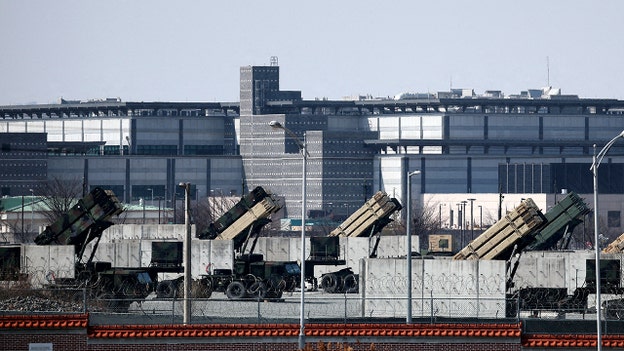
U.S. Patriot missile defense systems at a U.S army base in Pyeongtaek, South Korea, March 10, 2026. (REUTERS/Kim Hong-Ji/File Photo)
The Pentagon is pressing U.S. defense companies to accelerate weapons production as the military works to replenish munitions depleted during the ongoing war with Iran, The Associated Press reported Saturday.
Pentagon spokesman Sean Parnell told the AP that the Defense Department is focused on increasing munitions acquisitions to provide “the weapons our warfighters need at the pace the threat demands.”
Parnell confirmed that the Pentagon has taken steps over the past week to significantly accelerate the process, though he said the effort is part of a broader military modernization push that began before the five-month conflict with Iran.
Deputy Defense Secretary Steve Feinberg also sent a memo to defense industry leaders Wednesday giving them no more than 21 days to submit proposals for significantly faster delivery schedules or increased production of critical weapons, the AP reported, citing a memo obtained by The Washington Post.
“Years-long development cycles are not acceptable,” Feinberg wrote, according to the report. “We must dramatically accelerate our program schedules and expand our production capacity now.”
The push comes amid heightened scrutiny of U.S. weapons stockpiles following months of fighting with Iran. Recent combat has further depleted inventories of advanced missile interceptors, potentially increasing risks to U.S. forces if hostilities resume, according to an analysis cited by the AP.
President Donald Trump pushed back Thursday against reports that some U.S. weapons inventories have been severely depleted, declaring that the country has “massive amounts” of munitions and that additional weapons are being manufactured.
The Pentagon has similarly maintained that the U.S. military has the arsenal necessary to protect American forces and interests and conduct operations around the world. Exact figures for U.S. weapons stockpiles remain classified.
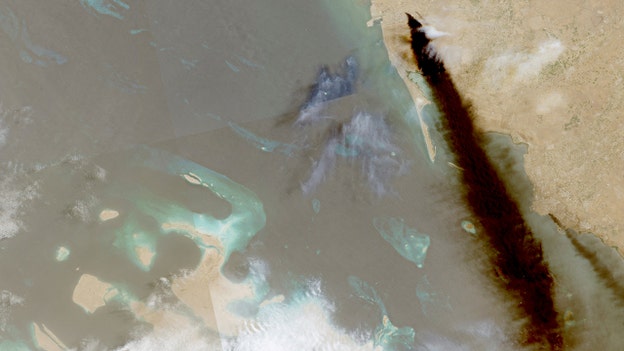
A composite satellite image shows trail of smoke rising from an oil facility, in Jizan, Jazan province, Saudi Arabia, July 26, 2026. (European Union/Copernicus Sentinel-2/Handout via Reuters, File)
Iran-backed Houthi rebels in Yemen said they attacked an oil facility in southwestern Saudi Arabia on Sunday, while a Yemeni government official accused the group of launching a separate assault on a crucial Red Sea port.
Houthi military spokesperson Yahya Saree said the group targeted a Saudi Aramco refinery in Jazan with a drone. He said the strike was carried out in response to Saudi drones allegedly breaching Yemeni airspace over the provinces of Hajjah and Saada.
Saudi Arabia's Energy Ministry reported a fire early Sunday at a facility belonging to the Aramco refinery but did not identify its cause. The ministry said the fire was extinguished and there were no casualties.
Separately, Fayed al-Noman, an official with Yemen's internationally recognized government, said the Houthis launched missiles and drones at the port of Mocha on the Red Sea. The Houthis did not immediately comment on that alleged attack.
Mocha is one of the main ports controlled by Yemen's internationally recognized government and has been renovated in recent years to accommodate shipping that avoids Houthi-held ports in Hodeida.
The latest attacks come amid a series of Houthi missile and drone strikes targeting Saudi Arabia and shipping in the Red Sea, raising concerns that the escalation could reignite major fighting in Yemen more than four years after a 2022 truce largely halted the country's civil war.
The Associated Press contributed to this report.
Iran laid out six demands Saturday for what it called U.S. "behavior correction" before the Strait of Hormuz can reopen, according to the country's state-run IRNA news agency.
Mohammad Baqer Zulqader, secretary of Iran's Supreme National Security Council, said “until America corrects its behavior, The Strait of Hormuz will not open.”
Zulqader said the U.S. must stop threatening Iran and insulting what he described as the country's sanctities, end military action against Iran and its allies in Lebanon, the Palestinian territories, Yemen and Iraq, and lift the naval blockade.
His remaining demands call for U.S. sea and air forces to withdraw from Iran, compensation for damages from two wars, the removal of sanctions against Iran and the unconditional release of frozen Iranian assets.
The demands come as negotiations over reopening the Strait of Hormuz remain ongoing. Vice President JD Vance told Fox News earlier Saturday that Iranian officials have told the U.S. they have no plans to toll the critical waterway.
Zulqader also said the Supreme National Security Council would maintain its position in both military and diplomatic talks, according to IRNA.
Live Coverage begins here