Iran attacks another commercial ship in Strait of Hormuz as Trump sends new warship to Middle East
A second commercial oil tanker was struck in the Strait of Hormuz on Wednesday amid talks between Oman and Iran to impose a toll in the crucial waterway.
Coverage for this event has ended.

Barron Trump / AP Photo / Evan Vucci, File
Reports of a potential plot to assassinate President Donald Trump’s youngest son, Barron Trump, were dismissed as a lie on Thursday by Iran’s top security official.
Mohsen Rezaei, secretary of Iran’s Supreme National Security Council, made the comments during an interview broadcast by Lebanon’s Al-Manar TV, Iran International reported.
Rezaei’s remarks followed a video aired by Iranian state television that discussed an alleged plot against Barron Trump, 20. The video also said he was being monitored and that a $10 million bounty had been placed on his life.
The Secret Service said Tuesday it was aware of the video and was investigating anything that could be perceived as a threat against people under its protection, Reuters reported.
Click here to follow the latest updates in the conflict against Iran.
Adm. Brad Cooper, commander of U.S. Central Command, shared a video update Thursday on military operations in the Middle East and praised thousands of U.S. troops, including “dedicated sailors,” operating across the region for doing “outstanding work.”
Cooper also confirmed that sea mines had been cleared from the Strait of Hormuz's international shipping lanes, “thanks to the incredible work of the U.S. military.”
Cooper displayed a nautical chart of the shipping lanes, showing how vessels are safely separated in the waterway, before saying the international shipping lanes are open and momentum is building.
U.S. forces have assisted nearly 1,500 commercial vessels transiting the strait, providing coordinated protection to vessels carrying nearly 750 million barrels of crude oil destined for global energy markets, he said.
“We've asked them to stay ready, and that's exactly what they are doing. I just could not be prouder of their efforts, and I know that the American people share that same pride,” he said.
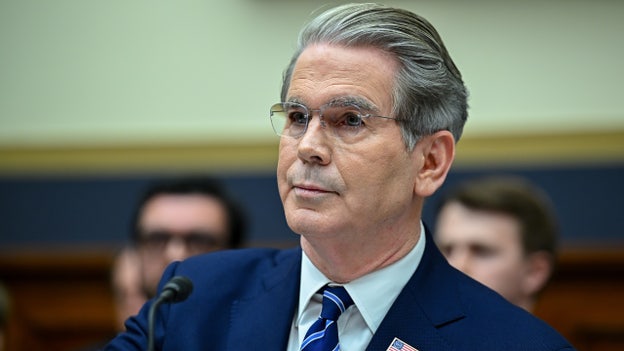
Scott Bessent / Graeme Sloan / Bloomberg / Getty Images
Washington will press G20 nations next week to help cut off Iran’s economic lifelines as it ramps up pressure on Tehran, a senior Treasury official said Thursday.
Treasury Secretary Scott Bessent will host finance ministers and central bank governors from the world’s major economies in Asheville, North Carolina, on Monday and Tuesday.
The U.S. and its G20 partners will also discuss measures to boost economic growth, reduce global imbalances and address sovereign debt challenges, officials told Reuters.
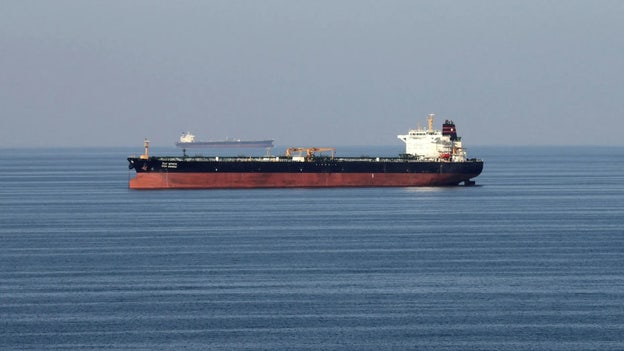
The U.S. may use prize courts to formally seize captured Iranian vessels, with their oil or other sold cargo helping to offset the cost of the war. (Reuters/Hamad I Mohammed)
The Department of Justice is planning to reactivate maritime prize courts in an effort to make it easier to claim Iranian oil tankers as war prizes to help offset the cost of the war, according to a new report.
Utilizing prize courts would give the government a clearer path to legally claiming ships seized by the U.S. Navy in the course of its enforcement of a naval blockade of Iran as the government's property.
That process would allow the government to sell oil or other cargo from the ships that violated the blockade, and the proceeds would be provided to the Treasury Department.
The plan was first reported by Bloomberg Law, citing three people familiar with the matter.
"Our national security interests may require the United States military to seize vessels or cargo supporting the enemy during military conflict," U.S. Attorney for the Southern District of Texas Aaron Reitz said in a statement provided to FOX Business by the DOJ.
"If that happens, our federal courts must be ready to adjudicate the disposition of these captured vessels and cargo."Prize law is an ancient body of maritime law — already codified in statute but which we are now reviving — that sets the rules for how seized maritime property is condemned, returned or disposed of," Reitz continued.
If the plan is put into effect, it will likely draw legal challenges from shipping companies that own vessels seized in the blockade, and the Bloomberg report noted that victims of Iranian terrorism may also pursue claims against seized assets.
This is an excerpt from a report by FOX Business' Eric Revell
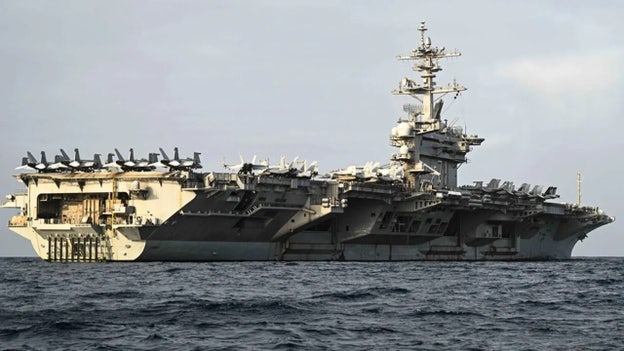
USS Theodore Roosevelt Carrier Strike Group / U.S. Navy
The USS Theodore Roosevelt Carrier Strike Group is expected to deploy from San Diego to the Middle East in the coming weeks, relieving the Japan-based USS George Washington, the U.S. Naval Institute reported Thursday.
The new deployment is expected to last more than seven months, according to USNI. The George Washington entered the U.S. 5th Fleet area last week after deploying from Japan to replace the USS Abraham Lincoln.
The Lincoln left the Middle East on Aug. 22 after nearly seven months in the region. It is scheduled to make a port call in Thailand next week, providing rest and recuperation for its roughly 5,000 sailors and Marines before continuing to San Diego.
Since the U.S.-Israel war with Iran began Feb. 28, the United States has maintained an aircraft carrier presence in the Arabian Sea, launching strikes over Iran and helping enforce the blockade of Iranian ports.
Iranian Parliament Speaker Mohammad Bagher Ghalibaf fired back at Treasury Secretary Scott Bessent on Thursday after Bessent accused Tehran of squandering money abroad while ordinary Iranians struggle to afford basic necessities.
“Instead of funneling billions to its terrorist proxy, Israel, and 750 bases, this failing empire could spend that cash on its own people,” Ghalibaf said in a post on X.
“Scotty, man, your credibility is on the line. Do something.”
Ghalibaf was responding to Bessent’s X post earlier Thursday urging Terhan to spend its resources on its people rather than its "terrorist proxies."
The Israel Defense Forces (IDF) said Thursday it struck two locations in Gaza, killing two Hamas commanders who allegedly were planning attacks against Israeli troops and civilians.
The IDF identified the commanders as Bilal Ibrahim Saleh Raqi'i, an anti-tank unit commander who was killed in the Al-Shati area of northern Gaza, and Azzam Rifaat Abd Abadala, an operative in Hamas' Khan Younis Brigade who was killed in southern Gaza.
The IDF said both men were working to carry out attacks while trying to rebuild Hamas' capabilities and in violation of the ceasefire agreement.
“IDF forces under Southern Command are deployed in the area in accordance with the agreement and will continue to operate to remove any immediate threat,” the IDF said in a post shared on X.
President Donald Trump said Thursday that he will not engage in talks with Iran as Washington pivots toward a new economic campaign aimed at crippling Tehran’s regime.
"We don't want to speak to them. We're not looking to meet or anything," Trump told reporters in the Oval Office, according to Reuters.
Just hours earlier, White House Press Secretary Karoline Leavitt said the administration will not resume negotiation talks until officials believe Iran is ready to honor its commitments.
“No negotiations are happening right now, and this will continue until the president feels that maybe they come to the table in a meaningful way. We have not seen that yet," she said on "Fox & Friends."
Last Monday, U.S. Treasury Secretary Scott Bessent announced the launch of Operation Economic Outcast, a campaign designed to squeeze Iran’s economy by isolating Tehran from its trading partners through secondary sanctions.
The operation will target the country’s oil industry by seizing what the administration described as illegal oil exports.
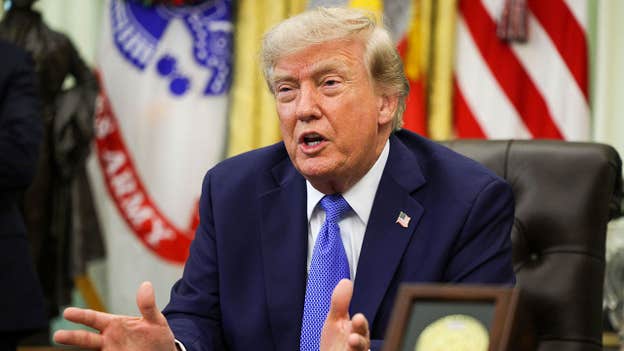
FILE - Gas price pressure builds as Trump prepares to meet with industry leaders.
President Donald Trump is expected to meet with American refiners and fuel retailers as economic pressure surrounding gas prices mounts amid the war with Iran.
The meeting will take place next week as rising energy costs and elevated pump prices intensify political pressure ahead of November’s congressional midterm elections, Reuters reported.
While crude oil prices slipped for a third straight day Thursday to hover around $82 a barrel, retail fuel prices have remained stubbornly high for American consumers
Retail fuel prices typically lag behind declines in crude oil prices as refiners and gas stations continue to face processing bottlenecks that can keep costs and refining margins elevated.
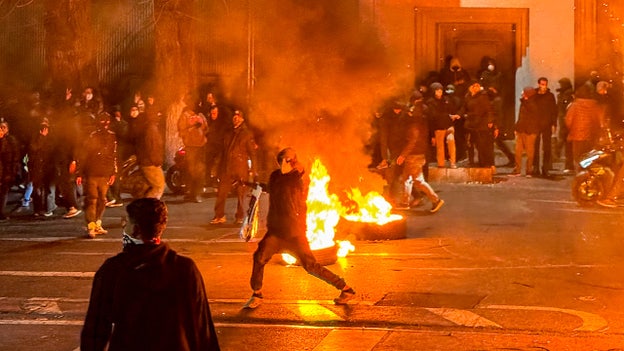
Iranians gather while blocking a street during a protest in Tehran, Iran on Jan. 9, 2026. (MAHSA / Middle East Images / AFP via Getty Images)
Iran has executed at least 500 people so far this year, according to the Iran Human Rights organization.
At least 16 women were among those executed, with 30-year-old Fatemeh Kamal-Zareh being the latest woman recorded by the human rights group.
Many of those executed were reportedly affiliated with anti-regime protests, underscoring the regime’s continued efforts to suppress dissent.
Since March 18, at least 31 protesters have been executed , including 29 in connection with protests that erupted last December and two linked to the "Woman, Life, Freedom" movement, the group said.
Another 13 political prisoners affiliated with banned protest groups were also put to death during the same period, according to the organization. Iran Human Rights described the toll as the highest number of political prisoner executions recorded in such a period in the past 30 years.
The organization added that at least a dozen people executed were charged with espionage or allegedly collaborated with foreign governments.
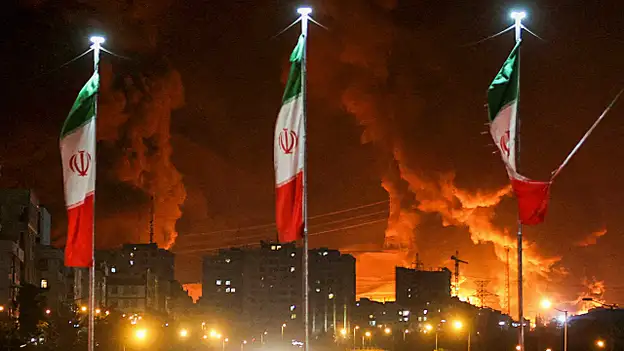
Iranian flags fly as fire and smoke from an Israeli attack on Sharan Oil depot rise, following Israeli strikes on Iran, in Tehran, Iran, June 15, 2025. Credit: Majid Asgaripour/WANA (West Asia News Agency) via Reuters
Iran is scrambling to fill the trade gaps left by increasing economic pressure from the U.S., according to a new report from the Associated Press (AP).
On Monday, U.S. Treasury Secretary Scott Bessent announced the start of Operation Economic Outcast, an American campaign to squeeze Iran financially by, among other things, threatening its trade partners with secondary sanctions.
“Those who stand with the United States will reap the rewards of our partnership,” Bessent said Monday while annoincing the plan.
“Those who tether themselves to the Iranian regime should expect to share in the isolation,” he added.
Even before Bessent's announcement, the United Arab Emirates (UAE) moved to suspend trade relations with the Islamic Republic, removing one of Iran's already dwindling trade options from its pool of partners.
In 2024, the bulk of Iran's trade dollars came from just four nations - the UAE, Turkey, Iraq and China, according to the Associated Press.
China is by far Iran's largest import market, particularly for oil, according to the Associated Press.
The Associated Press contributed to this post.
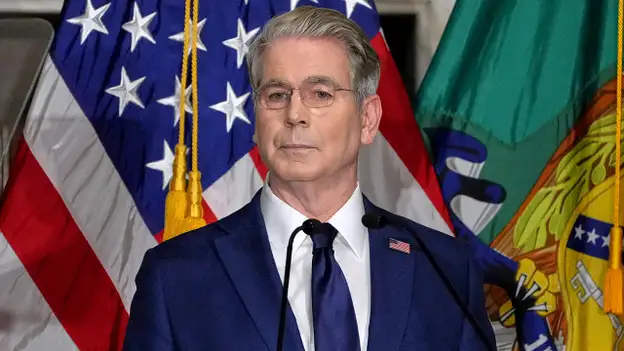
Treasury Secretary Scott Bessent speaks at a news conference, Monday, Aug. 24, 2026, at the Treasury Department in Washington. Credit: AP Photo/Julia Demaree Nikhinson
Treasury Secretary Scott Bessent will ask fellow global finance ministers to "sever the economic leakage" of their financial ties to Iran during the upcoming G20 Summit in Asheville, North Carolina, a source familiar with Bessent's thinking told Fox News.
Bessent plans on discussing specific Iran-related activity that Treasury has identified in certain nations and will make clear that the U.S. will be uncompromising in its goal to target any illicit source of revenue for Iran, the source said.
Bessent is scheduled to have nearly a dozen bilateral meetings with foreign finance ministers at the G20 summit -- which will run from Aug. 31 to Sep. 1 -- where he will raise the Iranian issue directly with them, according to the source.
The planned move follows Bessent's Monday announcement of Operation Economic Outcast, a strategy to shut off any illicit revenue schemes that could benefit Iran's Islamic Revolutionary Guard Corps (IRGC).
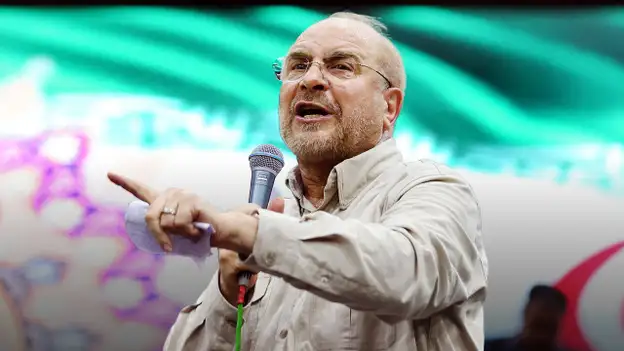
Mohammad Bagher Ghalibaf speaks during a campaign event in Tehran, Iran June 26, 2024.
Iranian Parliamentary Speaker Mohammad Ghalibaf said Iran will defeat the U.S. in an "an all-out economic war," in remarks to his government Thursday, according to Iranian state media outlet IRNA.
Ghalibaf, facing an American shift in focus from kinetic war to economic coercion, remained defiant.
He also urged citizens to remain faithful in Iran's government as the country's currency, the Iranian rial, sunk to an all-time low. One U.S. dollar is now worth over two million Iranian rials.
"He said supporting the government does not mean overlooking its shortcomings, but rather trusting it to better serve the people. He added that the government has taken effective measures to run the country despite the economic consequences of the war and is working to address its weaknesses," IRNA reported.
U.S. Treasury Secretary Scott Bessent announced Monday the start of Operation Economic Outcast, marking a shift in U.S. tactics to focus on alienating Iran economically through sanctions and the crippling of the country's oil export industry.
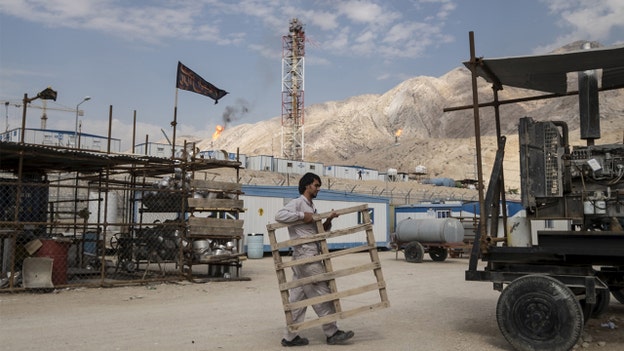
An Iranian labourer works at a unit of South Pars Gas field in Asalouyeh Seaport, north of Persian Gulf, Iran November 19, 2015. REUTERS/Raheb Homavandi/TIMA
Approximately 40% of the damaged South Pars gas field has been restored, Iran's Deputy Oil Minister Ahmed Zeraatkar said Thursday, Reuters reported, citing Fars news agency.
South Pars --- which was at one time responsible for up to 75% of Iran's domestic natural gas production, according to the Iranian Ministry of Petroleum --- was damaged during an Israeli airstrike in March.
South Pars, based in the Persian Gulf, is shared by Iran and Qatar and constitutes the world's largest offshore natural gas field.
Reuters contributed to this post.
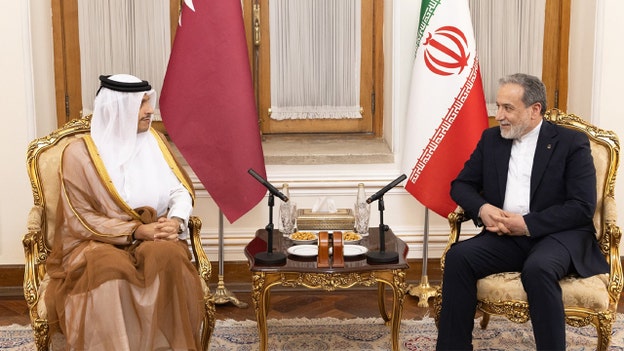
Qatar's Prime Minister Sheikh Mohammed bin Abdulrahman bin Jassim Al Thani meets with Iranian Foreign Minister Abbas Araghchi in Tehran, Iran on Thursday Aug. 27, 2026. Credit: Qatari Ministry of Foreign Affairs.
Iranian Foreign Minister Abbas Araghchi met with Qatari Prime Minister Sheikh Mohammed bin Abdulrahman bin Jassim Al Thani in Tehran on Thursday to discuss deescalating the U.S.-Iran war and reopening the Strait of Hormuz, according to the Qatari Ministry of Foreign Affairs.
"During the meeting, the latest developments in the regional situation were reviewed, along with the efforts being made to reduce escalation and create appropriate conditions for dialogue, contributing to the enhancement of regional security and stability," the Qatari ministry wrote on X.
"The meeting also addressed the ongoing discussions regarding the proposed phased framework, which includes the establishment of a temporary joint navigational corridor through the Strait of Hormuz, and agreement on the implementation of a joint project to clear the Strait of mines," the ministry wrote.
Iranian leaders have been negotiating with their Omani counterparts in recent days to reach an agreement on jointly managing traffic in the Strait of Hormuz and establishing the navigational corridor which Qatar's Foreign Ministry referred to.
The pair's meeting in Tehran, according to the ministry, also touched on ensuring regional stability.
"His Excellency the Prime Minister and Minister of Foreign Affairs emphasized, during the meeting, the necessity of respecting the sovereignty of neighboring countries and the freedom of navigation, affirming the importance of continuing diplomatic efforts to reduce escalation and address differences through dialogue," Qatar's Foreign Ministry wrote.
Hours before the meeting, the United Kingdom Maritime Trade Organization announced that an oil tanker had been struck with a projectile in the Strait of Hormuz, marking the second such attack on a commercial vessel this week.
Additionally, Iranian drone and missile strikes have targeted Qatar directly multiple times in the past year.
Outgoing White House press secretary Karoline Leavitt said that the U.S. military blockade in the Arabian Sea will continue during her final interview on the job Thursday with Fox & Friends.
"As commander in chief, he, of course, continues to retain all options on the table," she said, referring to President Donald Trump, "and the naval blockade continues to be in effect as well, which has proven hugely successful.
"The United States is essentially controlling the Strait of Hormuz, which remains open thanks to President Trump and the United States military," Leavitt said.
Leavitt also shed some light on her thinking about Operation Economic Outcast, a U.S. plan to choke off Iran's financial resources through sanctions and seizures of illegal oil exports which Treasury Scott Bessent announced on Monday.
"Right now we're focused on Operation Economic Outcast, which Secretary Bessent announced this week, crippling sanctions on the Iranian regime and their economy, which we already know is in freefall," she said.
"They are in a devastating place. Inflation is over 100%. They can't pay their police. They can't pay their military. They're in a very weakened position already. And now Secretary Bessent and the president are continuing to pull every economic lever," Leavitt continued.
"And of course, this follows Operation Epic Fury, which was hugely successful in diminishing the Iranian regime's military completely, wiping out their navy, their air force, and really crippling their military infrastructure," Leavitt said.
"What President Trump's number one goal has been, and will always be, is to ensure that Iran can never obtain a nuclear weapon, period. And so we've had Operation Epic Fury to destroy their military. Now we have Operation Economic Outcast to destroy their economy. No negotiations are happening right now, and this will continue until the president feels that maybe they come to the table in a meaningful way. We have not seen that yet," she said.
Trump announced Leavitt's departure on Aug. 12, writing in a post on Truth Social that she would be leaving her post to spend more time with her family.
Though her last day in the administration will be on Aug. 31, Leavitt maintained that she will continue to serve as an informal advisor to the president.
"I look forward to spending more time with them, but continuing to serve the president as a top advisor on the outside. I'm grateful to him that he still wants me to stick around, just in a way that I can spend more time with family," she told Fox & Friends
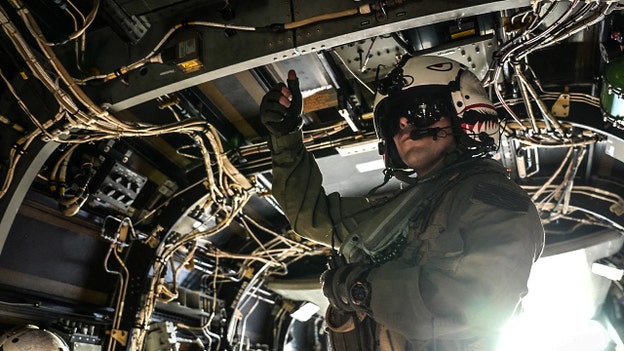
A US Navy aircrew member gives a thumbs-up inside an MV-22 Osprey aboard the aircraft carrier USS Theodore Roosevelt (CVN-71) while the ship is moored in Honolulu, Hawaii, during Exercise RIMPAC (Rim of the Pacific) 2026 on July 17, 2026. CreditL Michelle Bir / AFP via Getty Images
The USS Theodore Roosevelt will soon leave port in San Diego for the Middle East, naval officers told reporters Wednesday.
Families of the ship's crew and strike group are already preparing for a deployment that will last at least seven months as the Roosevelt prepares to relieve the USS George Washington, which entered U.S. 5th Fleet last week.
“They know they’re going to be there longer than seven months," Master Chief Petty Officer of the Navy John Perryman told U.S. Naval Institute News (USNI).
"Their [commanding officer] is giving them eight months to plan on," Perryman added.
“I would prefer, you know, seven-month deployments. I typically am not a big fan of extensions, and I push back hard on that. But the enemy gets a vote,” Chief of Naval Operations Adm. Daryl Caudle also said.
Since the Oct. 7, 2023 terrorist attack by Hamas on Israeli civilians, U.S. naval deployments have averaged 8.5 months, according to the USNI News carrier deployment database.
The USS Gerald R. Ford (CVN-78) broke a post-Cold War record in May when it returned home after a 326-day deployment. The USS Abraham Lincoln (CVN-72), currently on station in the Arabian Sea, is not far behind, as it has been deployed for 279 days.
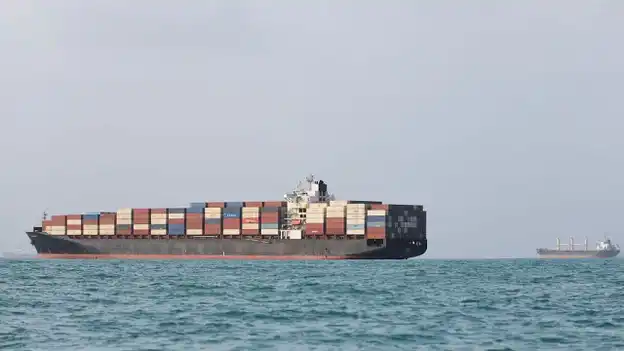
Ships are anchored in the Strait of Hormuz on August 10, 2026 off the coast of Bandar Abbas, Iran. In a recent statement, Iran's Supreme National Security Council said the vital waterway would not reopen until the United States "corrects its behavior," demanding that the U.S. end its war on Iran and compensate the country for war damage, among other conditions. Iran has largely halted vessel traffic through the strait with the threat of strikes; meanwhile, the U.S. has imposed a blockade on Iranian ports.
The United Kingdom Maritime Trade Organization (UKMTO) issued a warning Thursday after an oil tanker was struck by an unknown projectile in the Strait of Hormuz near Oman.
"Local authorities have reported a tanker has been hit by an unknown projectile causing fire to the vessel which has since been extinguished," the organization wrote in its warning.
"All crew are reported as safe and accounted for and there has been no report of environmental impact," the warning continued.
"Authorities are investigating. Vessels are advised to transit with caution and report any suspicious activity to UKMTO," the message concluded.
The tanker's incident was the second strike on a vessel in the Strait of Hormuz this week after another projectile struck a Liberian-flagged tanker's engine room on Monday.
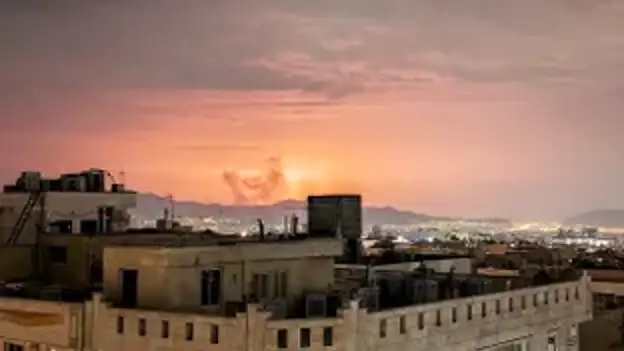
Plumes of smoke rise following reported explosions in Tehran, Iran, on March 2, 2026. (Sohrab/Middle East Images/AFP via Getty Images)
When President Donald Trump announced last week that he would subject Iran to unprecedented economic pressure, critics crowed that this shift was tantamount to an admission that Operation Epic Fury had failed. Yet such a policy is not only completely consistent with the president’s approach during his first term, but has a significantly greater chance of working because of Epic Fury’s actual military success.
Now, with Treasury Secretary Scott Bessent’s announcement of the so-called "D-Day" sanctions of Operation Economic Outcast, the pressure on Iran is about to become intolerable, giving Trump overwhelming leverage to force the nuclear deal he wants on Tehran.
Between 2019 and 2021, Trump directed the implementation of the Maximum Pressure campaign against Iran. The most aggressive sanctions program in modern history, it was designed to prevent Iran from getting a nuclear weapon by starving it of the economic resources to build one.
This is an excerpt from an opinion article by Victoria Coates.
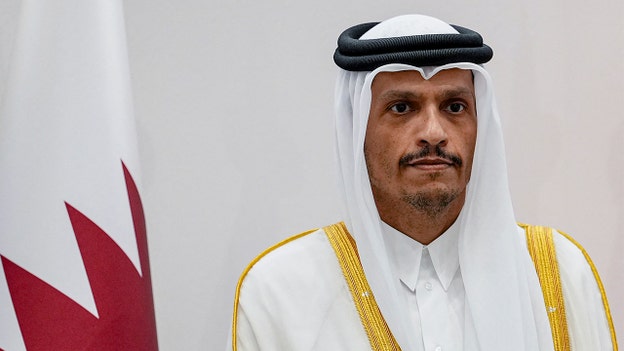
Qatar's Prime Minister and Foreign Minister Sheikh Mohammed bin Abdulrahman al-Thani attends a meeting with foreign ministers of the Gulf Cooperation Council Member States and the US Secretary of State in Manama on June 25, 2026. Credit: Eric Lee / POOL / AFP via Getty Images
Qatar's Prime Minister Sheikh Mohammed bin Abdulrahman bin Jassim Al Thani is expected to visit Tehran on Thursday on a diplomatic mission to "de-escalate" tensions between Iran and the U.S.
Doha announced Al Thani would be visiting Tehran in an effort to "discuss ways to de-escalate tensions and create the conditions conducive to dialogue.”
Qatar has served as a key backchannel between the U.S. and Iran throughout the war, playing a pivotal role in organizing the diplomatic process that led to the June memorandum of understanding (MOU) between the two nations, though the MOU has since expired.

Azerbaijan /
Azerbaijan is having to navigate a sensitive security environment, dominated by Iran to its south, The Jerusalem Post reported Wednesday.
Despite Baku’s official neutrality, the South Caucasus nation faces vulnerability as Tehran views it with suspicion over its reliance on Israeli weapons—a tension that escalated when Iranian drones struck the Nakhchivan exclave along their shared border in March.
One drone hit the passenger terminal at Nakhchivan International Airport, and another fell near a school in the nearby village of Shakarabad on March 5.
Simultaneously, Baku has to balance its ties with Turkey, economic relations with Russia, and ongoing peace efforts with Armenia, the outlet said.
International law and security researcher Farid Shukurlu told the Jerusalem Post the tension stems from Tehran rather than the public: “Even though Azerbaijan's position was formally neutrality, the country was still targeted by the IRGC in the Nakhchivan enclave.”
Shukurlu also said, “The military cooperation between Azerbaijan and Israel is at an all-time high.”
Live Coverage begins here