Trump says Iran war 'hopefully' nearing end as House Speaker vows Tehran won't get nuclear weapon
As the Iran war nears the seven month mark, President Donald Trump told reporters Wednesday that Tehran "wants to make a deal," while House Speaker Mike Johnson said the threat of an Iranian nuclear weapon has been "taken care of" and that Republicans should turn their attention to lowering gas prices ahead of the midterms.
Coverage for this event has ended.
Iran could escalate war with US or 'implode' under mounting pressure, expert says
Iran is under mounting military and economic pressure that could force the regime to escalate its conflict with the U.S. or eventually implode, regional experts said Thursday.
“Both scenarios are possible at the same time,” Middle East Institute adjunct fellow Nazee Moini said on “The Story.”
“The Islamic regime is under extreme pressure for all the good reasons, militarily, economically,” the expert added before stating that everything Washington has done so far has brought Iran one step closer to a state of affairs where they either have to “gamble for restriction, go all out militarily and try to raise the cost of U.S. or eventually implode.”
“Both scenarios are possible at the same time,” Moini added.
Her remarks came as President Donald Trump said Thursday that he hoped the war with Iran was nearing its end, while weighing a “big decision” over whether to escalate U.S. military action to “annihilate” the Iranian regime or pursue a path to end the conflict.
CENTCOM shares image of an F-16 flying over Middle East amid Iran conflict
U.S. Central Command (CENTCOM) released a photo of a U.S. Air Force F-16 fighter jet carrying out patrols in the Middle East, signaling continued military vigilance and readiness in the region.
Oil prices sink to one-week low as Saudi Arabia reroutes exports amid disruptions
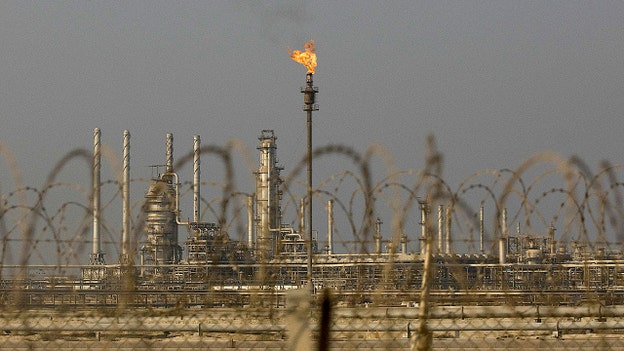
Crude prices dropped to a one-week low on Thursday after reports that Saudi Arabia was moving oil through Oman, easing fears of supply disruptions in the Middle East, Reuters reported.
U.S. Energy Secretary Chris Wright told CNBC on Tuesday that Saudi Arabia had taken “quick action” to increase oil exports through the Strait of Hormuz with help from the U.S. military and to offset the shutdown of its key pipeline.
Brent crude futures, the global benchmark, fell $1.01 to settle at $104.82 a barrel. U.S. West Texas Intermediate crude fell 52 cents to settle at $101.91 a barrel.
IDF takes out Oct. 7 Hamas Nukhba commander, naval commander accused of plotting new attacks
Two Hamas commanders, including a Nukhba terrorist involved in the Oct. 7 massacre, were killed in separate Israeli strikes this week after advancing new attacks against Israeli civilians and troops, the Israel Defense Forces (IDF) said Thursday.
Muhammad Jamal Ahmad Eid, a Nukhba commander in Hamas’ military wing who infiltrated Israel during the Oct. 7 terrorist attacks, was killed Wednesday in a strike in the Al-Bureij area.
Saleh Ziad Ibrahim Miqdad, a platoon commander in the naval array of Hamas’ military wing, was killed Tuesday in a separate strike in Gaza City, the military said.
“Recently, the terrorists advanced attacks against Israeli civilians & IDF troops, worked to increase the readiness of Hamas terrorists and to restore Hamas’ capabilities, in systematic violation of the ceasefire,” the IDF said on X.
“The terrorists were eliminated in order to remove the threat they posed.”
China expands spy capabilities at Djibouti base near Bab al-Mandeb Strait, US outpost
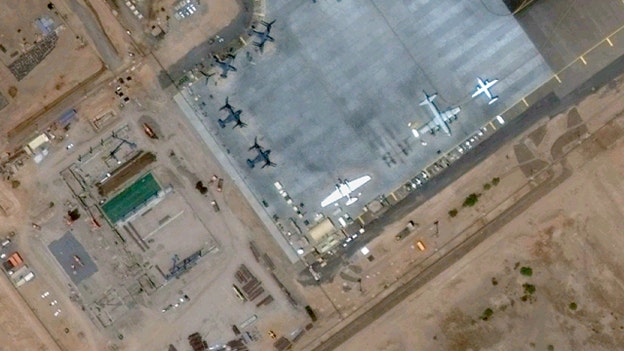
China has upgraded an overseas military base in the Horn of Africa to expand its intelligence-gathering capabilities and monitor military activity, according to a report released Thursday by the Center for Strategic and International Studies.
Satellite imagery shows that China installed new communications equipment at its support base in Djibouti and upgraded infrastructure to improve intelligence gathering.
“The People’s Liberation Army (PLA) has installed new equipment that will strengthen its internal communications capabilities while also enabling signals intelligence (SIGINT) collection,” the report said.
The base sits along the Gulf of Aden near the Bab al-Mandeb Strait, just miles from Camp Lemonnier, the main U.S. military base in Africa.
“The base’s capabilities have continued to evolve over time to enable increasingly sophisticated operations,” CSIS noted in the report, “helping the PLAN establish a growing foothold in the region.”
US offers $15M reward for intel targeting Iran’s IRGC money machine
The U.S. State Department’s Rewards for Justice program announced Thursday that it is offering up to $15 million for information that could disrupt the financial networks of Iran’s IRGC and its Quds Force.
The reward program is targeting Iran’s illegal oil-for-money schemes, front companies and entities assisting the regime with sanctions evasion, as well as formal financial institutions and donors directly backing the IRGC’s regional terrorist proxies.
“The IRGC has financed numerous terrorist attacks and activities globally,” the program said in a statement, adding that the IRGC-QF “leads Iran’s terrorist operations outside Iran via its proxies, such as Hamas, Hizballah, and Iran-backed militia groups in Iraq.”
Ex-IDF general challenges Israel's political establishment with new right-wing party
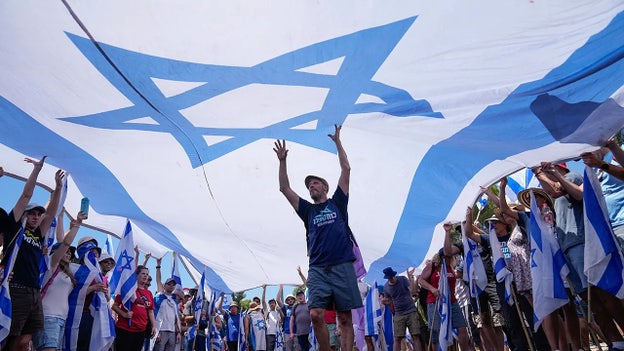
The leader of the new Amcha Yisrael (People of Israel) party, Ofer Winter, is looking to reshape Israel’s political right in the wake of the Oct. 7 massacre, The Jerusalem Post reported Thursday.
Calling for political renewal, the retired brigadier general is building a team of political newcomers and families affected by the war, the outlet reported.
Winter is also calling for policy changes within government, with his sights set on the Defense Ministry and rejecting a merger of right-wing parties.
Asked about Prime Minister Benjamin Netanyahu’s leadership and security responsibilities for Oct. 7, Winter said, "He was prime minister. There wasn’t somebody else here... Nobody can take the responsibility away from Netanyahu,” he told the outlet.
US puts NY retailers ‘on guard’ as Iranian president’s UNGA team faces ‘luxury retail splurge’ ban
The State Department alerted New York-area retailers Thursday against enabling Iranian diplomats and officials attending the United Nations General Assembly to buy luxury goods or wholesale club memberships.
This came after the Trump administration approved visas for Iranian President Masoud Pezeshkian, Foreign Minister Abbas Araghchi and other senior officials to attend next week’s U.N. gathering in New York.
“While ordinary Iranians endure brutal repression, water and electricity shortages, and soaring inflation, the regime’s officials want to go on shopping sprees in New York. Not on our watch,” State Department spokesperson Tommy Pigott said on X.
“We will not let the Iranian regime’s elites exploit UNGA for a luxury retail splurge paid for by the Iranian people’s suffering, all while the regime funnels Iran’s wealth to support its terrorist proxies.”
Pigott said the U.S. would continue restricting Iranian U.N. Mission officials, visiting officials and their dependents from obtaining wholesale club memberships or purchasing luxury goods without prior approval.
“New York-area retailers: Be on guard. Don’t become complicit in these violations,” Pigott added.
Fresh activity emerges at Iran’s deeply buried nuclear site as Trump warns Iran not to ‘get cute’
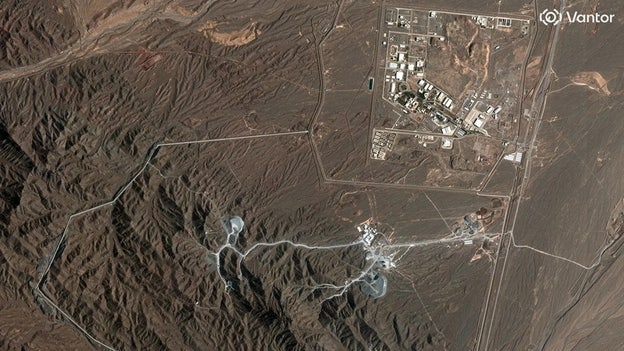
New satellite imagery shows Iran has added new defenses around tunnel entrances at Pickaxe Mountain, the deeply buried nuclear-linked site President Donald Trump has repeatedly threatened to strike, as Russia and China on Thursday vetoed a U.S.-drafted Security Council resolution aimed at preserving international monitoring of sanctions on Tehran.
The Institute for Science and International Security said in a report released Thursday that satellite imagery from Sept. 11 shows earthen roadblocks remain in place on roads leading to Pickaxe Mountain’s western tunnel portals near the Natanz nuclear complex.
The institute said the continued restricted access reinforces its assessment that the facility is not currently being used for normal operations, while assessing that valuable equipment or materials remain inside.
The report also identified additional soil placed over one western tunnel portal and over a nearby cluster of entrances first built in 2007.
The institute said the added soil increases the amount of earth protecting the entrances and helps harden them against aerial bombardment.
The findings come one week after Trump issued his latest warning over Pickaxe Mountain.
"We notice there’s a little activity at Pickaxe," Trump told reporters last week. "I would advise Iran not to get cute because we will have to hit them very hard."
This is an excerpt from a report by Fox News Digital's Efrat Lachter.
Iran backs Houthis after group denies targeting Mecca with drone
Iranian Foreign Ministry spokesperson Esmaeil Baqaei on Thursday condemned “aggression” against Islamic holy sites and warned against what he called unverified drone attack claims to inflame regional tensions.
His comments came after the Saudi-led coalition in Yemen said the Houthis launched a drone toward Mecca on Tuesday evening.
Saudi air defenses intercepted and destroyed the drone before it entered the holy city’s restricted airspace, according to the coalition.
“Any aggression against Islamic holy sites, particularly Mecca al-Mukarramah, Medina al-Munawwarah, and Al-Aqsa Mosque, as well as threats to their pilgrims and neighbors, is a condemned act,” Baqaei said in a post shared on X.
At the same time, Baqaei said the reported interception of a drone headed toward Mecca al-Mukarramah could not “constitute grounds for accusing a specific party, especially since the Yemeni government of Change and Construction has explicitly denied this claim.”
Baqaei said the region has witnessed “numerous instances of false flag operations, particularly in recent months, aimed at diverting public opinion from the crimes committed by the Zionist entity and the United States in the region, and at sowing discord among Islamic countries.”
US sanctions Iran-linked crypto exchange accused of funneling funds to IRGC
The United States on Thursday sanctioned an Iranian cryptocurrency exchange controlled by an sanctioned Iranian financier, accusing it of helping process payments tied to commercial shipping through the Strait of Hormuz.
“Today's action exposes how international digital asset exchanges have provided the Iranian regime, including the Central Bank of Iran, with a gateway to the international financial system,” spokesman Tommy Pigott said in a statement.
Pigott said the network includes BitBank, a platform tied to Babak Zanjani, a regime-linked financier whose sanctions evasion enterprise has channeled funds to Iran's U.S.-designated Islamic Revolutionary Guard Corps, or IRGC.
Since June, the exchange has been used to transfer payments received by the previously sanctioned Hormuz Safe Marine Services Authority to the Iranian government, according a statement from the Treasury.
The U.S. also sanctioned a BitBank software developer and three Zanjani associates.
“The United States calls on all nations and the private sector, particularly those operating in the digital assets space, to exercise vigilance and ensure their platforms are not exploited by the Iranian regime or its facilitators,” Pigott said.
US clears potential $24.3B F-35 fighter jet sale to Saudi Arabia
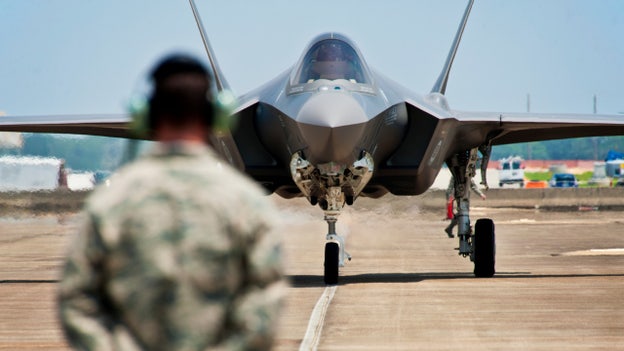
Washington approved the potential foreign military sale of 48 F-35 Lightning II aircraft and related equipment to Saudi Arabia, valued at about $24.3 billion, the State Department announced Thursday.
According to a statement, the package includes 48 F-35 takeoff-and-landing jets, 49 Pratt & Whitney engines, advanced communications and cryptographic hardware, electronic warfare support, training simulators, and long-term technical and logistical services.
The agreement is intended to advance U.S. foreign policy and national security goals by strengthening a non-NATO ally in the Gulf region and enhancing Saudi Arabia's air-to-air and air-to-ground self-defense capabilities while reinforcing homeland defense and NATO forces.
Lockheed Martin and Pratt & Whitney will serve as the primary contractors for the deal, the State Department said.
“The proposed sale of this equipment and support will not alter the military balance in the region,” the statement said, adding that there will be no adverse impact on U.S. defense readiness as a result of the proposed sale.
Trump lets Iran’s president into US for UN summit, hits delegation with ‘no luxury goods’ rule
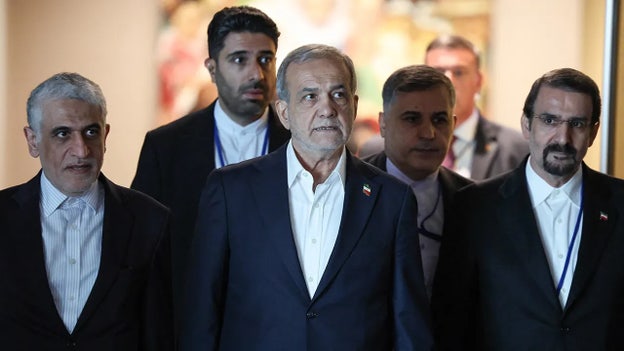
Washington has approved visas for Iranian President Masoud Pezeshkian, Foreign Minister Abbas Araghchi and other senior officials to attend next week’s U.N. General Assembly in New York, The Associated Press reported Thursday.
The State Department said the visas were approved for Iran’s “core delegation” and essential staff members, with officials confirming that Pezeshkian and Araghchi are part of the delegation.
The Iranian officials will face travel restrictions, including a ban on purchasing luxury goods.
“The delegation will be under travel restrictions and will face prohibitions on the purchase of luxury and other goods per our policy,” a State Department official told Bloomberg. “The delegation is smaller than last year.”
The decision to approve the Iranian visas came one day after the State Department denied visas to Palestinian Authority President Mahmoud Abbas and his delegation to attend the General Assembly in person.
Former Pentagon official says ‘clock is ticking’ on Iran, war could end by November
The Iran war could end by November as both the U.S. naval blockade and economic pressure squeeze Tehran, a former Pentagon official said Thursday.
This came after President Donald Trump said he hoped the Iran war was nearing its end and that Tehran was “very much wanting to make a deal.”
“The math definitely supports a conclusion of this, just from the fiscal and monetary side of this,” Brent Sadler said on “America’s Newsroom.”
“You know, before the end of the year, but as early as the elections in November.” Sadler said the naval blockade and other tools of economic warfare were the reasons for that estimate.
“What Treasury Secretary Scott Bessent and Pentagon chief Pete Hegseth are doing against the regime means the clock is ticking at limited cost to the U.S.,” Sadler said.
“And for the Houthis’ part in the Red Sea, the shipping market has largely already adjusted, and so the impact is going to be modest, not zero.
“I think also the energy markets are never going to go back to where they were in February this year, and have already made significant adjustments,” he added.
Saudi oil faces ‘almost existential’ threat as Iran targets Red Sea route, expert warns
Saudi Arabia faces its most serious threat to oil production since the kingdom was founded as Iran tries to disrupt its alternative export route through the Red Sea, regional experts warned Thursday.
“The situation is really precarious for the Saudis. This is the biggest threat to their production of oil since their kingdom was founded in 1932, and this is almost existential,” Hussain Abdul-Hussain, a research fellow at the Foundation for Defense of Democracies, told Fox News Digital.
“We see that the Saudis are trying to shop for some force to fight their war for them, and I think they also called President Trump.”
“It doesn't look to me that Washington is going to get involved in this one,” he said, adding that the U.S. would probably offer advice and “intel support.”
“I don't think we, the United States, will get involved in this war over Bab el-Mandeb,” he said.
Abdul-Hussain said that Iran is unable to export any of its oil legally or illegally.
“What the Iranians are trying to do is that they're trying to telegraph to the other oil exporters in the region that either we export, all of us export oil, or none of us will export oil.”
“This is why you see Iran shutting down the Strait of Hormuz. This forced Saudi Arabia to switch its oil production from east to west, from Hormuz to the other side to the Red Sea.”
“Tankers started picking up oil at the port of Yanbu in Saudi Arabia on the Red Sea, and sailing south through the Bab el-Mandeb all the way to the Asian markets.”
Abdul-Hussain also said that Iran “likely instigated the Houthis to force a blockade on Saudi Arabia.”
Iran official vows Strait of Hormuz won't reopen while Trump, Netanyahu remain in power: state media
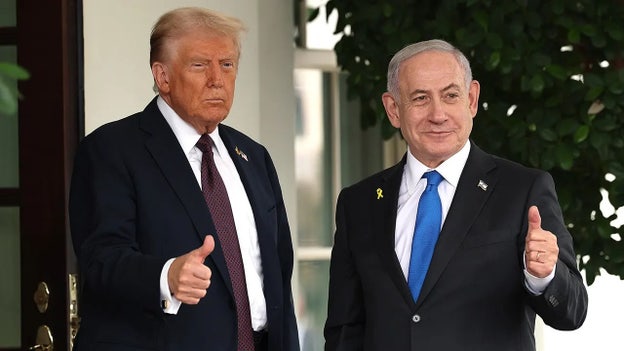
A top Iranian official said Thursday that Iran will keep the Strait of Hormuz closed until President Donald Trump and Israeli Prime Minister Benjamin Netanyahu are removed from power, according to state media.
"Our warriors will not open the Strait of Hormuz until they remove the criminal Trump and the bloodthirsty Netanyahu from the throne of power," said Mohammad Baqer Zolqadr, according to Iranian state TV broadcaster IRNA.
Zolqadr is the political advisor to Supreme Leader Mojtaba Khamenei, who has not been seen in public since replacing his father as Iran's head of state.
Ayatollah Ali Khamenei was killed on Feb. 28, when the U.S. and Israel launched airstrikes on the capital city of Tehran.
Trump and Vice President JD Vance have both said Mojtaba Khamenei was likely seriously wounded in those same strikes.
Trump says he has 'big decision coming up' on Iran war
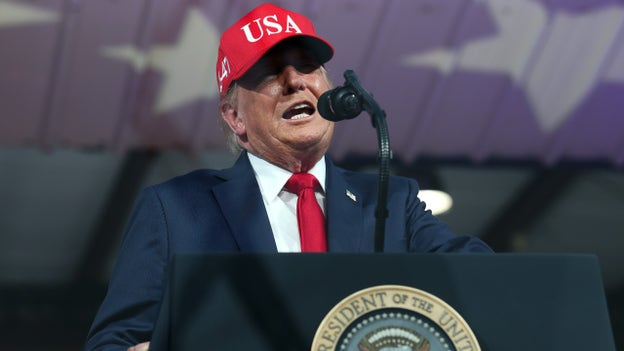
President Donald Trump told Axios Thursday that he will soon be making a "big decision" on how the Iran war progresses.
"I have a big decision coming up. Do I want to go in and annihilate them [the Iranian regime] or do I not? It's a big decision. Anything could happen with me," he told the outlet.
Trump has made similar statements throughout the war, but his comments come before a Tuesday meeting with leaders from six Gulf countries on the sidelines of the U.N. General Assembly in New York City.
The president told Axios that his approach to the conflict going forward will depend on what the allied heads of state tell him at that meeting.
"I want to find out where they are and how they are doing. We have been very protective of them," he said.
Trump will meet at U.N. headquarters in Manhattan with leaders from Saudi Arabia, the United Arab Emirates, Qatar, Bahrain, Kuwait and Oman.
Lebanon, Jordan and France leaders meet in Paris to discuss military support
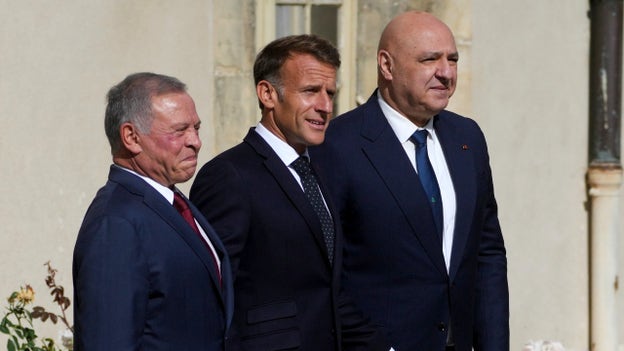
The heads of state of Lebanon, France and Jordan met in Paris on Thursday to secure support for the struggling Lebanese military.
The Lebanese military has so far been unable to retake southern Lebanon, which is now the site of a protracted conflict between the Israeli military and the Iranian-backed terror group Hezbollah.
Lebanese officials have thus far hesitated to engage in direct military conflict with Hezbollah, fearing such a confrontation could spiral into a civil war. The government has also argued it needs a larger and better-equipped military to win over Hezbollah sympathizers in the country who question the Lebanese army's ability to protect them.
Ahead of the meeting between Lebanese President Joseph Aoun, French President Emmanuel Macron and Jordan's King Abdullah II, Aoun released a statement claiming the trio would discuss plans to implement an international presence in Lebanon when the mandate allowing a U.N. peacekeeping force to deploy to the country expires at the end of the year.
The Associated Press contributed to this post.
Oil tanker targeted in apparent interception attempt off southern Yemen, UKMTO says
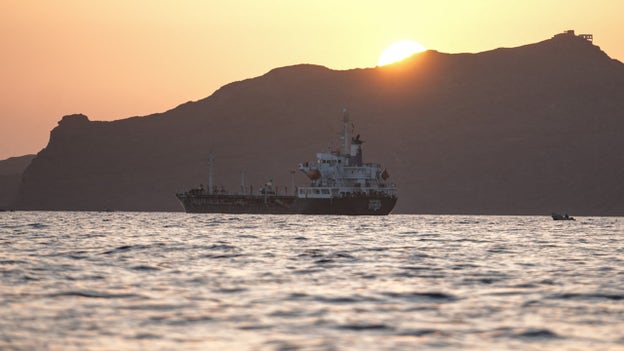
A small boat was spotted trailing and attempting to intercept an oil tanker off the southern coast of Yemen, according to a report from the United Kingdom Maritime Trade Operations (UKMTO) Center.
The incident occurred in waters 75 nautical miles east of Aden, Yemen, UKMTO said in its advisory. No details were shared about the origin of the smaller vessel or the tanker.
CENTCOM says it's redirected 104 commercial ships in Middle East
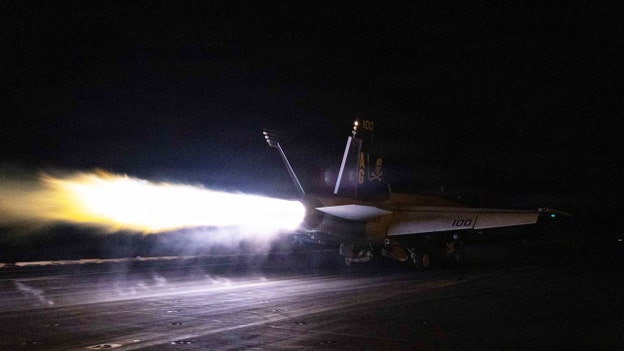
U.S. Central Command (CENTCOM) has redirected 104 commercial vessels in the Middle East to ensure strict compliance with U.S. maritime policy amid an ongoing naval blockade in the Arabian Sea, CENTCOM wrote in a Thursday post on X.
Posting a photo of a fighter jet, CENTCOM wrote "An F/A-18F Super Hornet launches from the flight deck of USS George H.W. Bush (CVN 77) as the ship sails in regional waters and continues to support enforcement of the U.S. blockade against Iran. As of Sept. 17, CENTCOM forces have redirected 104 commercial vessels to ensure strict compliance."
Saudi officials say intercepted Houthi drone debris killed one and injured two
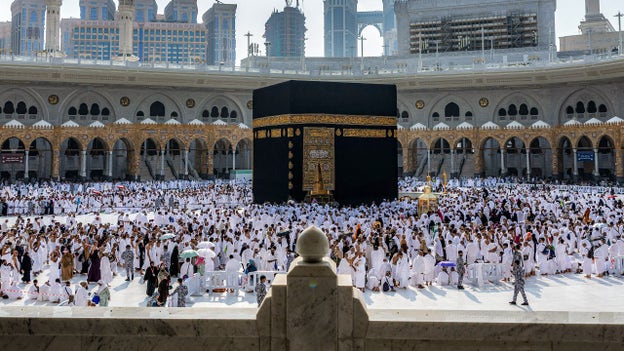
The Saudi civil defense said that debris from an intercepted Houthi drone over the Taif province killed one person and injured two others on Thursday.
One Yemeni was killed, a Saudi citizen was injured and a Pakistani national was left in critical condition, officials said.
The falling debris also damaged several vehicles and buildings, according to officials.
The latest casualties in Saudi Arabia come amid a series of tit-for-tat strikes between the kingdom and the Houthis, an Iran-backed terrorist organization based in Yemen.
On Wednesday, the Saudi government accused the Houthis of targeting Mecca, Islam's holiest city, with a drone. The Houthis have denied this.
In a social media post in Thursday, Iranian Foreign Ministry spokesperson Esmail Baghaei downplayed the possibility of the Houthis being behind such an attack, while condemning any aggression against Islamic holy sites.
"A mere claim of intercepting a drone en route to Mecca al-Mukarramah cannot constitute grounds for accusing a specific party," Baghaei wrote on X.
In July, the Houthis announced a blockade of Saudi shipping throughout the Red Sea, which has resulted in the group firing missiles at commercial ships and oil tankers.
Former US Navy officer says it is possible for Iran war to end shortly after November election
A former U.S. Navy officer joined "Fox & Friends First" Thursday morning and speculated that the Iran war could end in the near future.
Arthur Busick, a former surface warfare officer, said the timeline President Donald Trump offered voters during a North Carolina rally on Wednesday of the war wrapping up sometime before or after the November midterm elections is "certainly possible."
"The president is a very skillful negotiator, and the ability to put pressure on both sides, we have been conducting targeted strikes on Iran, and the Iranians are also showing their ability to conduct asymmetric warfare on U.S. and American shipping," Busick said.
Busick acknowledged that if Trump is not able to get Tehran to the negotiating table or end the war, it "could be a very big difficulty" for Republicans.
Pentagon strikes deal with Lockheed Martin to boost production of next-gen missiles
The Department of War announced a framework agreement Thursday with Lockheed Martin to boost production of next-generation air-to-air missiles, particularly the newly developed AIM-260 Joint Advanced Tactical Missile (JATM).
In a press release, Lockheed said JATMs have increased range and effectiveness compared with existing air-to-air weapons.
JATMs will also be compatible with a variety of Air Force and Navy aircraft, including the F-22 Raptor and F-35 Lightning II. The framework agreement lays the groundwork for a multiyear procurement contract between the Department of War and Lockheed.
“Today’s announcement reflects our commitment to sending clear, long-term demand signals across the defense industrial base, ensuring our Warfighters receive unmatched capability exactly when and where the mission demands,” said Michael P. Duffey, Under Secretary of War for Acquisition and Sustainment.
The agreement is part of the Arsenal of Freedom initiative led by War Secretary Pete Hegseth. Announced in January 2026, it aims to rebuild America's defense industrial base and accelerate weapons manufacturing.
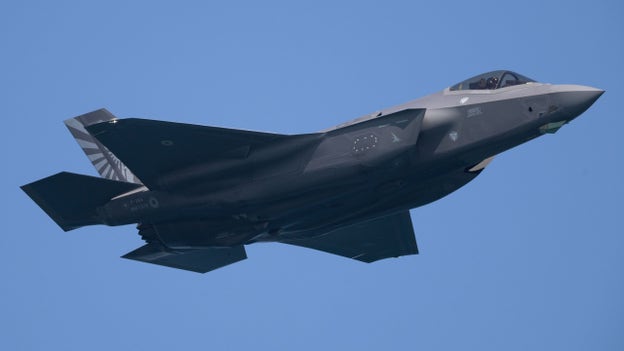
An Italian Air Force Lockheed Martin F-35 Lightning II of the 6th Wing based at Ghedi, near Brescia, performs during the first day of the Air Show del Garda 2026 in Desenzano del Garda, Italy, on Sept. 4, 2026. (Photo by Richard Morgano/NurPhoto via Getty Images)
"This extraordinary 22‑day turnaround underscores Lockheed Martin's relentless focus on execution – delivering for our troops faster, with greater capacity," Tim Cahill, president, Lockheed Martin Missiles and Fire Control said in a statement. "Our partnership with GM Defense is a concrete example of how we're merging world-class commercial manufacturing with defense supply chain and production practices and rapidly translating that into battlefield readiness for the United States."
"We're proud to support production of this country's critical defense capabilities. Our partnership with Lockheed Martin leverages GM's precision-fabrication expertise and ability to manufacture with quality at scale. We look forward to putting these strengths to work in support of our nation's security and the people who protect it," added Stephen duMont, President and CEO, GM Defense.
In another statement to Reuters, Cahill said JATM has been a classified program throughout the length of its development.
"JATM is one of our nation's most important air dominance capabilities, but because of the classified nature of the program, it's also a story we haven't been able to tell," Cahill said. "We're proud to finally talk about the extraordinary work behind this missile and how we're working with the U.S. government to rapidly scale production."
Fox News' Liz Friden and Reuters contributed to this post.
China responds to Lindsey Graham-named sanctions bill that also extends penalties for Iran
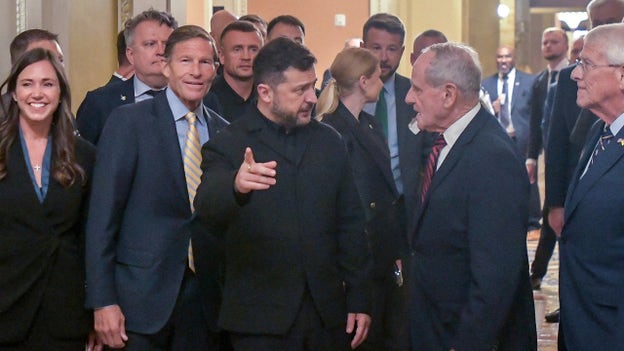
China's foreign ministry has responded to the House passing a bill Wednesday named for the late Sen. Lindsey Graham, R-S.C., that would expand penalties on countries that continue purchasing Russian energy or helping Moscow evade sanctions.
"Economic and trade cooperation between China and other countries does not target any third party and shall be free from disruption or coercion from any third party," a spokesperson for China's Ministry of Foreign Affairs said in a statement.
The spokesperson added: "China opposes long-arm jurisdiction and unilateral sanctions that have no basis in international law and lack UN Security Council mandate."
The Lindsey O. Graham Sanctioning Russia and Iran Act, introduced by Graham last year, authorizes 100% tariffs on all goods imported to the U.S. from countries that buy a sufficient amount of crude oil or natural gas from Russia.
The bill, if passed, would impose this penalty if a country ends up ranking among the five largest importers of Russian energy during the preceding 12 months.
China was by the far the largest importer of Russian fossil fuels in August, according to the Center for Research on Energy and Clean Air.
Iran is also targeted by the bill, which, if signed by President Donald Trump, would extend existing U.S. sanctions on Tehran through 2031.
Gas prices across the nation edge higher overnight
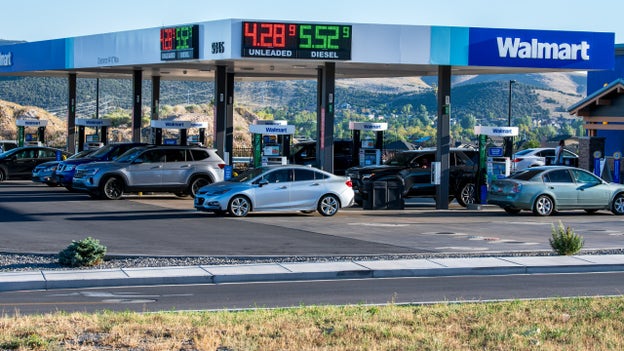
The average price for a gallon of regular gasoline in the United States has risen 1.6% overnight from $4.36 to $4.43, according to AAA.
As of Thursday, gas prices are more than 9% higher nationwide than they were a month ago, driven in part by continued disruptions in the Strait of Hormuz amid the Iran war.
House Speaker Mike Johnson, R-La. acknowledged this dynamic at a Wednesday press conference, saying it was time for his fellow Republicans to focus on getting fuel costs down ahead of the midterms.
"Of course, gas prices are too high. When we get that thing resolved in the Strait of Hormuz, that will have a direct effect on that and it will help to bring down grocery costs," Johnson said. "Our candidates are addressing that and they are again reminding the American people of the extraordinary record of success that we have done."
Vance warns US withdrawal from Middle East would trigger ‘worldwide energy crisis’
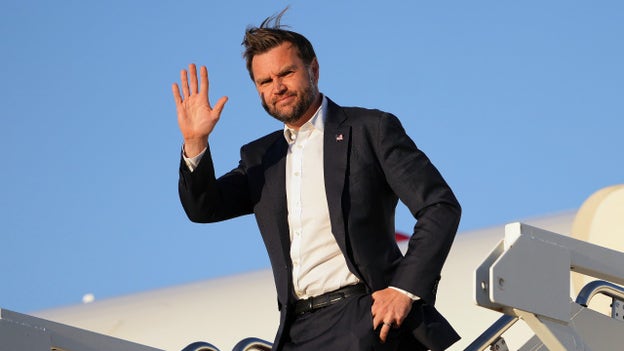
Vice President JD Vance warned Wednesday that a U.S. withdrawal from the Middle East would trigger a “worldwide energy crisis” as Iran continues targeting commercial shipping.
“What I would say to anybody who’s frustrated right now is the alternative here, which is the United States effectively says to the Middle East, ‘You’re on your own,’ would mean necessarily a worldwide energy crisis, so long as the Iranians keep on shooting at shipping, which we know that’s exactly what they would do,” Vance said during an appearance at the All-In Summit.
“The president came in, and yes, he wanted to keep the United States out of foreign entanglements,” Vance said.
“He also said that he was committed to Iran not having a nuclear weapon, and I think that wanting to keep the United States out of foreign entanglements does not mean that you can never use the military in order to accomplish the American people’s objectives.”
Vance said the U.S. had achieved “substantial destruction” of Iran’s nuclear program and conventional military but that Iranian forces continued targeting commercial shipping “even in the midst of peace negotiations.”
“I think the president has actually done the responsible thing here, which is to try to ensure that world energy markets, despite Iranian terrorism, continue to get that flow of oil and gas,” Vance added.
Live Coverage begins here