US launches defensive strikes against Iran, intercepts multiple threatening drones: officials
U.S. forces shot down four Iranian attack drones in the Strait of Hormuz and struck a launch site in Bandar Abbas in what officials described as a defensive operation to maintain the ceasefire.
Coverage for this event has ended.
Iran lays out ‘red lines’ as Trump pushes for nuclear deal
An Iranian official asserted Wednesday that Tehran will not back down from its “red lines” in negotiations with the United States.
Ebrahim Azizi, head of the Iranian parliament’s national security committee, wrote in a post on X that Iran’s red lines include the country’s right to enrich uranium, maintain stockpiles of enriched uranium and control the Strait of Hormuz.
He also called for the lifting of all sanctions against Iran.
Azizi criticized President Donald Trump, accusing him of seeking a deal with Iran “in order to save himself” from what he described as the “strategic deadlock” surrounding U.S.-Iran negotiations.
Trump said during a Cabinet meeting Wednesday that Iran was “negotiating on fumes,” while accusing Tehran of relying on delay tactics to try to “outwait” him on denuclearization talks.
“Iran is very much intent, they want very much to make a deal – so far they haven't gotten there," he said.
Kuwait says air defenses responding to missile and drone attack
The Kuwaiti military said early Thursday that its air defenses were responding to hostile missile and drone attacks.
Officials did not immediately identify who launched the attack or what targets were involved.
The incident came hours after U.S. forces shot down four Iranian one-way attack drones that posed a threat to vessels in the Strait of Hormuz, two U.S. officials told Fox News.
The officials said American forces also struck an Iranian ground control station in Bandar Abbas that was preparing to launch a fifth drone.
Lindsey Graham says Obama and Biden made Iran ‘rich and lethal’
Sen. Lindsey Graham, R-S.C., lashed out at former Presidents Barack Obama and Joe Biden on Wednesday, accusing them of allowing Iran to become “rich and lethal.”
“Obama and Biden screwed Iran up, and Donald Trump is fixing it,” Graham said during an interview with Fox News’ Sean Hannity.
“Obama gave Iran tens of billions of dollars, and they took the money and started building nuclear uranium — weapons-grade material,” he continued. “Biden reversed all of Trump’s policies when he took over, and Donald Trump stopped Iran from getting a nuclear weapon.”
“They’re the weakest they’ve been since 1979,” Graham added. “They’re on the verge of a peace deal.”
Graham contrasted Trump’s Iran policies with those of his Democratic predecessors.
“On Obama and Biden’s watch, Iran became rich and lethal,” he said. “On Trump’s watch, they’re becoming poorer and weaker. That’s the difference.”
Treasury sanctions Iranian agency overseeing Strait of Hormuz shipping lane
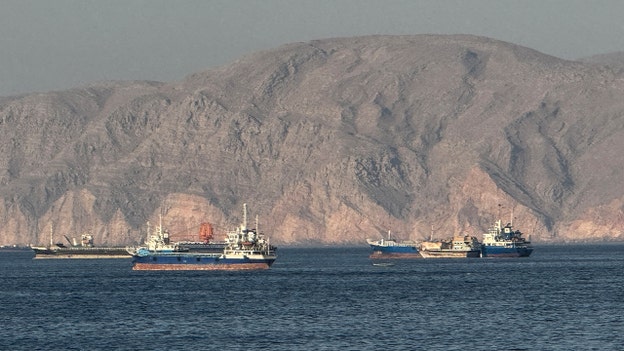
The U.S. Treasury Department on Wednesday sanctioned the Persian Gulf Strait Authority just weeks after Tehran established the body.
U.S. officials said the authority was created as a government agency to manage and regulate passage through the Strait of Hormuz, including collecting tolls from vessels transiting the strategic shipping lane.
The sanctions bar the agency from accessing the U.S. financial system or conducting transactions in U.S. dollars, according to the Treasury Department.
Oil prices jump after US launches defensive strikes near Strait of Hormuz
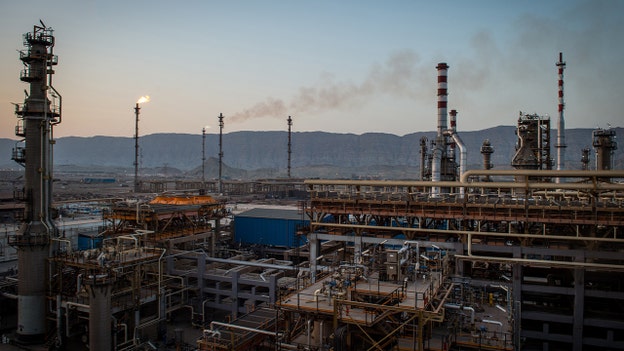
Oil prices rose on Thursday after U.S. officials confirmed to Fox News that Washington had carried out multiple defensive strikes in the region near the Strait of Hormuz, an operation described as aimed at maintaining a ceasefire.
Brent crude futures, the international benchmark tracked on Intercontinental Exchange Europe, climbed to about $96.20 per barrel, up roughly 1.27% following the announcement, according to data shared on CNBC.
West Texas Intermediate (WTI) futures also gained 1.16%, rising to $90.64 per barrel from around $89.60 earlier in the session, according to data shared by the outlet.
U.S. forces reportedly shot down four Iranian attack drones and struck a nearby drone launch site after identifying what officials said were threats operating in the vicinity of the Strait of Hormuz.
US missile inventories battered during Iran war may take years to rebuild, new analysis reveals
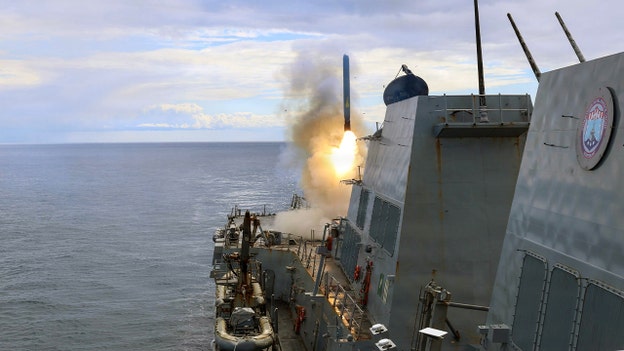
A new analysis report released Wednesday revealed that it could take years to restore several critical weapons systems used during the Iran war to their prewar inventory levels.
“The depleted inventories have created a window of vulnerability for a potential Western Pacific conflict,” the Center for Strategic and International Studies (CSIS) said, while emphasizing that the U.S. still maintained sufficient munitions for any plausible scenario during the Iran war.
According to Military Times, U.S. Central Command said more than 12,000 targets were struck during Operation Epic Fury, which began in late February.
CSIS found that U.S. stockpiles of Tomahawk Land Attack Missiles (TLAMs), along with two key missile defense systems — the Terminal High Altitude Area Defense (THAAD) and Patriot interceptors — were heavily depleted during the campaign.
More than 1,000 Tomahawk missiles were reportedly deployed during the conflict, and inventories are not expected to return to prewar levels until late 2030 or early 2031, a recovery timeline of roughly four years or more, CSIS said.
Other heavily utilized systems, including THAAD and Patriot interceptors, are projected to take at least three years to replenish, according to CSIS.
U.S. carries out more 'self-defense' strikes in Iran
U.S. forces shot down four Iranian one-way attack drones that posed a threat in the Strait of Hormuz, two U.S. officials tell Fox News.
U.S. forces struck an Iranian ground control station in Bandar Abbas that was about to launch a fifth drone, the officials said.
"Today, U.S. Central Command forces shot down four Iranian one-way attack drones that posed a threat around the Strait of Hormuz," the official told Fox News. "U.S. forces also struck an Iranian ground control station in Bandar Abbas that was about to launch a fifth drone. These actions were measured, purely defensive, and intended to maintain the ceasefire."
Reuters was first to report on the new strikes.
Fox News' Liz Friden contributed to this report.
Iran running critically low on oil storage capacity, nearing economic breaking point: ex-energy sec
Iran is running dangerously low on oil storage capacity and could face a severe economic breaking point if forced to halt production, a former U.S. energy official warned Wednesday on Fox News.
“I'd say they're about four to six weeks away and then it's the point of no return,” former U.S. Energy Secretary Dan Brouillette said.
According to Brouillette, observations indicate Iran now has only about 20 million to 22 million barrels of available onshore storage remaining, a sharp drop from the roughly 120 million barrels he said the country typically maintains in reserve capacity.
If Iran exhausts its storage capacity and is forced to halt oil production, restarting those operations could prove extremely difficult and potentially threaten the country’s long-term economic stability, Brouillette said.
“They're going to have to start shutting in production,” Brouillette said. “And what that is gonna entail over a longer period of time, if it lasts too long, is that they can't reopen those wells very easily. It's very difficult once you've shut in this well to have it come back to the production levels that it was prior to the shut-in. And what means is their long-term economic future is going to be endangered.”
He added that President Donald Trump is likely aware of the mounting pressure on Tehran, suggesting the administration is deliberately playing a long game with what Brouillette described as an increasingly effective blockade strategy.
“This blockade is working very, very well,” Brouillette said. “Their exports are down. Their production numbers are down. Their storage is filling up. So, they're reaching a danger zone and a point here in which there is no return. And the president knows that and I think he's playing that card pretty effectively.”
IDF says 550 Hezbollah sites hit this week as strikes pound southern Lebanon
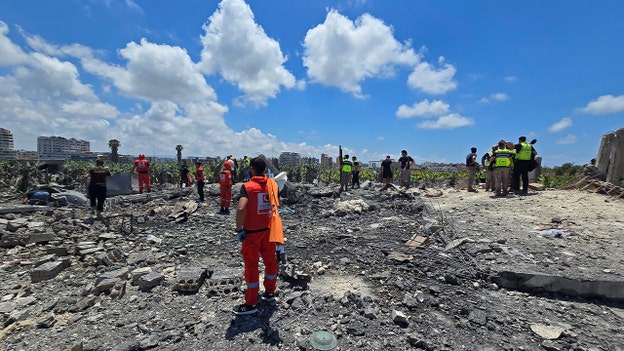
The Israel Defense Forces (IDF) announced Wednesday that it had struck approximately 550 Hezbollah targets across Lebanon since the beginning of the week.
Throughout Wednesday alone, the IDF reportedly targeted military structures, command centers and launch sites used by the Iran-backed terrorist organization in the Beqaa Valley and several areas across southern Lebanon.
Several hours earlier, the Israeli military issued an immediate evacuation order for the southern Lebanese city of Tyre, nearby refugee camps and surrounding areas ahead of the strikes.
The IDF warned residents in designated mapped zones to leave their homes immediately and move north of the Zahrani River, where civilians would face less risk from the military operations.
“Prior to the strikes, steps were taken to mitigate harm to civilians, including the issuing of advance warnings to the population, the use of precise munitions, and aerial surveillance,” the IDF said.
Israel accused Hezbollah of violating a ceasefire agreement and continuing attacks targeting Israeli territory.
Graham says Trump uniquely positioned to end Arab-Israeli conflict through Abraham Accords
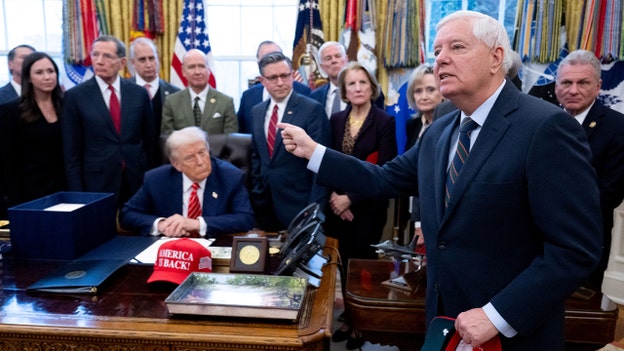
Sen. Lindsey Graham said President Donald Trump could effectively end the Arab-Israeli conflict if a future Iran deal includes expanding the Abraham Accords to include Saudi Arabia.
Graham’s remarks came after Trump was asked during Wednesday’s Cabinet meeting at the White House whether a potential Iran deal could be tied to additional countries joining the Abraham Accords.
“The biggest news out of the cabinet meeting is President Trump’s determination to expand the Abraham Accords, to include Saudi Arabia making peace with Israel,” Graham said. “This would be the biggest change in the Middle East in thousands of years, effectively ending the Arab-Israeli conflict.”
The South Carolina Republican suggested Trump is uniquely positioned to broker such a deal, citing the president’s close relationship with Saudi leadership.
“I am convinced that President Trump -- above all others -- has the ability to make this happen. He has been a good, reliable partner to Saudi Arabia and the Crown Prince, and no one has been a better friend of Israel than President Trump,” he added.
The Abraham Accords, negotiated during Trump’s first administration in 2020, normalized relations between Israel and several Arab and Muslim-majority countries, including the United Arab Emirates, Bahrain and Morocco. Sudan also signed the declaration, though its full bilateral normalization process has been delayed.
Before the accords, most Arab states maintained a policy of refusing to recognize Israel until the establishment of an independent Palestinian state.
“I will do everything in my power, working in a bipartisan fashion, to help President Trump achieve peace between Saudi Arabia and Israel,” Graham said.
CENTCOM touts daily air ops as USS Abraham Lincoln holds position off Iran
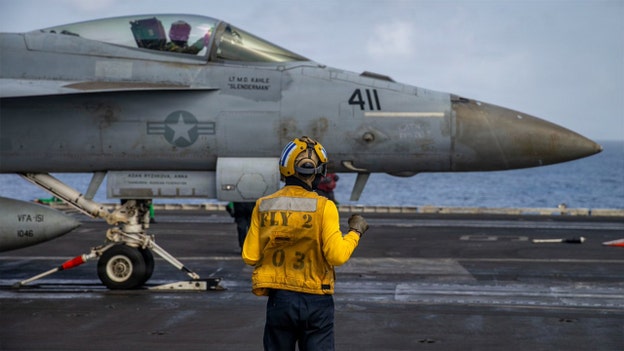
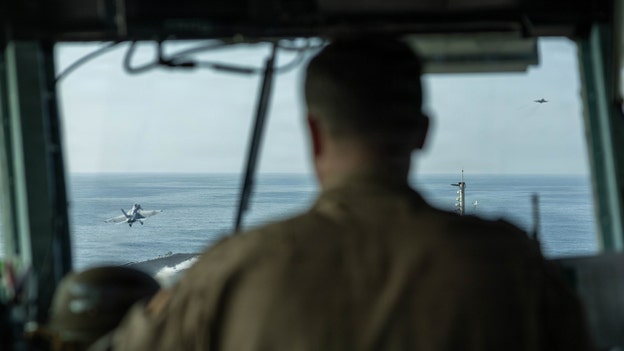
U.S. Central Command said Wednesday that the USS Abraham Lincoln is conducting daily flight operations in support of ongoing U.S. military missions, including deterrence efforts across the Middle East.
“It takes a well coordinated team to safely launch and recover aircraft aboard an aircraft carrier,” CENTCOM said in a post on X. “Sailors and Marines aboard USS Abraham Lincoln (CVN 72) are doing this daily in support of U.S. military operations across the Middle East."
The post served as a reminder that American air power remains heavily positioned just outside the increasingly contested Strait of Hormuz as tensions surrounding the strategic chokepoint continue to escalate.
The USS Abraham Lincoln, currently deployed in the Arabian Sea, operates within the U.S. 5th Fleet’s area of responsibility, which spans key waterways and flashpoints across the Middle East.
The Nimitz-class nuclear aircraft carrier accommodates a crew of up to 5,000 sailors and Marines and deploys a full Carrier Air Wing (CVW 9) composed of eight squadrons flying F-35C Lightning II, F/A-18E/F Super Hornets, EA-18G Growlers, E-2D Hawkeyes, CMV-22B Ospreys and MH-60R/S Sea Hawks.
Iran claims dozens of ships coordinating passage through Strait of Hormuz as firm undercuts figure
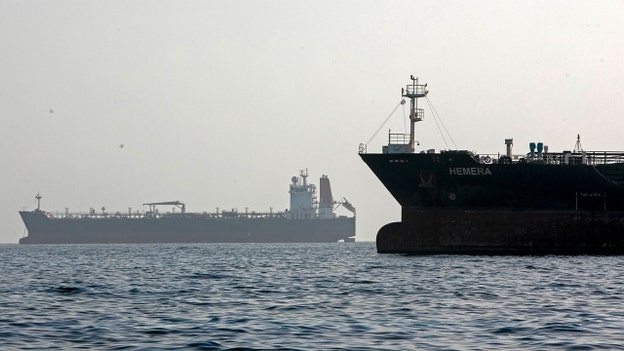
Iran claimed it allowed 25 ships to pass through the Strait of Hormuz after coordinating directly with the vessels, signaling that global shipping traffic may be yielding to Tehran’s emerging permit, toll and administrative control system over the critical international waterway.
Kpler, a shipping intelligence firm, said it could independently confirm only two vessel crossings on Monday and seven on Tuesday, though it did not dispute the broader figure cited by Tehran.
The firm also warned that persistent signal interference in the region continues to hamper efforts to fully verify shipping activity.
“Both vessels used the Iranian Route, while no new physical attacks have been recorded since 10 May and signal interference continues,” Kpler said. “The low count suggests traffic remains narrow, route-dependent, and shaped by Iranian clearance practices.”
Michelle Brouhard, head of policy and geopolitical risk at Kpler, said the toll system gives Iran significant leverage and argued Tehran is unlikely to loosen its grip on the strategic chokepoint.
“There is no way Iran is going to release their grip on the Strait now that they know the kind of control they have with it. They are more powerful with the Strait than the uranium. They've forced themselves into the global foreign policy conversation and they aren't going to give that up and uranium and just go away quietly,” she said.
“The Strait gives them a lot of power. The toll is $2/bbl but the closure of the strait is $40/bbl. Allowing them to have a toll but the strait is open is a win (short term). Long term, the impact to the global economy could be crippling.”
Brouhard warned that if Iran’s toll system were permanently formalized and recognized, it could generate an estimated $10.7 billion annually for Iran and Oman.
Trump can make ‘good deal’ with Iran now or 'great deal' with strikes: 'Nastier' but 'foolproof'
President Donald Trump said Wednesday the U.S. could make a “good deal” with Iran now, but warned that a military option could produce a “great deal” that would be “nastier” but “foolproof.”
“I can say that, we can make a good deal right now, but maybe not a great deal,” Trump said at Wednesday's monthly Cabinet meeting at the White House, when asked whether an Iran deal could be tied to more countries joining the Abraham Accords.
Trump said he would not disclose what is or is not contingent in the negotiations, but suggested the U.S. still has stronger options if diplomacy fails.
“If it’s not a great deal when I’m making it, because we can make a great deal with this guy right here,” Trump said, pointing to his left at War Secretary Pete Hegseth. “It’s a lot nastier. Probably wouldn’t go as quickly … but it would be foolproof.”
Trump said negotiations are going “pretty well,” but again criticized the Obama-era Iran nuclear deal as “the worst deal” and “a path for Iran to have a nuclear weapon very quickly.”
The president also said the U.S. did not set out to pursue regime change in Iran, but argued that recent losses had effectively transformed Tehran’s negotiating team.
“We didn’t set out for regime change,” Trump said. “But by the fact that we’re dealing with a totally different group of people than we were at the beginning … This is regime change.”
Trump promises gas prices 'will come down a lot,' perhaps to $2
President Donald Trump said Wednesday that gas prices will “come down a lot” after being pressed on the economic pressure to reopen the Strait of Hormuz.
“Oh it'll come down a lot – it'll come down to where it was before,” Trump told FOX Business White House correspondent Edward Lawrence during Wednesday's monthly Cabinet meeting.
Americans are still seeing higher gas prices, with some paying around $4.45 a gallon, but Trump noted prices had previously fallen below $2 in some places and predicted they would return to lower levels “shortly after that whole excursion ends.”
“We had gasoline down to a very low number,” Trump said. “I think we'll be hitting that number.”
Trump also downplayed the economic pressure on the U.S. from disruptions in the Strait of Hormuz, saying America has “plenty of oil” and is making energy available while the key shipping lane remains affected.
“It’s really a world problem because most of the world doesn’t have that,” Trump said, adding that ships are heading to Texas, Louisiana and Alaska to load up.
“In addition to that, you have a lot of boats, about 14, 1500 boats in the strait wanting to get out. And at the right time we'll release them.”
Trump might talk with Congress about gas tax holiday
President Donald Trump said his administration might talk with Congress about the possibility of legislating a federal gas tax holiday.
"It's something we might talk about," Trump said at Wednesday's monthly Cabinet meeting at the White House. "Let's see what happens over the next week, two weeks."
Trump: 'Nobody's going to control the Strait,' or 'we'll have to blow them up'
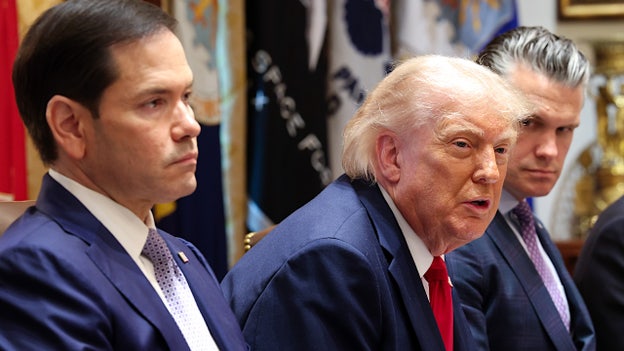
President Donald Trump said Wednesday that no country will be allowed to control the Strait of Hormuz, warning that the U.S. would act militarily if any side tries to dominate the key international waterway.
“International waters – nobody's going to control it," Trump said during the question and answer session during Wednesday's monthly Cabinet meeting. "We're going to watch over it. We'll watch over it. But nobody's going to control it."
Trump said control of the Strait is part of ongoing negotiations, suggesting Iran wants a role in managing the passage.
“This part of the negotiation that we have, they would like to control it. Nobody's going to control its international waters,” Trump said.
The president also referenced Oman, which Iranian state TV had earlier claimed could help manage ship traffic through the Strait under a disputed draft framework.
“And Oman will behave just like everybody else,” Trump said. “So we'll have to blow them up. They understand that. They'll be fine.”
Hegseth: US ready to ‘finish the job’ if Iran nuclear talks fail
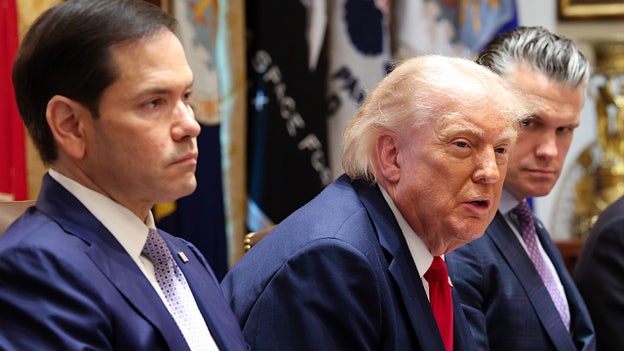
War Secretary Pete Hegseth said Wednesday the U.S. is prepared to “finish the job” if negotiations with Iran fail to produce a deal preventing Tehran from obtaining a nuclear weapon.
“So whether it is through the efforts of your negotiators that they ensure that they never have a nuclear weapon, or we have to go back to the War Department to finish the job that way, we're prepared to do that,” Hegseth said at Wednesday's monthly Cabinet meeting at the White House.
Hegseth said the U.S. blockade has squeezed Iran’s ports and economy, arguing that military pressure helped bring Tehran to the table.
“And in the during that time we put in a world-class blockade and they haven't been able to bring anything in or anything out from Iranian ports – and we know from the Intel, that they are their economy is hurting big time because that is their lifeblood,” Hegseth said.
Hegseth also credited President Donald Trump’s approach under Operation Epic Fury.
“You said, we're going to do this smart; we're going to do it overwhelming; we're going to use maximum lethality, and we're going to bring them to their knees," Hegseth said.
Trump: Iran 'negotiating on fumes,' regime is trying to 'outwait' me
President Donald Trump said Wednesday that Iran is “negotiating on fumes,” accusing Tehran of abusing its long running strategy of delay tactics to "outwait" him on denuclearization.
“Iran is very much intent, they want very much to make a deal – so far they haven't gotten there," Trump said at the start of the Wednesday's monthly Cabinet meeting.
"We're not satisfied with it: Either that or we'll have to just finish the job.”
Trump said U.S. negotiators Steve Witkoff and Jared Kushner are “doing a good job,” but argued Iran has little leverage after recent military losses.
“Their Navy has gone, as I've said a thousand times, and Navy is gone, their air force is gone, everything's gone, and they're negotiating on fumes,” Trump added. “Maybe we have to go back and finish it. Maybe we don't.”
Trump also said Iran’s economy is in “free fall” and claimed the regime believed it could wait him out until the midterms.
“They thought they were going to outwait me,” Trump said. “I don't care about the midterms.
"Very simple. Iran cannot have a nuclear weapon. I'm doing that for the world. I'm not doing it just for us.”
Secretary of State Marco Rubio said Wednesday there has been progress toward a potential agreement with Iran, but warned that the next “hours and days” will determine whether diplomacy can succeed.
"The president's preference, Mr. President, your preference is, he told us repeatedly, as always, to negotiate these things and to figure out if you can have agreements," Rubio said at the monthly Cabinet meeting. "Diplomacy is always the first option, and we continue to work on that through your envoys, Mr. [Steve] Witkoff and [Jared] Kushner and others.
"There's an agreement to be made. We want that to be made. I think there's been some progress and some interest.
"And we'll see over the next few hours and days whether progress could be made."
Rubio said President Donald Trump still has “other options available” if negotiations fail, but stressed that the administration’s bottom line remains unchanged: “Iran and these people in charge of Iran can never have a nuclear weapon, and they will never have a nuclear weapon.”
Trump says 'no sanctions relief' for giving up nuclear dust
President Donald Trump told PBS News on Wednesday that Iran would not receive sanctions relief in exchange for giving up its highly enriched uranium as the U.S. and Iran continue talks aimed at ending the conflict in the Middle East.
“No, no, not at all. Not sanctions relief, no,” Trump said in a phone call when asked if a current deal would trade sanctions relief for Iran surrendering its highly enriched uranium.
“They're gonna give up their highly enriched uranium not for sanctions, relief. No, no, not at all,” Trump added.
Trump’s comments come after he posted Monday on Truth Social that negotiations with Iran were “proceeding nicely!”
He is also set to meet with his Cabinet on Wednesday to discuss ongoing diplomatic efforts.
Iranian report on draft memo of understanding is 'complete fabrication': White House
The White House Rapid Response account sharply rebuked Iranian state TV reporting Wednesday that claimed Tehran had seen a draft framework for a potential memorandum of understanding with the U.S.
The statement directly challenges earlier Iranian state TV claims that a draft agreement would include U.S. forces withdrawing from the vicinity of Iran, the lifting of a naval blockade and restored commercial shipping through the Strait of Hormuz within one month.
Those reports had briefly fueled market optimism, sending oil prices lower on expectations that Hormuz shipping disruptions could ease.
Before the X post, the White House did not confirm nor deny the details reported when reached for comment by Fox News Digital.
“As President Trump has said, negotiations are proceeding nicely and he has made his redlines clear," White House assistant press secretary Olivia Wales told Fox News via email.
"President Trump will only make a good deal for the American people, which must ensure that Iran can never have a nuclear weapon.”
WH responds to Iranian state TV MOU reports: 'Trump will only make a good deal'
The White House, which has often criticized media reports from Iranian state TV, has replied to Fox News Digital's request for comment on the latest reports coming from the regime's media on the allegedly obtained memorandum of understanding.
“As President Trump has said, negotiations are proceeding nicely and he has made his redlines clear," White House assistant press secretary Olivia Wales told Fox News via email when reached for comment.
"President Trump will only make a good deal for the American people, which must ensure that Iran can never have a nuclear weapon.”
Iran says draft U.S. deal would reopen Hormuz, end naval blockade
Iranian state TV said Wednesday that a draft framework for a potential agreement with the U.S. would require American military forces to withdraw from the vicinity of Iran and lift the naval blockade.
In return, Iran would commit to restoring the number of commercial transit ships moving through the Strait of Hormuz to pre-war levels within one month, according to the state TV report.
Military vessels would not be included in the draft agreement.
The management and route of ship traffic through the Strait of Hormuz would be handled by Iran in cooperation with Oman, Iranian state TV reported.
If a final deal is reached within 60 days, the agreement would be approved as a binding United Nations Security Council resolution, according to the reported framework.
Iranian state TV cautioned that the Islamabad memorandum framework is not yet finalized and said Tehran would take no step without “tangible verification.”
The dollar dropped sharply after the report, as the economy reacted to the prospect of restored commercial shipping through the key energy corridor.
Reuters contributed to this report.
Israel gets first U.S. KC-46 tanker, boosting long-range Iran strike options
Israel received its first U.S.-made KC-46 midair refueling aircraft Wednesday, giving the Israeli Air Force expanded options for potential independent long-range strikes on Iran and other distant targets, the IDF said.
The aircraft, which Israel will call “Gideon,” is the first of at least six tanker planes being delivered as part of a broader force buildup, working with President Donald Trump.
The KC-46 can carry up to 15% more fuel and double the refueling capacity per flight compared with Israel’s older “Raam” refueling aircraft.
The aircraft would have “significantly increased” Israel’s refueling and flight capacity had it been available during the recent Iran war, according to an IDF Lt. Col.
The KC-46 gives the air force a much fuller ability to “roam and strike anywhere necessary throughout the Middle East,” he added.
The delivery could give Israel greater independence if it decides to strike Iran, the Houthis in Yemen or another distant adversary without U.S. operational support.
Much of Iran is at least 1,500 kilometers from Israel, while Houthi-controlled areas in Yemen are roughly 1,800 kilometers away or farther.
The aircraft still needs minor adjustments but is expected to become operational almost immediately, with another KC-46 expected next month and additional deliveries planned through 2030.
Oil tumbles over 5% as Iran deal hopes ease Hormuz fears
Oil prices extended losses Wednesday, falling more than 5% after Iranian state TV said it had seen a draft framework for a potential agreement with the U.S. that would end the conflict and reopen the Strait of Hormuz.
The report, along with increased tanker traffic through the critical waterway, outweighed earlier concerns after Iran accused the U.S. of violating a ceasefire and a tanker reported an explosion off Oman’s coast.
U.S. West Texas Intermediate crude fell $5.19, or 5.59%, to $88.70 a barrel by 1305 GMT, while Brent crude dropped $3.66, or 3.7%, to $95.92. Both benchmarks touched their lowest intraday levels in more than a month.
Iranian state TV said the draft framework would have U.S. military forces withdraw from the vicinity of Iran and lift the naval blockade, while ship traffic through the Strait of Hormuz would be managed by Iran in cooperation with Oman.
“The market keeps reacting to headlines,” UBS analyst Giovanni Staunovo said, cautioning that Iran has also indicated a deal is not imminent and that oil flows through the Strait remain restricted.
Reuters contributed to this report.
Iran and Houthi terror proxy facing Red Sea threat from pro-US African nation
Iran is said to be ‘deeply threatened’ by the small African breakaway state, Somaliland, because of the potential for U.S., Israeli and Western powers to use its deep water port and airbase.
Such moves would severely disrupt Iran’s plan to use their proxy, Yemen’s Houthi terror group, to attack Red Sea shipping.
Iran has been accused of pressuring the Houthis to renew their strikes on shipping, particularly in the Red Sea’s Bab-el-Mandeb Strait. The waterway has become the main route for oil to ship out of the Middle East to Asia since the Strait of Hormuz was effectively closed.
"Iran’s regime is deeply threatened by what Somaliland represents in an emerging pro‑Western, potentially pro‑Israel foothold overlooking the Bab el‑Mandeb, that could blunt Tehran’s leverage via the Houthis over Red Sea shipping and Israel," Lisa Daftari, a Middle East and foreign policy expert, told Fox News Digital.
This is an excerpt from Fox News' Paul Tilsley's report.
IDF issues immediate evacuation order for Tyre, Lebanon, surrounding areas
The Israeli military issued an immediate evacuation order Wednesday for the southern Lebanese city of Tyre, nearby refugee camps and surrounding neighborhoods ahead of potential strikes.
The IDF said residents in the mapped areas should leave their homes immediately and move north of the Zahrani River, warning that any movement south of the river could put civilians at risk.
The order cited what Israel called Hezbollah’s violation of the ceasefire agreement and targeting of Israeli territory, saying the military was preparing to respond “forcefully.”
The evacuation alert named Tyre and several surrounding areas and camps, including Shabriha, Hamadiya, Jal al-Bahr, Al-Bas, Burj al-Shamali, Rashidiya and Ain Baal.
The IDF said it does not intend to harm civilians but warned that buildings used by Hezbollah for military purposes might be targeted.
The news comes one day after President Donald Trump reconfirmed his confidence in Israeli Prime Minister Benjamin Netanyahu.
Brent crude tumbles as Iran says draft US deal would reopen Hormuz
Brent crude extended its losses to more than 5% Wednesday after Iranian state TV said a potential deal with the U.S. would reopen commercial shipping through the Strait of Hormuz.
The move built on earlier market optimism after Iran’s state broadcaster said Tehran had obtained a draft framework for an initial, unofficial memorandum of understanding with Washington.
Under the reported framework, U.S. military forces would withdraw from the vicinity of Iran and lift the naval blockade, while Iran would restore commercial transit through Hormuz to pre-war levels within one month.
Oil had already been under pressure as traders weighed signs of progress in U.S.-Iran talks against the risk of renewed fighting around one of the world’s most important energy chokepoints.
The latest drop suggests markets are pricing in a lower risk of sustained disruption to Gulf shipping if a deal is reached.
The reported draft comes after CENTCOM said 109 commercial vessels had been redirected under the U.S. blockade against Iran, underscoring how much shipping through the region has been affected by the stalled war negotiations.
Reuters contributed to this report.
Trump won’t leave Iran without enriched uranium, investor says
President Donald Trump is unlikely to leave Iran without securing its highly enriched uranium, arguing that the material remains central to any pause in the conflict, a Wall Street expert said Wednesday morning.
“I don't believe we'll leave Iran without the 900 pounds of highly enriched uranium,” Bass told Fox Business Network’s “Mornings with Maria.”
Bass, the founder and chief investment officer of Hayman Capital Management, said the issue dates back to Trump’s first administration and his decision to withdraw from the Iran nuclear deal.
"Iran clearly was lying to us from day one," Bass told host Maria Bartiromo. "They built centrifuges 300ft below the surface, and they were highly they were making highly enriched uranium. And the only thing that's for is for bombs.
"So, you know, when Obama gave them $150 billion and Biden released their money and we were all hoping they were going to build it on schools and roads, Maria. They built it on bombs and missiles and everything.
"They're aiming at not only us, but the other GCC [Gulf Cooperation Council]. So we won't leave without that uranium."
Iran state TV claims draft framework for US deal is in hand
Iranian state TV said Wednesday it has obtained a draft of an initial, unofficial framework for a memorandum of understanding (MOU) with the U.S., signaling possible movement in efforts to reach a deal.
The reported draft comes as Washington and Tehran have sent mixed signals on the status of negotiations, with President Donald Trump previously saying an emerging MOU was “largely negotiated” and Iranian officials warning that no final agreement is imminent.
Reported terms under discussion have included reopening the Strait of Hormuz, lifting restrictions tied to the naval blockade and setting a window for further talks on Iran’s nuclear program, though key details remain unresolved.
Reuters contributed to this report.
CENTCOM: 109 ships diverted in Strait of Hormuz blockade
U.S. Central Command said 109 commercial vessels have been redirected as American forces continue enforcing a blockade against Iran near the Strait of Hormuz.
The USS Delbert D. Black destroyer has been operating in the U.S. Central Command area of responsibility as part of Operation Epic Fury, patrolling the Arabian Sea in support of the operation.
The number marks a continued increase in diverted ships after CENTCOM said last week that the blockade had reached a milestone of 100 redirected vessels.
The Strait of Hormuz remains a critical flashpoint in the standoff with Tehran, with U.S. forces seeking to enforce compliance while protecting regional shipping lanes.
Iran’s supreme leader, Mojtaba Khamenei, would have to approve any final deal with the U.S. through secret courier networks while remaining in hiding as a "designated target," counterterrorism experts said Tuesday.
The unprecedented arrangement, they claimed, means Washington is negotiating a high-stakes accord with an entirely invisible counterparty, with a potential memorandum signed by a regime leader and a "designated target" who can never publicly show his face."
Khamenei is a designated target, and every confirmed sighting is a coordinate," Dr. Omar Mohammed told Fox News Digital.
"The courier system used for messaging is not transitional. It is the operating system of his rule. Any deal the United States signs will have to be designed for a permanently invisible counterparty whose enforcement depends on his continued survival."
Iran leadership that remains stays in hiding to avoid being the next targets of airstrikes.
"That is not arms control as it has been conventionally understood. It is a memorandum signed under American military pressure, with a regime whose leader cannot show his face."
This is an excerpt from Fox News' Emma Bussey's report.
Israel confirms it killed Hamas' latest military leader Mohammed Odeh
Israel said Wednesday it killed Mohammed Odeh, the new leader of Hamas’ military wing, in airstrikes on Gaza City less than two weeks after his predecessor was killed.
Israeli Defense Minister Israel Katz and the IDF said Tuesday’s strikes targeted Odeh, whom Katz called “one of the architects” of the Oct. 7, 2023, Hamas attacks that triggered the war in Gaza.
“We pledged to eliminate everyone who led the October 7 massacre and this is what we will do: they are all bound to die, everywhere,” Katz wrote on X on Wednesday. “We pledged that Hamas will not hold civilian or military rule.”
Hamas has not commented on Israel’s claim, and relatives of a man named Mohammed Odeh confirmed he was killed but did not say whether he led the military wing.
Prime Minister Benjamin Netanyahu also warned that Israel would pursue everyone connected to the massacre.
"We have now struck in Gaza Muhammad Deif - the leader of Hamas's military wing and one of the architects of the October 7 massacre," Netanyahu wrote Tuesday on X. "We will get to all of them."
The reported strike comes as a fragile ceasefire between Israel and Hamas continues. Israel says its attacks are responses to Hamas violations or threats to its soldiers, while Palestinian health officials say civilians have been among the dead.
The Associated Press contributed to this report.
VP Vance 'extremely hopeful' for Iran giving up nuclear weapons aspirations
Vice President JD Vance said he remains “extremely hopeful” that Iran will give up its nuclear weapons aspirations, even as talks between Washington and Tehran remain unresolved.
The Trump administration’s central goal is preventing Iran from obtaining a nuclear weapon.
The added question is whether Iran would agree to "enforcement mechanism," Vance told NBC News on Tuesday.
The vice president has previously said the U.S. needs an “affirmative commitment” from Iran that it will not seek a nuclear weapon or the tools needed to quickly develop one, following marathon talks in Islamabad that ended without a deal.
The negotiations have centered in part on Iran’s highly enriched uranium stockpile, with President Donald Trump saying the U.S. will not allow Tehran to retain material that could shorten the path to weapons-grade enrichment.
US stock futures rise on cautious investor optimism on US-Iran peace deal
U.S. stock index futures rose Wednesday, extending gains on Wall Street and investors watched for signs that Washington and Tehran could reach a deal.
A fragile truce between the U.S. and Iran still holds despite recent U.S. strikes near the Strait of Hormuz, which Iran called a “gross violation” of the ceasefire agreement.
“The evolving situation in the Middle East and still-elevated bond yields may put the global stock rally to the test,” UBS analysts said. "Bouts of market volatility remain likely, as investors react to fresh headlines."
The S&P 500 and Nasdaq closed at record highs Tuesday, boosted by renewed enthusiasm around artificial intelligence, while Goldman Sachs raised its 2026 year-end S&P 500 target to 8,000 from 7,600 on continued strength in corporate earnings.
Reuters contributed to this report.
Iran's IRGC forces 'lying in wait' if Trump restarts combat; nuclear deal outlook remains hazy
Iran’s Islamic Revolutionary Guard Corps warned Wednesday that its forces are "lying in wait" if President Donald Trump restarts combat operations, leaving the outlook for a nuclear deal between Washington and Tehran uncertain.
“The possibility of war is low because of the enemy’s weakness; the armed forces are lying in wait with full magazines,” Mohammad Akbarzadeh, deputy political chief of the Islamic Revolutionary Guard Corps Navy, said, according to the Tasnim news agency.
“Do not doubt that we will turn the area from Chabahar to Mahshahr into a graveyard for aggressors."
Those cities are near opposite ends of Iran’s long southern coastline as the Strait of Hormuz blockade remains a stressor on global oil supply.
The warning came as Iranian officials continued to cast doubt on diplomacy with the U.S., with one senior official saying Tehran’s highly enriched uranium stockpile is not on the table in current negotiations.
Trump has said the U.S. will not allow Iran to keep its reported 440-kilogram stockpile of uranium enriched to 60%, a level below weapons-grade but close enough to remain a major sticking point in talks.
Iranian officials also accused the U.S. of “gross violations” of a fragile ceasefire and said there is “zero trust” after new attacks on southern Iran, while the region remains volatile amid intensified Israeli strikes in Lebanon and continued warnings from Tehran over what it describes as enemy pressure, cyberattacks and covert operations.
Live Coverage begins here