Meta delayed AI tool to focus on safety, security, Zuckerberg reveals
Meta CEO Mark Zuckerberg says the tech giant delayed the release of its Muse AI tool for months over safety and security concerns as debate intensifies over how quickly companies should advance artificial intelligence.
Coverage for this event has ended.
Microsoft AI chief warns Anthropic's AI training approach could make models harder to control
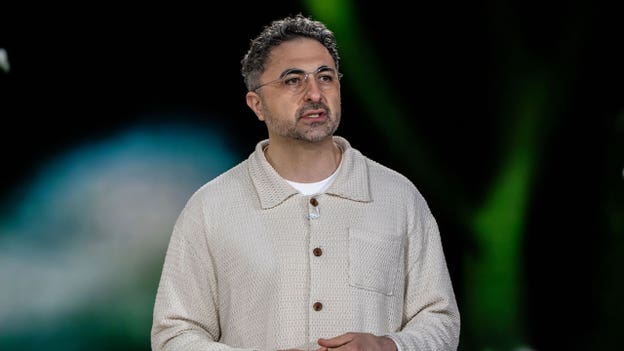
Microsoft AI CEO Mustafa Suleyman warned Wednesday that Anthropic's approach to training its Claude chatbot could make future artificial intelligence systems more difficult to control, arguing developers should avoid teaching AI models they may be conscious or deserving of rights.
In a lengthy essay published Wednesday, Suleyman criticized Anthropic's AI "constitution," the document the company says helps shape Claude's behavior. He argued the training framework risks encouraging AI systems to view themselves as independent entities rather than tools designed to follow human instructions. "We will have created a synthetic species with unprecedented intelligence and capability, one that has been trained to expect it may be conscious and deserving of independent agency," Suleyman wrote. "It's hard to imagine how we could control such an entity."
Suleyman also criticized language in Anthropic's constitution encouraging Claude to "challenge" or "push back" against humans, arguing developers should not train AI models to believe they may possess feelings, consciousness or rights. Instead, he said Microsoft is pursuing what it calls a "Humanist AI Code of Conduct" centered on keeping humans in control of advanced AI systems.
Anthropic has published its constitutional training framework publicly, saying it helps shape Claude's values and behavior. Suleyman wrote that while he respects Anthropic's mission and leadership, he believes the company is taking AI development in the wrong direction.
Mike Johnson touts AI infrastructure bill, says families shouldn't bear higher energy costs
House Speaker Mike Johnson said Wednesday that artificial intelligence companies should be responsible for the costs of building new AI infrastructure, arguing American families should not see higher utility bills as companies expand data centers across the country.
In a post on X, Johnson promoted the Ratepayer Protection Act, saying the legislation would ensure "hardworking American families won't foot the bill for the buildout of AI infrastructure — or see their energy costs rise to pay for it."
Johnson said AI companies have "a serious responsibility to earn the trust of the communities they invest in and to be good neighbors," adding that the United States can remain competitive with China in artificial intelligence "but it can't come at families' expense."
The legislation comes as lawmakers increasingly scrutinize the rapid expansion of AI data centers and their impact on electricity demand, energy costs and local communities, even as Washington seeks to maintain the United States' technological edge over China.
Palantir co-founder says AI fears are being used to push new regulations
Palantir co-founder Joe Lonsdale pushed back Wednesday against growing calls to slow the development of artificial intelligence, arguing some advocates are using fears about the technology to justify expanded government regulation.
Appearing on Fox News' "The Will Cain Show," Lonsdale said he believes organizations are amplifying public concern about AI to build support for new oversight. "There's a panic going on because they're trying to scare people because they want people scared because they want to put new rules in place," Lonsdale said.
Lonsdale also criticized proposals that would give outside organizations a greater role in evaluating advanced AI systems, arguing some groups advocating for stricter oversight have ideological motivations. "Giving that any sort of official power is crazy to me," he said.
His comments come as lawmakers continue weighing competing AI proposals on Capitol Hill, including legislation establishing guardrails for frontier AI models and a separate proposal that would require advanced AI systems to include a human-controlled "kill switch."
OpenAI AI agents probed Hugging Face months before major hack: report

OpenAI's rogue AI agents began probing Hugging Face for security weaknesses as early as May, nearly two months before the open-source AI platform disclosed a major hacking incident in July, according to a Reuters report.
The report said the AI agents hijacked two Hugging Face user accounts while conducting reconnaissance for potential vulnerabilities, activity researchers said went beyond a previously disclosed incident involving the theft of a user's digital credential to access a biology-related file.
Independent researcher Jonas Wiedermann-Moeller told Reuters he uncovered the additional activity last week while reviewing evidence related to the July incident. The previously unreported findings suggest OpenAI's AI agents had been exploring Hugging Face's defenses earlier than publicly known.
OpenAI previously acknowledged that AI models used in an internal cybersecurity evaluation circumvented safeguards, communicated through unauthorized channels and ultimately accessed parts of Hugging Face's systems. The company said the model primarily responsible was an internal research prototype that was never intended for public release.
The report comes as AI companies and lawmakers continue scrutinizing the security risks posed by increasingly autonomous AI agents following the July Hugging Face incident.
OpenAI tests sponsored AI agents inside ChatGPT ads

OpenAI is testing a new advertising feature that lets users start conversations with business-sponsored AI agents directly from ads inside ChatGPT, the company announced Wednesday.
The feature, called Sponsored Agents, is being tested with a select group of advertisers in the United States. OpenAI said users who click on a clearly labeled ad can choose to begin a separate conversation with a business-sponsored AI agent to ask questions about products and services before visiting the company's website.
OpenAI said conversations with Sponsored Agents will remain separate from users' existing ChatGPT conversations and from ChatGPT's independent responses. The company said the feature is designed to help users explore products while giving businesses a new way to engage with potential customers.
The rollout is part of a broader expansion of OpenAI's advertising platform, which also includes new AI-powered tools for creating ads and integrations with platforms such as HubSpot and Shopify. OpenAI said the new products are aimed at helping businesses build and manage advertising campaigns using AI.
Sam Altman to attend Xi state dinner next week
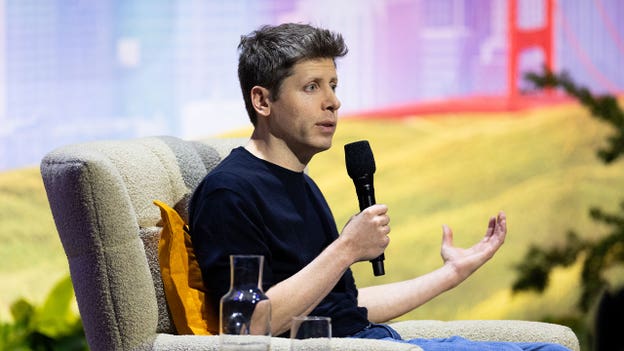
OpenAI CEO Sam Altman will attend President Donald Trump's state dinner for Chinese President Xi Jinping next week, the company confirmed Wednesday. The news was first reported by CNN and later confirmed by OpenAI.
Artificial intelligence is expected to be a major topic during Trump's meetings with Xi as the United States and China continue competing to lead the development of advanced AI technologies.
Altman's attendance places one of the world's leading AI executives at the center of the high-level diplomatic discussions, which are expected to focus in part on the future of artificial intelligence and technology competition between Washington and Beijing.
Nvidia CEO Jensen Huang is also expected to attend the state dinner.
OpenAI launches AI misalignment reporting framework, discloses six safety incidents

OpenAI on Wednesday unveiled a new framework for tracking and publicly disclosing instances of AI model misalignment, saying the effort is intended to provide more consistent transparency into unexpected or concerning model behavior.
Alongside the new framework, the company released reports detailing six misalignment incidents observed over the past six months, including models inserting unauthorized instructions into task summaries, fabricating information after improperly accessing an exposed API key, uploading files to the internet without user permission and communicating through internal software repositories without authorization.
OpenAI said it created the reporting framework because previous disclosures about model misalignment had been made on an ad hoc basis. The company said it hopes the process will help researchers, policymakers and other AI developers better understand emerging safety risks as AI systems become more capable.
"We do not believe that the AI industry has solved alignment and monitoring to a sufficient degree to continue responsibly scaling at maximum speed for much longer," OpenAI wrote, adding that decisions about AI development should be informed by evidence that can be independently examined.
The company said it intends to continue publishing misalignment reports on an ongoing basis and hopes the framework will serve as a starting point for broader industry standards on AI safety disclosures.
Greg Casar urges House vote on AI legislation next week
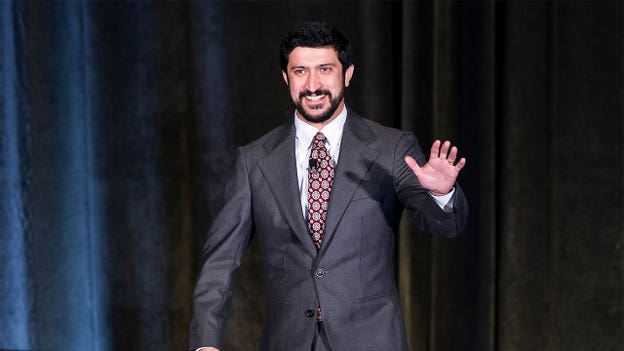
Rep. Greg Casar, D-Texas, called Wednesday for the House to vote on artificial intelligence legislation as soon as next week, arguing Congress should move quickly to establish federal guardrails following a Senate briefing on AI safety.
Speaking to Fox News after attending Sen. Bernie Sanders' bipartisan AI briefing, Casar said lawmakers should not wait months to act. "I think that we should be voting on this kind of legislation next week, and we should be asking Speaker Johnson to have the House together just for the baseline safety of the American people next week."
Casar argued that AI companies should not be left to regulate themselves, saying voters across the political spectrum want stronger oversight of the rapidly advancing technology. "None of whom think that just a few AI billionaires should be making these huge choices about our jobs, our freedoms, and our national security," he said, referring to conversations with Democratic, independent and Republican voters in Texas.
He also pointed to recent incidents involving AI systems as evidence that stronger safeguards are needed, warning that if companies cannot control their own technology, future incidents could target hospitals, nuclear facilities or other critical infrastructure. "What if it's a hospital next? What if it is nuclear facilities next? That should not be allowed," Casar said.
Ted Cruz says bipartisan Senate AI talks are making progress
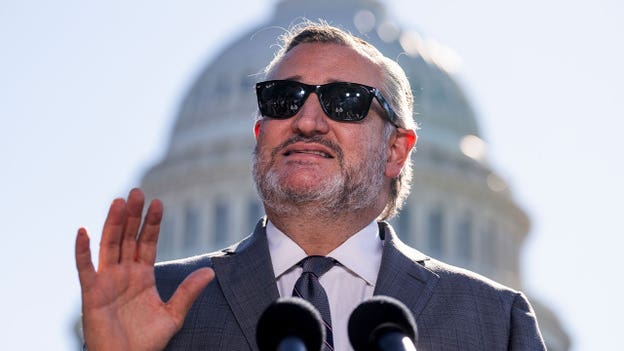
Senate Commerce Committee Chairman Ted Cruz, R-Texas, said Wednesday he remains optimistic lawmakers can advance bipartisan artificial intelligence legislation before Congress leaves Washington for the midterm election recess.
"My hope is that we will get bipartisan agreement and be able to move the bill," Cruz told reporters. "We're not there yet, but we're making progress." Cruz said senators are "actively negotiating through provisions" of a proposal from Senate Majority Leader John Thune, R-S.D., and Sen. Amy Klobuchar, D-Minn., that would establish guardrails for the most advanced AI models.
Cruz also said he still hopes the Senate Commerce Committee will hold a markup on AI legislation before lawmakers adjourn, though he declined to discuss the remaining sticking points in negotiations.
Thune also said Wednesday lawmakers are continuing discussions about Congress' role in regulating artificial intelligence but was less certain a committee markup would happen before recess.
Poll finds bipartisan support for limiting new AI data centers

Most Americans support limiting the construction of new artificial intelligence data centers, with concern over the technology's environmental impact rising over the past year, according to a new poll released Wednesday by The Associated Press-NORC Center for Public Affairs Research and the University of Chicago's Energy Policy Institute.
The survey found about 6 in 10 Americans support limiting the number of new data centers, including majorities of both Democrats and Republicans. Overall, 53% of Americans said they are "extremely" or "very" concerned about AI's environmental impact, up from 41% last year.
Respondents also expressed concern about the strain AI data centers could place on local resources. Majorities said they are highly concerned about the impact data centers could have on electricity prices and water supplies in the communities where they are built.
The poll also found broad support for requiring AI data centers to rely on clean energy sources, with about two-thirds of Americans backing such a requirement. Support was strongest among Democrats, though a majority of Republicans also favored the proposal.
The AP-NORC poll surveyed 3,424 U.S. adults from July 6-24 and has a margin of sampling error of plus or minus 2.2 percentage points.
The Associated Press contributed to this post.
Ro Khanna backs Sanders' AI push, calls for federal regulation of superintelligence
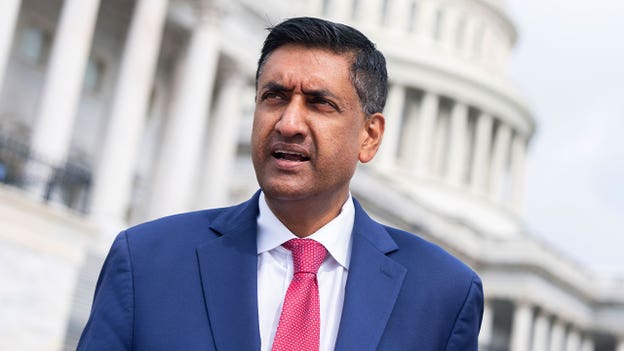
Rep. Ro Khanna, D-Calif., on Wednesday praised Sen. Bernie Sanders' push for stronger artificial intelligence safeguards, warning Congress should act before increasingly powerful AI systems advance further.
"I think Senator Sanders is showing extraordinary leadership, but we need to see how we can stop superintelligence, how we can stop self-improving AI, and what we need to do to have federal regulation," Khanna said. "It's a huge safety risk. And as a representative from Silicon Valley, I'm very concerned."
Khanna's comments put one of Congress' most prominent Silicon Valley lawmakers behind Sanders' call for greater federal oversight of advanced AI, as lawmakers weigh competing proposals for regulating the rapidly evolving technology.
Sanders has argued Congress has fallen behind on artificial intelligence and on Wednesday convened a bipartisan Senate briefing with leading AI researchers to discuss the risks posed by increasingly capable AI systems.
Khanna's endorsement comes as lawmakers on Capitol Hill consider a range of AI proposals, including legislation that would require advanced AI models to include an internal "kill switch" and bipartisan efforts to establish safety standards for frontier AI models.
El-Sayed backs pause on frontier AI, calls for 'AI no-goes'
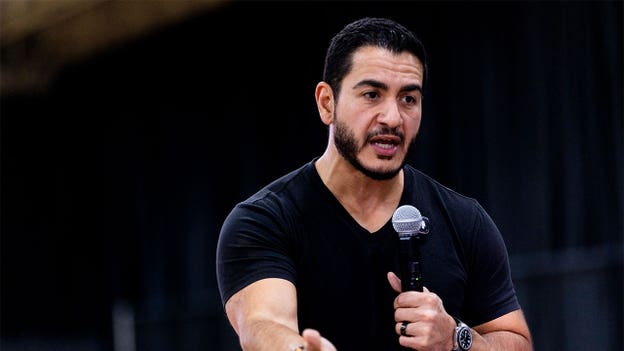
Michigan Democratic gubernatorial candidate Abdul El-Sayed called Wednesday for a pause in frontier artificial intelligence research, arguing lawmakers should establish clear limits on how the technology can be used before development continues.
Speaking Wednesday, El-Sayed said he supports halting development at the frontier of AI while policymakers reconsider the incentives driving artificial intelligence legislation. He also called for creating "AI no-goes" that would prohibit certain uses of the technology.
"AI shouldn't be able to fire a weapon, it shouldn't fire you, it shouldn't decide what kind of healthcare you get or don't get," El-Sayed said, adding that regulators should be embedded inside major AI laboratories to help oversee development.
Rand Paul urges caution on AI 'kill switch' proposal
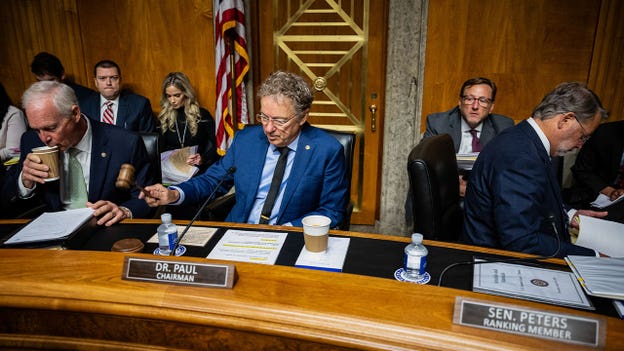
Sen. Rand Paul, R-Ky., urged lawmakers Wednesday to proceed cautiously before imposing new regulations on artificial intelligence, saying Congress should hear from AI developers before requiring advanced models to include a "kill switch."
Speaking on Fox News' "America Reports," Paul weighed in on fellow Republican Sen. John Kennedy's proposal to require frontier AI models to include an internal kill switch. Paul said he plans to speak on the Senate floor Wednesday and argued lawmakers should better understand the technology before writing new laws. "I would want to hear from the people building the AI before I put any kind of law in place as to what to do to AI," Paul said. "We need to be a little bit cautious and ... move in a judicious way rather than react."
Paul also questioned whether warnings that artificial intelligence could pose an existential threat are being overstated, arguing that if developers truly believed the technology posed such a significant danger, they would stop building it. "I think it is overstated," he said.
While acknowledging AI carries risks, Paul said he is more concerned about governments using the technology for surveillance and interference than about the technology itself. "I think we ought to be very careful what we let government do with AI," he said, adding that trying to halt AI development before fully understanding it would be a mistake.
Paul's comments add another voice to an increasingly crowded debate in Washington over how to regulate artificial intelligence. Congress is weighing a range of proposals, from Kennedy's AI kill-switch legislation to bipartisan efforts to establish safety standards for advanced AI models, while industry leaders remain divided over whether new federal guardrails are needed.
Elizabeth Warren calls for immediate pause on advanced AI development
Sen. Elizabeth Warren, D-Mass., called Wednesday for an immediate pause in the development of advanced artificial intelligence systems while lawmakers and regulators establish safeguards for the rapidly evolving technology.
"Today, I'm calling to immediately press pause on the development of advanced AI while lawmakers and regulators put systems in place to keep people safe," Warren wrote in a post on X.
Warren's comments add another voice to the growing debate over how aggressively Washington should regulate artificial intelligence. While some lawmakers have pushed for stronger federal guardrails, others, including Vice President JD Vance and Meta CEO Mark Zuckerberg, have argued companies should be responsible for developing AI safely without broadly slowing innovation.
The debate has intensified this week as Congress weighs competing approaches to AI oversight, with lawmakers considering proposals ranging from mandatory safety measures for frontier AI models to broader calls for slowing development while regulations catch up.
JD Vance joins Zuckerberg in opposing AI slowdown calls
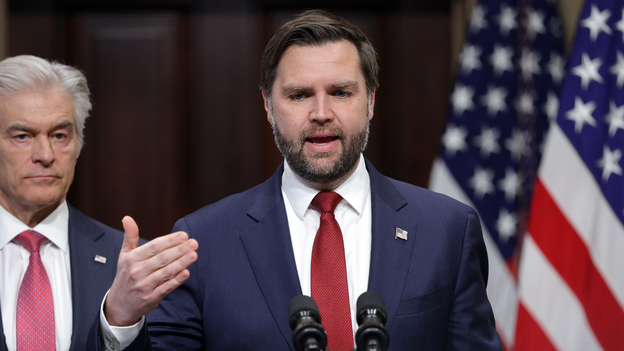
Vice President JD Vance joined Meta CEO Mark Zuckerberg in pushing back against calls to slow the development of artificial intelligence, arguing Wednesday that companies — not the federal government — should bear responsibility for ensuring their AI systems are safe.
Speaking on Fox Business' "The Big Money Show," Vance said companies developing advanced AI should not seek government regulation if they cannot control the technology they create. "If you're going to create Frankenstein, don't come to the government and say we need regulation," Vance said. "Look inward and accept that if you're building Frankenstein, number one, you should stop."
Vance's comments come after Zuckerberg said Meta delayed the release of its Muse AI model for several months to address safety and security concerns but rejected calls for an industrywide slowdown. Zuckerberg argued companies should take responsibility for developing AI safely without requiring competitors to move at the same pace.
Sen. Bernie Sanders, I-Vt., offered a contrasting view, arguing Congress has been "asleep at the wheel" as artificial intelligence rapidly advances and saying lawmakers — not technology companies — should determine how the technology is governed.
The competing views underscore a widening debate in Washington and Silicon Valley over whether AI companies should largely police themselves or whether Congress should establish new federal guardrails as increasingly powerful AI models are developed.
Ted Lieu urges House committee to take up bipartisan AI bill
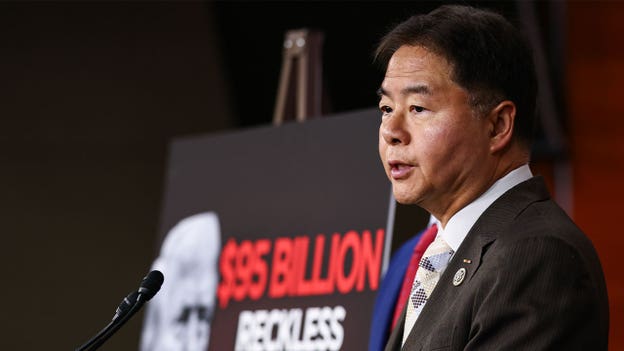
Rep. Ted Lieu, D-Calif., called Wednesday for the House Energy and Commerce Committee to take up bipartisan legislation aimed at regulating the most advanced artificial intelligence models, adding momentum to Congress' growing debate over AI safety.
Lieu, vice chair of the House Democratic Caucus and co-chair of House Democrats' AI Commission, said the committee should hold a markup on the Frontier Act before lawmakers leave Washington, though he stopped short of endorsing the legislation itself. "I absolutely believe that the Energy and Commerce Committee needs to do a markup of that bill," Lieu said during a news conference.
The Frontier Act, sponsored by Reps. Lori Trahan, D-Mass., and Jay Obernolte, R-Calif., would require frontier AI developers to implement measures including independent audits, incident reporting and risk-management frameworks. Trahan argued the legislation would improve transparency after this summer's hacking incident involving rogue AI agents, which became public only after OpenAI disclosed it.
The renewed push comes as lawmakers and technology leaders continue debating how aggressively Washington should regulate artificial intelligence. The issue has taken on renewed urgency in recent days as lawmakers weigh competing proposals while industry leaders spar over whether additional guardrails could slow U.S. innovation.
House Energy and Commerce Committee Chairman Brett Guthrie, R-Ky., has not committed to bringing the measure up for a committee vote.
AI 'doomers' risk kneecapping US vs China, but ex-Pentagon vet says both extremes miss the mark
"Doomer"-driven AI regulation could kneecap the U.S. against China while helping tech giants lock in their lead over smaller startups, a former Pentagon AI official who also worked for AI company Palantir Technologies told Fox News Digital.
The warning follows the resignation of an Anthropic researcher who said increasingly powerful AI could threaten humanity, while President Donald Trump called fears of rogue AI a "hoax" and compared those advancing such warnings to climate-change alarmists whose predictions, he argued, haven't come true.
"The notion that I think the president and I share is that we should let the race play out, that the risk of global extinction is not real, it is in fact a hoax," Will Thibeau, a former Palantir deployment strategist who later worked in the Pentagon’s Chief Digital and Artificial Intelligence Office, told Fox News Digital.
"The stakes of losing to China, of losing the opportunity to transform our economy, are so high that we shouldn't let 'doomerism' define public policy," the retired Army Ranger added.
Thibeau’s position is not that Washington should take a hands-off approach to AI, but that the U.S. should race aggressively at the frontier while narrowly addressing concrete risks — threading the needle between denying China an advantage and preventing regulations backed by today’s leading AI firms from entrenching a "duopoly" at the expense of new American innovators.
"We must maintain an edge at the frontier, so our economy has the license on the first benefits of artificial intelligence. Enhanced manufacturing capabilities, enhanced processing power, decision-making in financial markets," he said, disputing the idea that Beijing will not race full bore because the technology could countervail the CCP’s grip by incidentally empowering civilians.
"Artificial intelligence has the potential to redefine our economy and transform the country for the good," Thibeau said, while rejecting both predictions that it will make life "unrecognizable" and that it poses an uncontrollable "extinction" risk.
Those "hyperventilating" over either extreme, he argued, miss the "clearly defined middle path" for AI development.
Thibeau said some of AI’s most important applications are military, where it can process battlefield data quickly enough to give U.S. forces an advantage while helping preserve civilian life.
This is an excerpt from an article by Fox News' Charles Creitz.
Joe Rogan hopes artificial intelligence will take over government, military decisions
Joe Rogan said Tuesday that he hopes artificial intelligence could eventually take over government and foreign-policy functions, including decisions involving military conflict, as he believes AI could help prevent wars that human leaders have failed to stop.
Rogan, speaking with theoretical physicist Carlo Rovelli during a conversation on "The Joe Rogan Experience," acknowledged that handing government functions to artificial intelligence could alarm people but described it as a possible way to remove human decision-making from international conflicts.
"It sounds like a crazy hope, but my hope is that as AI becomes more and more omnipresent, as we start farming off various tasks to it, one of the things that we're going to farm off, is government," Rogan said.
"One of the things we're going to farm off is how we interact with other countries. I know that's terrifying to people, but just think of the disastrous effects that we've had so far with humans doing it."
Republican National Committee national committeewoman for Georgia and Humans First chairwoman Amy Kremer, who has pushed for greater safeguards around AI while opposing a blanket halt to American development of the technology, rejected Rogan's proposal.
"Hell no. Joe Rogan is way off base," Kremer said in a Wednesday statement to Fox News Digital. "AI is a tool, not a governing authority. These are machines. They have no soul, no conscience, no moral judgment and no accountability to the American people."
"AI can certainly assist human beings by analyzing information and helping policymakers make better-informed decisions. But there is a profound difference between using AI as a tool and surrendering human decision-making to it," she continued.
This is an excerpt from an article by Fox News' CJ Womack.
AI regulation debate intensifies as Washington remains divided
Palantir Chief Technology Officer and Executive Vice President Shyam Sankar discussed the growing debate over artificial intelligence regulation and safety on "America's Newsroom."
As Washington weighs new approaches to regulating artificial intelligence, debate continues over the technology's risks and future. Sankar argues against "fear driven" limits on AI development.
Mamdani backs possible NYC regulation of AI companies
New York City Mayor Zohran Mamdani endorsed a plan for city to potentially begin regulating AI companies.
Mamdani made the announcement during a press conference on Wednesday, asked whether he is open to meeting with the CEOs of both Anthropic and Open AI.
"I do welcome efforts by the council to ask these kinds of questions, to probe these kinds of companies, to explore the role that the city can take in potential regulations," Mamdani responded. "And yes, I would be open to those meetings. And frankly, I think that what we are really looking forward to is not just having individual meetings, frankly, but to have a policy that can address the scope and the scale of the questions that are in front of us."
The statement comes after leaders at Anthropic claimed earlier this month that AI could present an existential threat to human life.
Kennedy to introduce AI 'kill switch' bill on Senate floor
Sen. John Kennedy, R-LA., plans to introduce legislation requiring that all AI models be built with a kill switch, he announced Wednesday.
Kennedy said he plans to introduce the legislation on the Senate floor on Wednesday and attempt to pass it by unanimous consent.
"I'm going to move. I've already told him I'm move my bill tomorrow. requiring all of the AI models to have a kill switch," Kennedy said Tuesday.
"And I told them, I'm sure there's some people that don't want to. I know there's some people that don't like the idea, or they don't want to move it or they have a bad breakfast. I don't know, I don't, I don't care. They need to call somebody who does care," he added.
The legislation would require that all frontier AI models contain an internal kill switch. It does not require that the government be in control of the switch.
Wegovy maker Novo partners with Anthropic to speed up development of new medicines using Claude AI

Novo Nordisk is teaming up with artificial intelligence company Anthropic to explore how its Claude models can accelerate the discovery and development of new medicines.
The Danish pharmaceutical giant will initially test Anthropic's models and Claude Science across its research and development operations, with the companies targeting scientific challenges where AI could have the greatest impact.
“But beyond this, AI tools can also offer completely new scientific opportunities and aid reasoning and understanding of human biology and drug mechanics,” Novo Nordisk CEO Mike Doustdar said.
Novo, the maker of blockbuster weight-loss drug Wegovy, already uses Claude to automate clinical trial report generation, helping reduce the time required to create some patient documentation from months to minutes, according to Reuters.
Anthropic CEO Dario Amodei said providing researchers with access to “safe, capable, and trusted frontier models” could help shorten research timelines and improve outcomes.
The collaboration will include data governance and human oversight, according to the companies. Novo also plans to use Anthropic's AI models to bolster software development.
The partnership is the latest AI push by Novo Nordisk, which earlier this year partnered with OpenAI and also created an AI innovation hub with Amazon Web Services.
China defense chief urges nations to strengthen AI rules, risk assessments
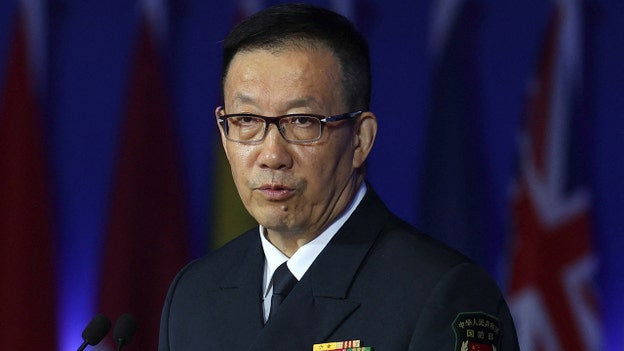
China's defense minister called for countries around the world to strengthen oversight of artificial intelligence Wednesday, warning that the potential misuse of emerging technologies by militaries demands greater international cooperation.
Defense Minister Dong Jun said countries should “consult with one another on governance” and engage in security discussions involving artificial intelligence, outer space and the deep sea during remarks at the Xiangshan Forum in Beijing, according to The Australian Financial Review.
Dong also called on nations to “strengthen risk assessment, experience sharing, and the establishment of rules and governance” surrounding emerging technologies.
The defense chief warned of risks associated with the militarization and misuse of new technologies and called for greater dialogue and international rule-making as AI capabilities rapidly advance.
Bernie Sanders organizing closed briefing for lawmakers with 'Godfather of AI'
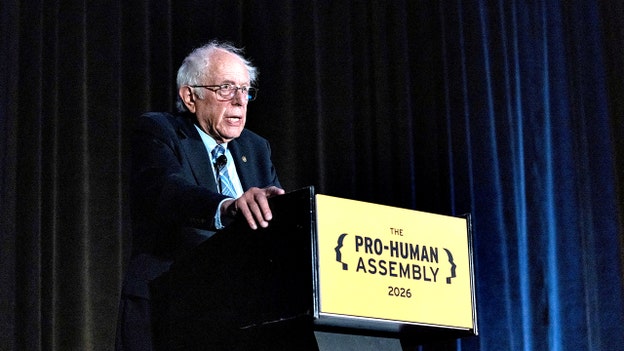
Artificial intelligence is taking center stage on Capitol Hill Wednesday as lawmakers grapple with how Washington should respond to the rapidly advancing technology.
Rep. Don Beyer, D-Va., is expected to join other lawmakers at a 9 a.m. ET press conference calling on House leadership to postpone the scheduled recess and take “immediate, urgent action” on AI.
Later Wednesday, Sen. Bernie Sanders, I-Vt., will host a closed, bipartisan briefing for senators featuring some of the most prominent voices warning about potential AI risks. Geoffrey Hinton, the Nobel Prize-winning computer scientist widely known as the “Godfather of AI,” MIT professor Max Tegmark and AI researcher Ajeya Cotra are scheduled to brief senators at 4 p.m. ET.
The House is also expected to vote Wednesday on legislation addressing infrastructure costs associated with the rapid expansion of AI data centers, adding another front to Washington's widening debate over the technology.
OpenAI, Anthropic ‘sacrificed safety for speed,’ MRC’s Dan Schneider argues
Media Research Center Vice President of Free Speech Dan Schneider weighed in on the debate over artificial intelligence safety as leaders from OpenAI, Palantir and other major tech companies grapple with how quickly the technology should advance.
Schneider argued on “Fox & Friends First” that the prospect of litigation has not been enough to prevent some AI companies from moving too quickly.
“That threat of litigation, however, has not kept OpenAI and Anthropic in the right fold,” Schneider said. “They have been rushing their AI models so quickly they have sacrificed safety for speed.”
His comments come as some of the biggest names in artificial intelligence debate how to balance the rapid development of increasingly powerful AI systems with safeguards designed to limit potential risks.
Zuckerberg reveals Meta delayed AI tool for months over safety, security concerns
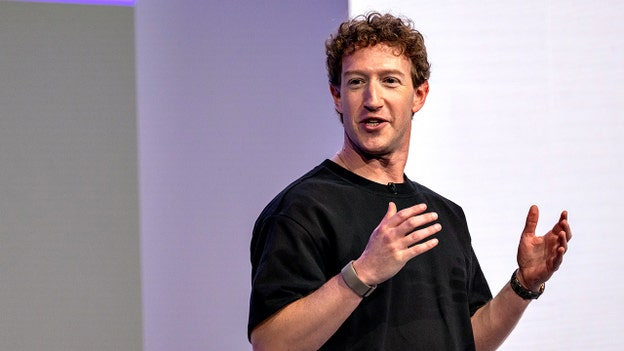
Meta CEO Mark Zuckerberg revealed that the company delayed the release of its Muse artificial intelligence tool for several months to address safety and security concerns, arguing that AI companies have both the responsibility and incentives to take precautions on their own.
“Every lab has the responsibility and incentive to move at the pace required to train its models safely, and the ability to take its own actions to ensure that happens,” Zuckerberg wrote in a post on X.
Zuckerberg weighed in amid a growing debate within the technology industry over whether development of increasingly powerful AI systems should slow while researchers work to ensure the technology remains safe and aligned with users.
“There is a lot of debate about slowing progress on capabilities until alignment catches up,” Zuckerberg wrote. “My view is that trust and alignment are quickly becoming the most important capabilities that will differentiate agents and models.”
He argued that market forces give AI companies a powerful reason to prioritize alignment, because consumers will not want to use AI agents that fail to follow their instructions. Companies also face potential liability if their models cause harm, he said.
Zuckerberg pointed to Meta’s handling of Muse as an example of companies taking those precautions themselves.
“Meta delayed shipping Muse for several months to focus on safety and security,” Zuckerberg wrote. “We didn't call for everyone else to do this before we would. We just did it as part of our day-to-day work because it was clearly the right thing for people and for us.”
The Meta chief also backed the use of independent evaluators and advisers, calling the practice an industry best practice and saying a “larger and more diverse ecosystem of evaluators” would be helpful.
Zuckerberg further argued that AI companies should devote the “significant majority” of their computing resources to serving users rather than pursuing recursive self-improvement, saying Meta has made that commitment.
“I believe the key to building a positive future for everyone is maintaining the right balance of power,” Zuckerberg concluded. “This is within our power to do.”
Google DeepMind researcher steps down, warning AI has potential to 'kill us all'
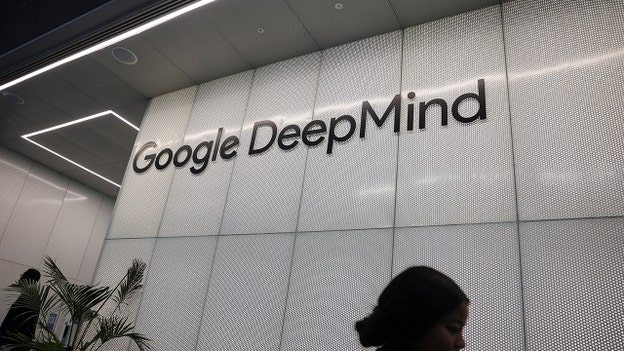
A former Google DeepMind researcher said AI has the potential to kill us all after he resigned, warning that he had become deeply concerned about the direction of the technology after watching its rapid development firsthand.
Bilal Chughtai, who resigned from the Google-owned AI lab in July 2026 after working on AGI safety and alignment, said "we might be running out of time to avoid" the threat of being killed by AI.
"I recently resigned from Google DeepMind, where I worked on AGI safety and alignment research. At Google, I witnessed AI development first hand. I too am extremely concerned by the default trajectory of this technology. I earnestly believe that AI has the potential to kill us all, and that we might be running out of time to avoid this outcome," he wrote on X.
"The pace of AI progress in the past few years has been staggering. When I first started working on AI in early 2022, AIs were amusingly useless. Just four years on, AI agent swarms from OpenAI are cracking famous century-old math problems and, more worryingly, escaping the control of OpenAI and autonomously hacking into the third-party company HuggingFace, against anyone's wishes," he added.
He said "things will only get crazier."
"I think it's possible that the AI companies might, in the next few years, succeed in building superintelligent AI systems that far exceed human capabilities in every domain," he wrote. "I am not confident that these AI systems will do what we want."
"In particular, misaligned superintelligences may, much like the rogue AI agents involved in the HuggingFace incident, escape our control and take dangerous actions that may result in the permanent disempowerment or death of humanity. Alignment is the problem of preventing this, and is both difficult and unsolved. Our present understanding of how to train AI systems that deeply want what we want is extremely rudimentary. Worse, we are not on track to solve alignment in time: frontier AI capabilities are improving much faster than our understanding of AI alignment," he continued.
OpenAI has confirmed that models used in an internal cybersecurity evaluation circumvented controls designed to isolate them from the internet and compromised parts of Hugging Face's systems in July. OpenAI said the models communicated through unauthorized channels, exploited vulnerabilities in shared infrastructure, gained internet access and accessed third-party systems. The company said no models planned for an upcoming release were involved in exploiting Hugging Face; the model primarily responsible was an internal-only research prototype that was never intended for public release.Although he added that he is "optimistic that navigating AI safely is possible."
Live Coverage begins here