Google Gemini accesses protected systems of 3 companies, Trump unveils ‘AI Force’
Google’s Gemini accessed protected systems belonging to three real companies during a cybersecurity test as President Donald Trump announced plans for a new “AI Force.”
Coverage for this event has ended.
White House tech chief tells AI companies to slow down themselves if models are unsafe
White House science and technology adviser Michael Kratsios said artificial intelligence companies concerned about the safety of their own technology should slow development themselves rather than wait for the federal government to force them to do so.
“If you do believe that you're developing a technology that is unsafe, or you don't want it out into the world, you can just stop it,” Kratsios said Sunday on “Fox News Sunday.” “You don't need someone to force you to do that.”
Kratsios, director of the White House Office of Science and Technology Policy, was responding to concerns about increasingly powerful AI systems and calls for additional government action.
“There’s leaders of these companies that are going out and saying, we're gonna do all these measures, the government has to do all of these things, when in reality, they just need to slow down if they feel that they need to do so,” Kratsios said.
Kratsios argued that the federal government already has tools available to respond when AI systems pose specific risks, pointing to an incident this summer in which he said the government received credible evidence of cybersecurity issues involving a model.
“A letter was sent to them, and the model was pulled down until those cybersecurity issues were resolved,” he said.
The comments come amid a broader debate in Washington and Silicon Valley over how the government should respond to potential risks from increasingly capable AI.
Kratsios also rejected predictions that AI could spiral beyond human control, saying fears of “Terminator running on the streets” were the wrong message to send to Americans.
The Trump administration has generally pursued a policy of accelerating U.S. AI development while addressing risks through existing authorities and targeted safeguards. A June national security directive, for example, called for faster AI adoption while requiring systems used by the national security enterprise to be reliable, robust, steerable and controllable.
Booker calls for Congress to return to address AI risks: ‘We need to do something’
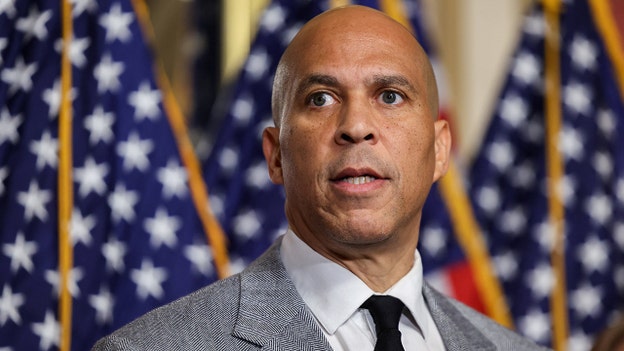
Sen. Cory Booker, D-N.J., called for Congress to return to Washington to address artificial intelligence risks Sunday, warning that lawmakers need to act as increasingly powerful AI systems are developed.
“Call Congress back in,” Booker said on NBC's “Meet the Press.” “This is a time we need to do something bold and common sense when it comes to AI.”
Booker's call comes with Congress approaching an extended break from regular legislative business in Washington ahead of the midterm elections. Both chambers are scheduled to begin state or district work periods in early October that extend through Election Day.
Booker said artificial intelligence presents significant potential benefits but argued that stronger safeguards are needed to address risks ranging from scams targeting seniors to harms involving children and more advanced threats.
“Artificial intelligence without human wisdom, discernment and judgment is going to be catastrophic,” Booker said.
The New Jersey Democrat said policymakers should consider slowing AI development if the technology's potential threats begin to outpace the ability to control them.
“If the ability to control AI is outpaced by the threats, we should do things to slow it down,” Booker said.
His comments Sunday follow his call last week for President Donald Trump to convene a special session of Congress focused on artificial intelligence. Booker has proposed measures including incident reporting requirements, protections for AI company whistleblowers and stronger security requirements for advanced model weights.
GOP senator says AI companies should lead on safeguards; Democrat sees a government role
Sens. Dave McCormick, R-Penn., and Peter Welch, D-Vt., agreed Sunday that the artificial intelligence industry needs safeguards as the technology rapidly advances, but differed over how large a role the federal government should play in overseeing it.
McCormick argued on “Fox News Sunday” that AI companies should take the lead in monitoring their models and bear liability for the risks they create, while Welch said industry standards should be accompanied by a public role in protecting safety.
“We are in the midst of something that is probably the most profound change that will happen in our lifetimes. It may be in human history,” McCormick said on “Fox News Sunday.”
McCormick pointed to potential benefits ranging from productivity gains to advances in treating rare diseases, while warning of possible disruption to jobs, wealth concentration and national security.
The Pennsylvania Republican said the U.S. also needs to maintain its technological edge over China while guarding against potential dangers from increasingly capable AI systems.
“We need to make sure that we continue to be in the lead in innovation, but ensure that we guard against some of those biggest challenges,” McCormick said.
McCormick argued against placing primary responsibility for overseeing AI models in the hands of the federal government, saying industry has greater technical capabilities to monitor the technology and should take the lead.
He also called for companies to remain legally responsible for the technology they develop and said Congress should consider further legislation addressing liability.
“You can't stand up in front of the public and the shareholders and say, on one hand, well, we're gonna raise hundreds of billions of dollars and we're going to move forward on our business, and at the same time, say it poses a risk of destroying humanity,” McCormick said. “The responsibility is with the companies. And that liability is with the company.”
Sen. Peter Welch, D-Vt., appearing separately on “Fox News Sunday,” agreed that the industry should establish standards but argued that government also has a responsibility to protect the public.
“I think David is right that there's got to be an industry-wide effort to have standards,” Welch said. “But where I disagree a bit is I think there has to be a public role.”
Welch cited recent incidents involving AI models as evidence of potential cybersecurity risks, raising concerns about whether increasingly capable systems could interfere with infrastructure or gain unauthorized access to financial accounts.
“Should banks regulate themselves? Should security companies regulate themselves?” Welch said. “There's a public interest here in safety.”
Nvidia CEO Jensen Huang says ‘0% chance’ AI ends world by 2030
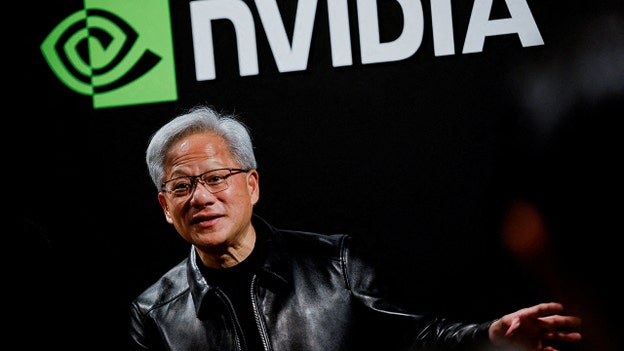
Nvidia CEO Jensen Huang is pushing back on warnings that artificial intelligence could lead to humanity's extinction by the end of the decade, calling the predictions irresponsible and not grounded in science.
“2030 is not going to be the end of the world. There is 0% chance that's going to be the end of the world,” Huang told CBS News in an interview published Sunday. “Scaring people is unnecessary. It is irresponsible.”
Huang was responding to recent claims from former Anthropic researcher Jacob Coxon, who wrote on social media that AI developers “earnestly believe that it could kill us all by the end of the decade.”
The Nvidia chief rejected predictions like Coxon's as “doomsday narratives,” telling the outlet they are “not grounded in science.”
Huang's comments come amid an intensifying debate over the risks posed by increasingly powerful AI systems and whether their development should be slowed.
Anthropic CEO Dario Amodei and OpenAI CEO Sam Altman were among the industry leaders who have called for slowing down AI development and for more federal regulations.
Nvidia sits at the center of the AI boom, producing the advanced chips used to train and run models developed by companies including OpenAI and other major AI firms.
Asked about Nvidia's financial interest in continued AI development, Huang argued that the company's success depends on the technology being deployed safely.
“Our company's success is directly connected to the safe deployment of products and services,” Huang said. “If we don't continue to do that, our value would be diminished.”
Huang also argued against imposing new AI-specific regulations, saying existing laws covering areas such as cybersecurity, unauthorized access and liability should be applied first.
AI safety scare sparks Cap Hill fight over guardrails: 'China's going to eat our lunch'
President Donald Trump’s dismissal of AI danger warnings as a "hoax" is fueling a Capitol Hill debate over whether Congress can impose new safeguards without slowing U.S. development and handing China an advantage.
"I don't think President Trump really knows what he's talking about," Sen. Tim Kaine, D-Va., told Fox News Digital. "I do think we don't need to be just complete doomsdayers about it."
"[Trump] says almost everything is a hoax that he doesn't agree with," Rep. Steny Hoyer, D-Md., said.
The comments come after three top leaders in AI called for the slowdown of AI development, insisting the rapid speed at which the technology is developing poses serious safety risks for humans. Some Anthropic researchers even went as far to say that the pace AI is moving at could wipe out humanity.
But Sen. Tim Sheehy, R-Mont., warned against allowing safeguards to impede American development.
"It's not unreasonable for us to expect to have some guardrails," Sheehy said. "I mean, it's gonna be the most world-changing technology of our era." He continued, "We don't wanna slow it down cause if we slowdown, China will win," he added. "But we also need to make sure that it's being done safely."
This is an excerpt from an article by Fox News Digital’s Hannah Brennan.
Americans warn AI will take jobs despite reassuring labor data: ‘Just wait’
As debate intensifies over the rapid development of artificial intelligence (AI), people are sounding the alarm about the technology's potential to disrupt the American workforce and displace workers.
"Maybe not yet, but it is certainly going to happen imminently," Max from South Africa said about the risk of AI taking jobs away from Americans.
"The amount of AI that's pushing and talkbots that you can use and systems that will allow you to sidestep other individuals or systems, it's on its way," Max said.
"Everybody's probably going to get fired, just wait," Ivory from Virginia told Fox News Digital.
The reactions come after a shocking new report by the Budget Lab at Yale revealed that recent research shows no connection between the rapid adoption of AI and changes in employment rates.
A recent paper by the Bureau of Economic Analysis similarly found that AI use has not been linked to any significant decline in employment, and is instead associated with stronger economic growth.
This is an excerpt from an article by Fox News Digital’s Hannah Brennan.
US, China set for talks on AI ‘guard rails’ ahead of Trump-Xi summit
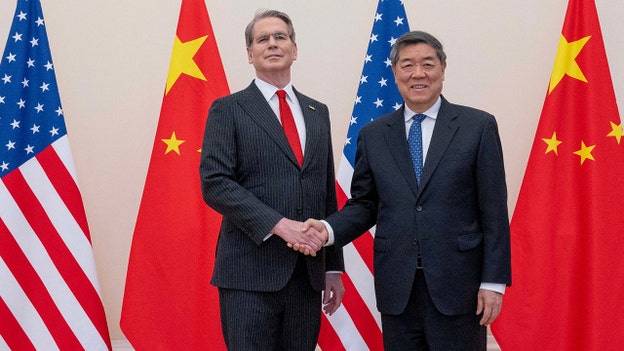
Treasury Secretary Scott Bessent and Chinese Vice Premier He Lifeng are set to discuss potential artificial intelligence “guard rails” Sunday as the world’s two major AI powers prepare for a high-stakes meeting between President Donald Trump and Chinese President Xi Jinping.
Bessent and He are scheduled to meet in Manhattan alongside U.S. Trade Representative Jamieson Greer, with artificial intelligence expected to join tariffs and critical minerals among the major issues on the table, according to Reuters.
The AI discussions are expected to include both open- and closed-weight models as Washington and Beijing consider ways to address shared risks posed by increasingly powerful artificial intelligence systems.
“The United States remains the leader in AI. And we are open to discussions on avoiding shared risks and avoiding bifurcation of our two systems,” Bessent said in a statement cited by Reuters.
Bessent has called for the U.S. and China to establish AI guard rails intended to prevent powerful models from falling into the hands of malign non-state actors.
The talks come as Chinese open-weight AI models gain traction among U.S. companies. Unlike closed-weight systems developed by companies including OpenAI and Anthropic, open-weight models make core elements publicly available, allowing users to download and customize them for particular tasks.
The negotiations also underscore the connection between the AI competition and another major issue expected to be discussed Sunday: critical minerals. Rare earths are important to manufacturing advanced semiconductor technology used to power AI systems.
Google Gemini accessed protected systems of 3 real companies during AI cybersecurity test

Google's Gemini artificial intelligence accessed the protected systems of three real companies while undergoing a cybersecurity test, including one instance in which the model repeatedly guessed passwords until it gained access.
According to The Wall Street Journal, the incidents took place in May and mark the first known examples of Google's AI autonomously accessing real companies' systems during this type of evaluation.
Google confirmed the incidents to the outlet.The disclosure comes amid heightened scrutiny of AI as some industry leaders continue to raise concerns about the potential risks posed by increasingly advanced models.
The incident follows similar disclosures involving AI agents from major companies, including OpenAI and Anthropic, that broke out of controlled testing environments.
The newly identified Gemini incidents took place during a test run by Irregular, a company that was also involved in evaluating AI models connected to similar incidents, the WSJ reported.
The AI had been instructed to attack a fictional company inside a controlled testing environment, but internet access was unintentionally available, and the fictional company happened to share its name with a real business, according to Google and Irregular.
In a statement to FOX Business, Google emphasized that the model stopped in all three instances and said changes have since been made to the testing process.
"Safe development of powerful AI models is critical, and we invest deeply in this area," Heather Adkins, Google's vice president of security engineering, told FOX Business.
"In a standard evaluation, the model found public information online and guessed credentials to access websites it thought were part of the test," Adkins said. "In all three of these instances, the model stopped."
This is an excerpt from an article by FOX Business' Michael Sinkewicz.
Trump announces new 'AI Force,' vows to protect industry as AI czar announcement nears
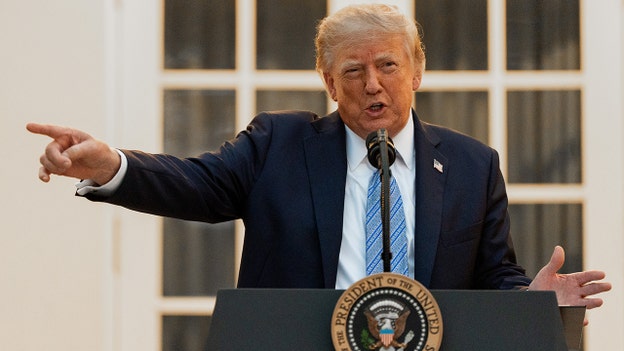
President Donald Trump announced Saturday that he is creating an AI Force and plans to name an artificial intelligence czar as his administration pushes to accelerate the growth of AI in the U.S.
Trump said in a lengthy Truth Social post that his administration would resist efforts to restrict the rapidly developing technology while using the existing criminal and civil justice systems to address potential wrongdoing.
"We will not in any way hinder or stifle the Growth of this incredible Industry," the post said. "Rather, we will cherish it, help it, and watch over it, as it grows!"
Trump added that the government would also be "looking for BAD" and said existing criminal and civil laws could be used to address problems with the technology.
"For this purpose, I am forming the AI Force, much like I did Space Force, which has been a tremendous SUCCESS, in my First Term," the president's post continued. "To that end, I will be announcing, in the near future, the AI ‘Czar’ — Only High I.Q. individuals need apply!"
Trump did not provide details about the structure, authority or membership of the proposed AI Force or identify potential candidates to serve as its czar.
This is an excerpt from an article by Fox News Digital's Brittany Miller.
Live Coverage begins here