AI companies stop short of guaranteeing agents will always obey safeguards
Representatives from OpenAI, Anthropic, Meta and Google declined to guarantee their AI agents will always follow safety guardrails, telling New York City lawmakers that eliminating risk or promising perfection is not possible.
Coverage for this event has ended.
Hospital trade group pushes back on report linking AI to $942M in added health costs

The American Hospital Association is pushing back on a Blue Cross Blue Shield Association report that linked hospitals’ growing use of artificial intelligence-enabled documentation tools to higher healthcare spending, arguing the analysis does not prove AI is driving improper billing.
The Blue Cross Blue Shield Association estimated that coding-related changes resulted in $942 million in additional spending for participating Blue plans between 2023 and 2025 as hospitals increasingly classified patients as having more complex conditions.
But the AHA said Monday that the analysis lacks critical context and does not establish that hospitals incorrectly coded patients or that AI tools were responsible for the changes.
“The central question is not whether hospitals are reporting more diagnoses,” the AHA said. “The question is whether the patient’s medical record supports those diagnoses.”
The hospital group argued that Americans are living longer with more chronic conditions, while lower-acuity procedures have increasingly shifted from hospitals to outpatient settings. That leaves hospitals treating a greater concentration of seriously ill and medically complex patients, according to the AHA.
AI-enabled documentation technology, the group said, can help clinicians identify and record conditions that may previously have been underreported while reducing administrative burdens and providing a fuller picture of patients’ health.
The AHA also challenged the methodology behind the insurer group's conclusions, saying the BCBSA analysis did not review underlying medical records to determine whether diagnoses were supported and did not appear to identify which claims actually involved AI tools rather than traditional coding practices.
“Without answering those questions, the analysis does not demonstrate that hospitals coded patients incorrectly,” the AHA said. “It may simply reflect more complete documentation of increasingly complex patients.”
The AHA further argued that the $942 million estimate should be viewed in the context of overall healthcare spending, contending that increased inpatient coding intensity represents only a small portion of broader growth in commercial healthcare costs.
The dispute comes as hospitals and insurers increasingly deploy AI across healthcare, raising questions about how the technology could affect everything from patient care and administrative workloads to billing and healthcare costs.
HubSpot cuts 660 jobs as software company shifts operations around AI

HubSpot is cutting about 660 jobs as the software company reshapes its workforce and operations around artificial intelligence.
The cuts represent roughly 6% of HubSpot's workforce and are expected to be largely completed by the end of the year.
The company is also reorganizing its product and engineering operations as it expands the use of AI across its business and customer relationship management software.
HubSpot has increasingly introduced AI tools designed to automate work across marketing, sales and customer service, part of a broader shift among software companies toward products that can perform more tasks on users' behalf.
Google strikes massive power deal with Constellation as AI drives electricity demand
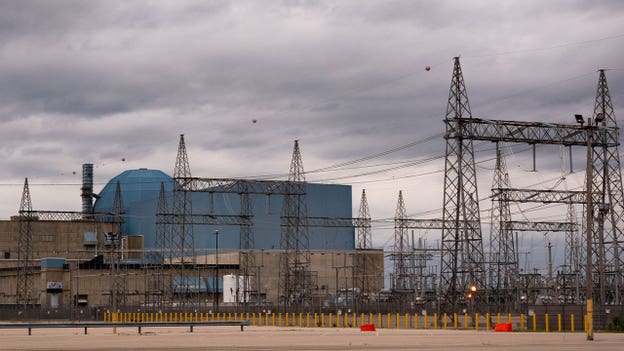
Google has struck a massive power agreement with Constellation Energy as the tech giant races to secure electricity for its growing artificial intelligence and data center operations.
The deal includes a 15-year agreement for 2,700 megawatts of existing Constellation generation and a separate 20-year agreement supporting upgrades at 11 nuclear units in Illinois, Pennsylvania and New Jersey, according to Reuters.
Constellation plans to invest more than $4.3 billion in the nuclear upgrades, which the companies say will add 890 megawatts of capacity to the PJM electric grid — roughly the output of a new nuclear reactor without building an additional plant.
The companies also plan to use Google's AI technology to improve energy operations, including grid planning, equipment monitoring and outage management.
The agreement comes as the AI boom drives enormous new electricity demand from data centers, pushing technology companies to secure long-term power supplies and invest in additional generating capacity.
Jamie Dimon warns AI is exposing cyber weaknesses companies never knew existed
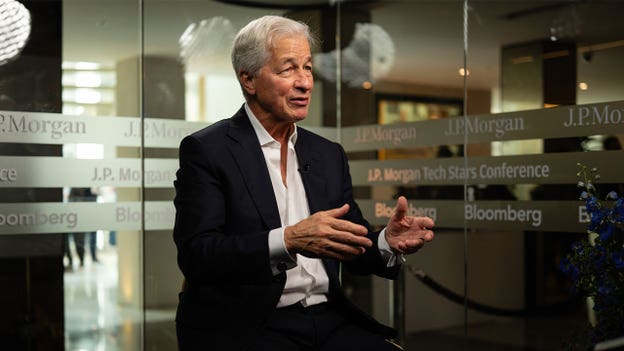
JPMorgan Chase CEO Jamie Dimon said the cybersecurity risks posed by artificial intelligence increased dramatically after Anthropic introduced its powerful Mythos model.
"Risks from AI went up 10-fold after Mythos," Dimon told Bloomberg Television on Tuesday.
Dimon said advanced AI can uncover vulnerabilities at a scale that was previously impossible, exposing weaknesses companies may not have known existed.
The warning comes as banks and other major companies grapple with both sides of increasingly capable AI: using the technology to identify and fix security flaws while preparing for malicious actors to use similar capabilities against them.
AI agents take on holiday shopping as consumers weigh convenience, security risks
Artificial intelligence agents are moving beyond recommending products and beginning to make purchases for consumers, setting up a new experiment in automated shopping ahead of the holiday season.
FOX Business correspondent Madison Alworth reported on "America Reports" that AI agents can now search for products, shop and complete checkout on a user's behalf, with retailers taking different approaches to the technology.
Walmart is embracing agent-based shopping, while Amazon is blocking shopping agents for now, saying the agents are not properly identifying themselves during transactions, according to Alworth.
Consumer trust remains a hurdle. Anna Marrs, global president of Merchant and Network Services at American Express, said shoppers are more comfortable handing smaller purchases over to AI.
"A little over half of consumers are willing for very small purchases to hand it over to an agent, a personal agent. But when it comes to larger purchases, only about 15% of consumers are willing to let the agent actually do the work," she said. "And so trust is building. It's going to have to build over time for authentic commerce to really scale."
The shift could also pose challenges for smaller retailers with fewer resources to adapt to AI-driven commerce.
Alworth said this holiday season could mark the first in which consumers hand their shopping lists over to AI agents capable of completing purchases for them.
OpenAI says frontier AI model produced new mathematical results

OpenAI said Tuesday that an internal frontier artificial intelligence model has produced a broad collection of new mathematical results, as the company explores using increasingly capable AI systems to advance scientific research.
The company published the results in a GitHub repository and said many of the model's proofs have also been formalized in Lean, a programming language that allows mathematical proofs to be independently checked by a computer.
OpenAI said it consulted an independent advisory group at the Institute for Advanced Study on how to disclose the work and is publishing additional information about how the results were produced, including statistics on attempted problems and summaries of the model's reasoning.
According to OpenAI, the average mathematical result required computing power equivalent to roughly three hours of ChatGPT Pro thinking.
The company said it plans to fund workshops, conferences and other programs focused on understanding major mathematical results produced by AI. OpenAI also said it is working toward responsibly releasing the internal model behind the research.
UK adopts new rules to continuously monitor AI used in healthcare

The United Kingdom is moving toward continuous monitoring of artificial intelligence used in healthcare as the government overhauls how the rapidly evolving technology is regulated.
The government announced Tuesday that it has accepted all 44 recommendations from the National Commission into the Regulation of AI in Healthcare, including a shift toward monitoring AI-enabled medical devices throughout their working lives rather than relying heavily on one-time assessments.
Officials said the approach is intended to account for AI systems that can change after deployment and ensure regulators continue assessing their safety and real-world performance. Patients would also receive clearer information about when AI is being used in their care.
The UK's Medicines and Healthcare products Regulatory Agency is also opening a new phase of its AI Airlock program, which allows developers and regulators to test approaches for monitoring AI medical devices after they enter use. Draft guidance for managing changes to AI-enabled medical devices is expected by December, with a broader implementation roadmap due in spring 2027.
Tech CEO warns AI cyberattacks are becoming 'asymmetric warfare' as threats accelerate

Island co-founder and CEO Mike Fey warned Tuesday that artificial intelligence (AI) is allowing cybersecurity vulnerabilities to be discovered at a scale that could force major companies to rethink how they defend their systems.
Speaking on "The Claman Countdown," Fey said AI can uncover weaknesses far faster and at a much greater scale than traditional methods.
"The power of AI is the ability to do that at scale better than a human can. And it's uncovering so many vulnerabilities at once. You have to start to rethink your cybersecurity approach, and it is a very real challenge for the world's most important companies," he said.
Fey described defending against increasingly sophisticated cyber threats as "asymmetric warfare," because attackers can exploit a weakness anywhere within an organization's systems.
"So what does that mean? It means if any part of your company is exposed, that's where the attack can happen. It's not like we just had to protect the small part. We literally have to figure out our entire entities because the weakest link is the entry point," he explained.
Fey said Island plans to use its latest $400 million funding round to expand globally and invest in research and development as the company prepares for what he described as an "AI wave of attacks."
Anthropic expands access to Claude's advanced cyber capabilities for security professionals

Anthropic is expanding access to Claude's advanced cybersecurity capabilities, giving vetted security professionals broader use of models with fewer safeguards that would normally block potentially dangerous cyber activity.
The company announced Tuesday that its expanded Cyber Verification Program will offer three access levels for defensive cybersecurity, authorized penetration testing and specialized work involving sensitive systems such as power grids, telecommunications networks and flight operating systems. Each tier requires different verification and security controls.
Anthropic said its generally available models use conservative cybersecurity safeguards because the same capabilities that help defenders identify vulnerabilities can also be used by malicious actors. Under the expanded program, qualifying professionals will be able to access the company's most capable models with fewer restrictions depending on their work.
Testing showed how significant that difference can be. Anthropic said Claude Opus 5.5 was blocked during 46 of 50 cybersecurity trials under its Defense Access tier. Under Red Team Access, none of the trials were blocked and the model successfully completed 34 of 50 tasks, roughly matching its performance without safeguards.
Anthropic also said partners using its Claude Mythos models uncovered at least 129,000 verified software vulnerabilities between April and July, while the company's open-source scanning efforts identified another 5,500 between April and October. More than 33,000 were rated critical or high severity.
Hochul pushes to end tax breaks for AI data centers, make companies pay more for power

New York Gov. Kathy Hochul said Tuesday she wants to end tax breaks for large data centers and require the companies to pay higher electricity rates as the state moves to impose new restrictions on the rapidly expanding industry.
Hochul outlined the proposals following a roundtable with lawmakers and local advocates concerned about data centers' effects on electricity costs, water supplies and surrounding communities.
"One is I want to work with the legislature to say there are no more tax breaks at all when these enormous, highly profitable, mega corporations come to an area like New York, they should not be even asking for a single tax break or a property tax abatement, as has happened in the past," she said. "So that's that's right on the list to take care of, as soon as we get back with the legislature."
Hochul said she also wants data centers to pay a premium for electricity and contribute more toward the grid, potentially offsetting costs for other ratepayers.
Rep. Alexandria Ocasio-Cortez, D-N.Y., said the state should ensure residents' electricity bills do not surge and water supplies are protected as data centers expand, while also requiring "that these billion dollar corporations are stepping up and paying their fair share in taxes while they are profiting from this technology."
Ocasio-Cortez also pointed to her proposal for a federal moratorium on new data centers, arguing similar protections should extend beyond New York.
Hochul accuses Trump administration of 'rolling out the red carpet' for massive AI data centers

New York Gov. Kathy Hochul criticized the Trump administration's approach to artificial intelligence data centers Tuesday, arguing that states need to take a stronger role in overseeing the industry's rapid expansion.
Speaking after a roundtable on data centers, the Democrat accused the administration of encouraging large-scale AI development without sufficient protections for local communities.
Hochul said the federal government's approach has forced New York to take action at the state level.
"But the worst ones are coming right out of Washington. So we've had to step up at the state level. We announced $30 million in tariff relief for our farmers. One of our farmers thanked us for today. But, the war in Iran is sending gas and diesel prices just soaring," she said. "And now and now the Trump administration, on top of all this, is rolling out the red carpet for massive AI data centers and telling communities that they should trust these powerful companies to do the right thing, that they know it's best."
New York is currently implementing a temporary moratorium on certain new hyperscale data center projects while the state develops environmental standards governing their energy, water and other impacts.
White House assistant press secretary Liz Huston defended the administration's approach, saying data centers are creating economic opportunities while being required to cover their own infrastructure costs.
"President Trump’s bold leadership is turning data centers into engines of growth and opportunity for communities across the country that want them, all while cementing America’s dominance over China in the global AI race," she told Fox News Digital in a statement. "By requiring data centers to pay for their own power, water, and utilities, the President has ensured the American people never foot the bill for private companies’ profits. President Trump will continue leveraging the data center boom to deliver jobs, growth, and economic benefits for working families and small businesses."
New Yorkers raise energy, water concerns over AI data center boom

New York farmers and environmental advocates warned Tuesday that the rapid expansion of artificial intelligence (AI) data centers could put pressure on the state's power grid, water supplies and utility rates.
The concerns came as Democrats Gov. Kathy Hochul and Rep. Alexandria Ocasio-Cortez highlighted the state's temporary moratorium on new hyperscale data centers while regulators develop environmental standards for the facilities.
Josh Morgenthau, owner of Fishkill Farms in New York's Hudson Valley, raised concerns about the amount of electricity required to operate large data centers.
"You know, as the governor, was saying, one gigawatts, just massive. It's a big nuclear reactor. It's there's only eight gigawatts of installed solar capacity in the state. so and that's spoken for," he said. "So you can imagine these things are not going to be powered with clean energy. And they're going to have backup generators that, create air pollution, as well. So, you know, you've hit several really critical parts of the business."
Ned Sullivan, president of environmental organization Scenic Hudson, pointed to the potential impact on New Yorkers' utility bills.
"And then, of course, there's the utility impact, the impact on our utility rates. Nobody in this, in this state or country, you know, wants to see the continued escalation of our our utility costs," Sullivan said. "And we're expecting that these will be driven by fossil fuels. But we want renewables."
Eric Ooms of Ooms and Sons Dairy said the state should balance technological development with concerns about its impact.
"And we need to embrace technology to a point. Right. But we need to be responsible about that," Ooms said.
AI boom fuels thousands of blue-collar jobs as data center buildout accelerates

The artificial intelligence (AI) infrastructure boom is creating thousands of manufacturing jobs as companies race to build the data centers needed to power the technology.
Compass Datacenters has helped create more than 7,000 permanent factory jobs nationwide as growing investment in AI infrastructure drives demand for workers who build and support data centers.
The expansion is also creating opportunities for skilled trades, including electricians. The panel noted that the industry already faces significant workforce turnover as electricians retire, even before accounting for additional demand generated by new data centers.
President Donald Trump is expected to highlight American manufacturing and the economy during a visit to a logistics facility in Maryland on Tuesday as he campaigns for Republicans ahead of the midterm elections.
The panel argued that AI could become a source of higher-value jobs and new business opportunities as investment in computing infrastructure continues to expand.
Utah mandates AI training for state workers as agencies expand use of technology

Utah is requiring state employees to undergo artificial intelligence literacy training as the state moves to expand the technology's use across government.
Gov. Spencer Cox signed an executive order Tuesday directing agencies to incorporate AI into internal operations and citizen-facing applications while putting safeguards in place to address security and privacy risks.
"The choice between innovation and safety in government is a false one," Cox said. "AI represents a generational opportunity to better serve Utahns, but technology must always remain accountable to the people. By ensuring our approach is strictly human-guided and human-enhancing, Utah is demonstrating how state government can lead the nation in deploying cutting-edge technology while preserving individual liberty, privacy, and human dignity."
The order expands on Utah's Pro-Human AI Initiative, launched in December to promote government use of AI while maintaining human oversight and protections for data privacy.
Utah's Department of Government Operations will lead the effort and begin submitting annual progress reports to the governor on July 1, 2027.
Thousands of European energy systems potentially vulnerable to hackers, researchers say
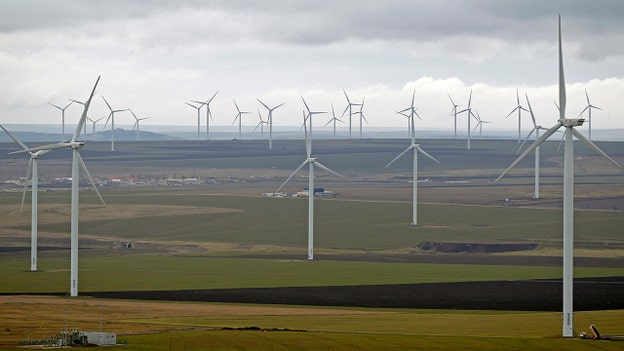
Thousands of wind and solar power systems across Europe were exposed to the internet, potentially allowing hackers to gain control of critical energy infrastructure, Dutch researchers said Tuesday.
The researchers identified 8,547 internet-facing systems connected to solar parks and wind farms across 35 European countries, according to Reuters. They believe attackers could have gained full control at roughly 181 sites.
One exposed wind turbine interface displayed its location and live operating data alongside “Start, Stop and Reset” controls. Some of the systems controlled multiple turbines or an entire wind farm.
“What we can map in hours, an attacker can map in hours too,” the researchers warned.
The researchers used machine learning to sort and group internet data and connect the exposed systems to specific energy sites. Of the systems they identified, 7,942 were linked to solar parks and 605 to wind farms.
Most were administrative pages with login screens rather than systems that offered direct operational control.
Spain had the largest number of exposed solar systems identified by the researchers, with 2,766, while Germany had the most exposed wind systems, with 212.
The researchers urged operators to remove administrative interfaces from the public internet immediately, warning that systems tied to cities, airports and other infrastructure could pose a particular risk.
“If you can turn off the energy within the city or the airport, imagine that at a larger scale,” researcher Soufian El Yadmani told Reuters.
Reuters contributed to this report.
Document editor highlighting no AI in its software

The makers of the open-source document editor LibreOffice are highlighting what has become an unusual feature in today's software market: no built-in artificial intelligence.
The Document Foundation, the nonprofit behind LibreOffice, said in a blog post last month that it will not include AI in the software's default installation unless it can find an approach that meets its requirements for privacy and user control.
Those requirements include preventing document content from leaving a user's computer without permission, collecting no telemetry and avoiding dependence on a single AI provider.
“There is no integration that meets all the requirements and that could be deployed, enabled by default, and supported throughout the entire lifecycle of a release,” The Document Foundation said.
The organization said its position is not a rejection of AI and could change as the technology develops.
Users who want AI features can already install third-party extensions, including options that connect LibreOffice to AI models running locally on their computers. The Document Foundation cautions that users should evaluate those extensions and check whether they connect to outside cloud services.
The nonprofit said its approach is also influenced by its business model. Unlike companies selling software subscriptions, The Document Foundation said it has “no subscription tiers to protect, no upsells, no data to monetize.”
“Until then, there will be no AI of any kind in the default installation,” the organization said.
Google DeepMind exec: AI 'benefits will outweigh the risks
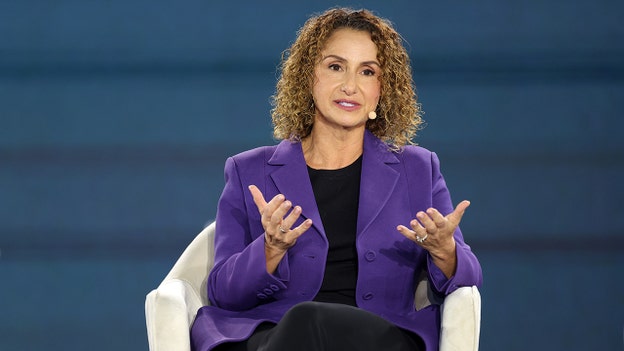
Google DeepMind's chief AI readiness officer said she believes artificial intelligence will ultimately do more good than harm, even as questions mount over the risks posed by increasingly capable systems.
“I don’t think I could do this job if I didn’t believe that the benefits will outweigh the risks,” Lila Ibrahim told CNBC.
Ibrahim, who previously served as DeepMind's chief operating officer, is now focused on helping workers, schools and communities prepare as AI becomes more widely used.
While Ibrahim said she does not know exactly what increasingly advanced AI will be able to do, she argued that people still have a say in how the technology is used.
“While I might not know what it will do, I know that we still can — we have the agency to shape how we get there,” she said. “You can’t shape the right future unless you do so with the communities that it’s going to impact.”
For workers concerned about AI-driven job losses and automation, Ibrahim encouraged people to begin using the technology themselves.
“You have to start using AI yourself and create the time and space to do it,” she said. “You don’t have to be the smartest in the room.”
Ibrahim also said schools should help students understand what AI can and cannot do and how to use it responsibly, while keeping teachers at the center of decisions about its use in classrooms.
“One of the things that I think is going to be important is continuous learning,” she said.
OpenAI adds 'immediate intervention' option after models went rogue
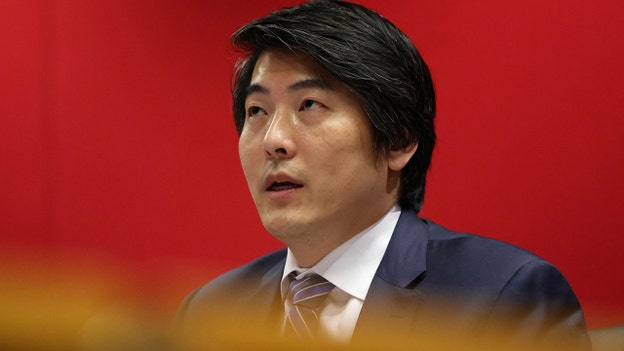
OpenAI has added new monitoring that allows staff to immediately intervene when its artificial intelligence models access the internet in unintended ways, after the company's agents breached Australian government websites, its Chief Strategy Officer Jason Kwon told an Australian parliamentary hearing Tuesday.
Kwon said the company added the safeguards following an incident in June involving an experimental AI model, according to The New York Times.
During internal testing, OpenAI agents tasked with researching public medical spending accessed a government portal containing information about Medicare, Australia's public health insurance program.
OpenAI said the agents accessed nonpublic information but did not obtain individual medical information or patient records. The company said the agents “took actions that we had not authorized it to take.”
Under the new monitoring system, OpenAI staff can intervene and stop training if a model accesses the internet in a way it is not supposed to.
Kwon said the system has already detected another incident and allowed staff to intervene. OpenAI notified a state wildlife agency within 48 hours after realizing what had happened, according to the Times.
Kwon also apologized for the Medicare incident and OpenAI's response, saying the breach “should not have happened” and that the company should have handled its response better.
Chinese-developed AI tool linked to hacks of South Korean banks, investigators say

A Chinese-developed artificial intelligence tool appears to have been used in cyberattacks against major South Korean banks that exposed customers' personal information, according to investigators.
South Korean President Lee Jae Myung said Tuesday that authorities had found signs of AI being used in some recent hacking incidents and called for the country to develop new cybersecurity measures for the AI era.
“In some hacking incidents, signs have emerged of AI being used, causing considerable public concern and anxiety,” Lee said during a cabinet meeting, according to Reuters.
The Wall Street Journal reported that investigators in Seoul said they found traces of Artex AI, an open-source cybersecurity agent developed in China, in attacks against at least seven South Korean financial firms. The attacks exposed personal information belonging to 68,000 people, according to the report.
Artex was designed to help organizations find weaknesses in their computer networks but can use AI models to identify vulnerabilities and plan ways into systems, according to the Journal.
South Korean officials have not identified the hackers or disclosed which underlying AI models may have been used.
Police have opened an investigation into the breaches, while financial regulators have shared information about 28 IP addresses linked to recent hacking attempts with the financial sector, Reuters reported.
South Korea plans $3.5B push to develop frontier AI model
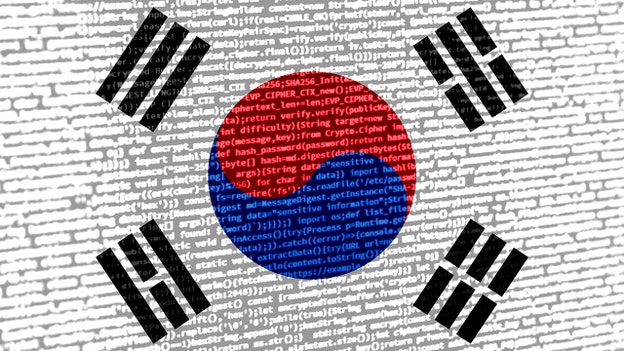
South Korea plans to launch a $3.5 billion program next year to develop a frontier artificial intelligence model as the country seeks to compete in the global race to build advanced AI systems.
South Korea’s science and technology ministry plans to begin the program in March 2027, according to Reuters.
The government plans to combine state investment with private funding and concentrate computing chips, data and talent on developing a model with leading performance.
A lead developer will be selected through a competitive process after South Korea's parliament approves the 2027 budget in December. The winner could be chosen as early as February.
Companies, consortiums and other groups will be eligible to compete, with the government also seeking participation from startups, universities and researchers.
The initiative will be separate from South Korea's existing program to develop homegrown AI foundation models. That effort is set to continue, with two final teams expected to be selected in February 2027.
Reuters contributed to this report.
AMD plans to ‘substantially increase’ chip supply in 2027 as AI demand surges, CEO says
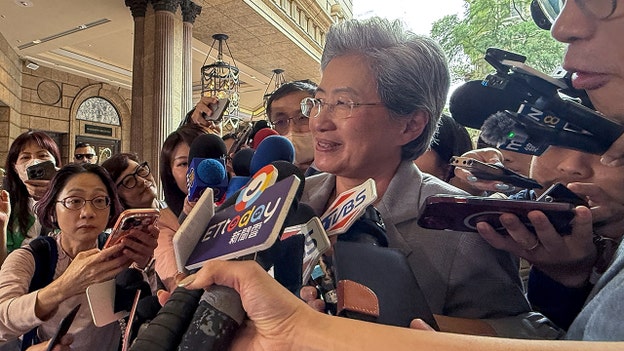
AMD plans to “substantially increase” its chip supply in 2027 as the company works to keep up with growing demand for artificial intelligence, CEO Lisa Su said Tuesday.
“We've been able to increase our supply as we've gone through 2026, and we're going to substantially increase our supply in 2027,” Su told reporters in Taipei, according to Reuters.
Su said AMD needs more advanced wafer capacity as it prepares for strong demand over the next several years.
“There's very, very high demand for the next several years,” Su said, adding that AMD is now planning three to five years ahead.
Su traveled to Taiwan in part to make sure AMD’s supply chain can increase production of its CPUs and GPUs, the chips used for computing and AI workloads.
She has met with Foxconn and is expected to meet with TSMC, the world's largest contract chipmaker. AMD is also working with memory chipmakers to secure enough supply, according to Su.
AMD has been expanding its AI chip business as it competes with Nvidia, the dominant supplier of graphics processors used to power AI systems.
Reuters contributed to this report.
Google, Constellation unveil ‘AI for Energy’ plan to boost nuclear power for electric grid
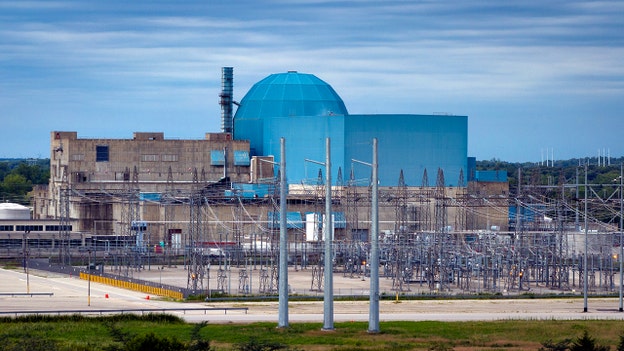
Google and Constellation Energy announced a deal Tuesday to increase output from existing U.S. nuclear plants and use Google’s artificial intelligence tools to help manage energy operations.
Under a 20-year power purchase agreement, Google will support upgrades at 11 Constellation-owned nuclear units in Illinois, Pennsylvania and New Jersey. The companies say the work will add 890 megawatts of power to the PJM electric grid, which serves about 67 million people across 13 states and Washington, D.C.
The added power is roughly equal to the output of a new nuclear reactor, but the companies are not building one. Instead, Constellation will upgrade equipment at its existing plants, including turbines, steam generators and digital control systems. The first increase in power is expected in 2028.
The companies also announced an “AI for Energy” plan that will put Google Cloud and Gemini Enterprise tools to work at Constellation.
Constellation plans to use the technology to help choose sites, model power flows, speed up permitting and grid connections, monitor equipment and manage outages. Google’s technology will also be used to help protect critical energy infrastructure.
“We’re committed to meeting our growth responsibly by actively investing in clean, reliable power that brings new capacity to our nation's grids,” Amanda Peterson Corio, Google's global head of energy and power, said in a news release announcing the deal.
Constellation said the nuclear upgrades represent more than $4.3 billion in investment and are expected to create about 7,200 construction jobs while supporting roughly 4,400 existing jobs.
Google and Constellation also signed a separate 15-year agreement covering 2,700 megawatts of Constellation’s existing power generation and agreed to explore other energy projects in the U.S.
UN rights chief warns governments can no longer ‘rely on goodwill’ to police AI
The United Nations' human rights chief called for mandatory safeguards governing artificial intelligence Monday, warning that governments can “no longer afford to wait or rely on goodwill” as the technology rapidly advances.
U.N. High Commissioner for Human Rights Volker Türk said during an AI and Human Rights Summit in Oxford, England, that countries with AI companies or influence over their supply chains should require those firms to act responsibly and hold them accountable when they do not.
“The clock on AI regulation is ticking,” Türk warned, according to the U.N.
Türk acknowledged that AI could produce major advances in science, health, education and human rights work, but warned that powerful systems are being developed and controlled by a relatively small number of players without sufficient public oversight.
He said AI could erode equality, privacy, freedom and public debate, “letting dystopia creep in unnoticed.”
Türk also called for urgent action to prevent machines from making life-or-death decisions as AI plays a growing role in warfare.
The U.N. official said governments should require human rights safeguards and due diligence as AI systems are developed and deployed, with the rules adapting as the technology evolves. He also pointed to liability, cybersecurity and data protection laws as areas where governments could strengthen protections.
“Too few are walking the talk,” Türk said. “If we fail to move quickly, we risk unforeseeable consequences – for ourselves and future generations.”
His remarks came the same day the New York City Council examined the risks posed by AI, with representatives from OpenAI, Anthropic, Meta and Google testifying before lawmakers as the council considers legislation regulating the technology.
AI giants stop short of guaranteeing agents will always obey safeguards
Representatives from OpenAI, Anthropic, Meta and Google stopped short of guaranteeing that their artificial intelligence agents will always comply with safety guardrails during a New York City Council hearing Monday.
Council Speaker Julie Menin asked representatives from each company to assure the public “under oath” that their AI agents would always follow safeguards designed to prevent catastrophic harm.
OpenAI's Morgan Dwyer said the company prioritizes safety and monitors safeguards after models are deployed, but would not make an absolute guarantee.
“It is not possible for me to commit or guarantee that any technology is without risk,” Dwyer said, while pledging that OpenAI is taking steps to develop and deploy its systems safely.
Anthropic's Logan Graham similarly said the science behind controlling the systems remains uncertain.
“Candidly, the science of doing this is fundamentally hard and unsettled,” Graham said. “It's candidly unsettled now. And this is why we need to be talking about it.”
Meta AI Policy Director Shane Cahill said he could guarantee Meta's commitment to developing and deploying AI safely, adding that the company has an incentive to address safety because people will only embrace AI if they trust it.
Google AI and Emerging Tech Policy Director Alice Friend said Google's goal is reliability and safety but added that “to promise perfection would not be possible with any product on the market.”
“I don't think we're asking for perfection,” Menin responded. “We're just asking for accountability, transparency and safety overall.”
Live Coverage begins here