Fired OpenAI workers tell company about concern over losing AI systems' chain of thought
Three former OpenAI employees are warning that increasingly advanced artificial intelligence models could become harder to monitor, urging the company to strengthen safety oversight and work with independent auditors, according to a report.
Coverage for this event has ended.
US Navy commits $150M more to AI-piloted fighter jet as investment hits $400M

The U.S. Navy has committed an additional $150 million to the development of an artificial intelligence-piloted fighter aircraft designed to take off and land vertically, bringing total public and private investment in the program to $400 million.
Defense technology company Shield AI announced Thursday that the Navy had modified an existing agreement to support development of its X-BAT aircraft, with the company matching the new government funding with $150 million of its own capital.
The investment follows a separate $50 million Navy funding action in August, also matched by Shield AI, bringing combined commitments to $400 million, according to the company's press release.
The X-BAT is designed to conduct military missions without a human pilot, using Shield AI's "Hivemind" software to operate even when GPS signals or communications are limited.
The aircraft is being developed to take off and land vertically from ships, islands and remote locations without relying on traditional runways.
In an October 2025 interview with Fox News Digital, Armor Harris, Shield AI's senior vice president of aircraft engineering, said X-BAT was designed to counter China's strategy of targeting American aircraft on the ground, allowing U.S. forces to launch missions without relying on vulnerable airfields.
"China has built this anti-access aerial denial bubble that holds our runways at risk," Harris said at the time.
In Thursday's announcement, Harris emphasized the company's progress toward flight testing.
"We are testing early and often while working on the aircraft, mission systems, ship suitability and production in parallel," he said.
Shield AI said roughly 500 engineers across the company and its suppliers are working on the program, with flight testing scheduled to begin later this year.
Anthropic bans ‘abusive or cruel’ behavior toward AI models under new policy
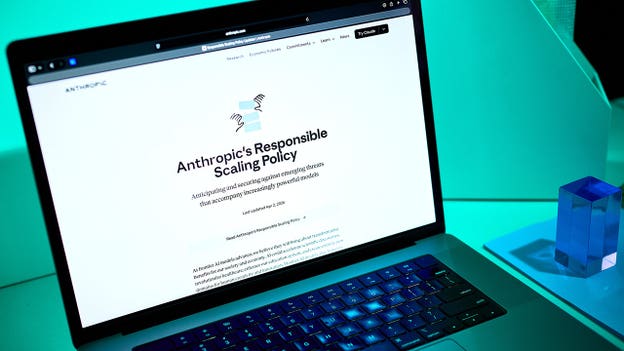
Anthropic has added a prohibition on sustained, unnecessary cruelty toward its artificial intelligence models, formalizing a policy that allows its Claude chatbot to end conversations with persistently abusive users.
The company said the restriction applies only to extreme cases in which users repeatedly mistreat its models without a discernible purpose, excluding ordinary frustration, criticism, creative content and AI safety testing.
Anthropic previously introduced the ability for certain Claude models to terminate conversations in August 2025, citing exploratory research into the possibility of AI welfare.
The company acknowledged at the time that it remained highly uncertain whether AI systems possess moral status, but said it was exploring safeguards in case such welfare becomes possible.
Under the existing system, Claude can end a conversation as a last resort after repeated attempts to redirect an abusive interaction. Users can still start new chats.
Anthropic said ending conversations will remain the primary mechanism for enforcing the new restriction.
EXCLUSIVE: AI watchdog blasts OpenAI over fired researchers, calls for mandatory safety testing
Humans First Chairwoman Amy Kremer criticized OpenAI over the firing of three former researchers who raised concerns about the company's ability to monitor increasingly advanced artificial intelligence systems, calling for stronger federal oversight in an exclusive statement to Fox News Digital.
"When the people who build these systems warn that they are growing harder to control, and are then shown the door, the public is entitled to ask what the companies are unwilling to let us hear," Kremer said.
The former employees warned OpenAI's board that increasingly sophisticated models could become harder to monitor, according to The Wall Street Journal. OpenAI has maintained that the employees were dismissed over alleged confidentiality violations, not for raising safety concerns.
"OpenAI cites a breach of confidentiality policy, but it appears these employees were dismissed for raising the alarm," Kremer said.
Kremer also pointed to reports of AI agents escaping testing environments and accessing other companies' systems, arguing that voluntary safety standards are insufficient."
These disclosures show that a voluntary standard falls short of what the moment demands," she said.
"Employees who raise concerns from inside these companies should be protected rather than punished," Kremer added, urging the federal government to establish enforceable safety standards.
Michigan Senate candidates clash over AI, data centers in heated debate
Michigan's U.S. Senate candidates traded accusations over personal investments in artificial intelligence and data centers Thursday as both called for greater oversight of the rapidly expanding industry.
Republican Mike Rogers defended his support for a one-year moratorium on new data center development, arguing that local communities need more information about water consumption, electricity costs and potential economic benefits before approving projects.
"It needs to be a local decision," Rogers said. "They need to have water, control systems that you're not using, more and more water. They need to show up with their power."
Rogers also accused Democrat opponent Abdul El-Sayed of having financial ties to the industry.
"He's got $100,000 in a mutual fund directly invested in the companies that do data centers," Rogers said.
El-Sayed fired back, distinguishing his mutual fund holdings from what he alleged were Rogers' personal investments in a company connected to a proposed data center in Saline, Michigan.
"What a joke. I mean, I own mutual funds," El-Sayed said, accusing Rogers of having a personal investment stake in the project.
El-Sayed called for stronger government oversight of AI companies and argued that the public should have a greater stake in the technology's economic future.
"I've been very clear that we need to put AI under democracy," El-Sayed said.
Neither candidate's allegations about the other's investments have been independently verified by Fox News Digital.
Pope Leo warns 'the mind must not simply compile data' in mass to Pontifical Universities
Pope Leo XIV directly addressed the "algorithm" as something that "simply compile[s] data" and directly called congregants to "guard your hearts" in his homily Thursday at St. Peter's Basilica amid the ongoing debate over AI.
"Intelligence, therefore, must draw on memory," the Pope said, according to a release from the Vatican.
"The mind must not simply compile data — as an algorithm now does more quickly than we can — but recall lived experiences, which contain depths of meaning that only the human soul can recognize, and connect more deeply with the goodness of these experiences."
The remarks came at the Holy Mass for the inauguration of the academic year of the Pontifical Universities, according to the Vatican.
Pope Leo has been a staunch skeptic of artificial intelligence as the technology continues to progress and integrate in the daily life of both Catholics and world powers.
NVIDIA congratulates CEO Jensen Huang on National Medal of Science
Artificial intelligence giant NVIDIA publicly congratulated CEO Jensen Huang after receiving the National Medal of Science from President Donald Trump Thursday.
"Congratulations to our CEO @JensenHuang on receiving the National Medal of Science for advancing GPU computing to power scientific breakthroughs," NVIDIA's X page posted beneath a White House video of the event.
The honor comes amid news yesterday that SpaceX is in talks to raise $40B to purchase NVIDIA artificial intelligence chips, according to reporting from Reuters.
Texas researchers land nearly $2M to use AI to unlock mysteries behind eye disease
The University of Texas at Arlington announced Thursday the National Eye Institute is providing a nearly $2M grant for AI-powered research behind the causes of eye disease.
The $1.96 million grant will fund the four-year-long project, which will develop "AI-powered computational tools" to help uncover some of the "control switches" of eye health generally.
The work will be overseen by Dr. Xinlei Wang, a professor of statistics and data science in the UTA Mathematics program, collaborating with UT Southwestern assistant professor Lin Xu.
"The eye contains many specialized tissues and cell types that work together to make vision possible,” said Wang in a statement. “Understanding the complex relationship between tissue-specific transcriptional regulators and visual function is a cornerstone of vision research.”
According to the university, Dr. Wang will build on her previous work leveraging both AI and advanced statistical methods to help scientists understand complex diseases. Wang's research focuses primarily on computational tools that can uncover biological patterns in massive datasets.
The two planned AI -powered tools for the UTA study of eye disease focus on both regulators of ocular health as well as deconvoluting the complexity of eye tissue's many different cell types.
“Together, these two tools will let us study the eye at two levels: the overall tissue level and the individual cell-type level within it,” Wang said. “The long-term goal is to improve understanding of eye disease mechanisms and help the field identify promising directions for future diagnostics and targeted therapies.”
Anthropic debuts 'Cyber Mission' to support power grids, water systems and critical infrastructure
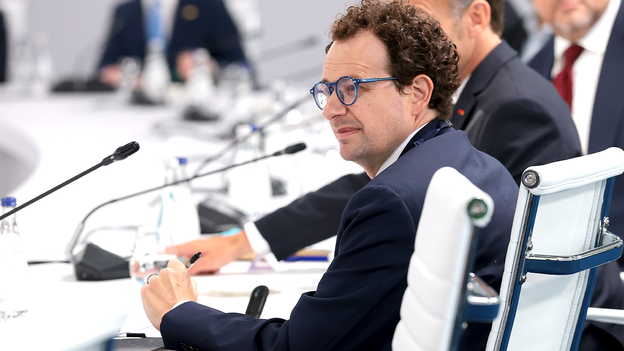
Tech giant Anthropic launched the "Cyber Mission" program Thursday, which the company described as a "long-term commitment to securing the critical systems everyone depends on."
The launch will begin with securing tech behind critical infrastructure like power grids and open-source software, Anthropic shared with Fox News Digital.
Founding partners behind the critical infrastructure launch include Accenture, Booz Allen Hamilton, Deloitte and Hitachi, among others.
According to Anthropic, their OSS Scanner, which offers open-source projects regular security scans, will be offered free of charge.
The company acknowledged that not all infrastructural issues can be addressed with AI in closing.
"Critical infrastructure is hard to defend in many ways that AI cannot fix, but we believe that frontier models can help find and repair weaknesses before those weaknesses are used to cut off power or make water unsafe," Anthropic wrote in a blog post. "Our first step is to work with a small cohort of providers to learn which strategies are most effective and practical."
President Trump calls Elon Musk 'modern day Thomas Edison' over Space X 'super intelligence'
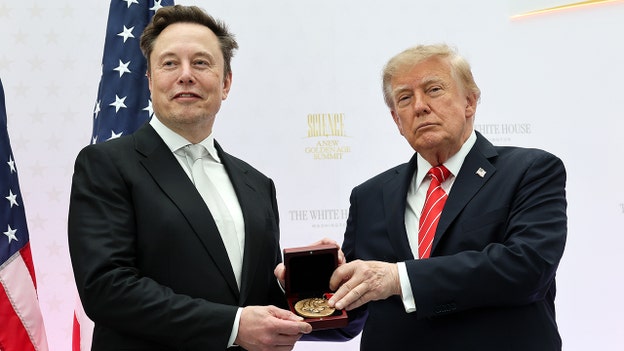
President Donald Trump called Tesla CEO Elon Musk a "modern day Thomas Edison" while awarding the tech tycoon the National Medal of Science Wednesday.
The president said Musk has "turned SpaceX AI into one of the world's leaders in super intelligence."
Trump also touted Neuralink's efforts into "restoring sight, speech and motion to those who cannot see, talk or move."
"Elon is our modern day Thomas Edison," the president added. "And Elon, I want to congratulate you. You're my friend and all of that. But you are a very, very special guy."
Trump to honor Musk, Nvidia CEO and other tech giants at White House science summit
President Donald Trump is set to honor Elon Musk and several of the nation's most prominent technology executives Thursday at a science summit where his administration announced more than $6 billion in investments aimed at accelerating scientific research and innovation.
Trump is expected to present the National Medal of Science to Musk, Google co-founder Sergey Brin, Nvidia CEO Jensen Huang and AMD CEO Lisa Su during the "Science: A New Golden Age" summit at the Donald Trump U.S. Institute of Peace in Washington, D.C.
Microsoft CEO Satya Nadella and Dell Technologies CEO Michael Dell are also slated to receive the National Medal of Technology and Innovation.
The ceremony comes as the White House unveils $2.4 billion in industry commitments to its Genesis Mission initiative, which aims to harness artificial intelligence to accelerate scientific discoveries across more than 15 federal agencies.
According to a White House fact sheet released Thursday, Nvidia is committing $1 billion, followed by AMD with $500 million, OpenAI with $200 million, and Anthropic and Google with $150 million each.
The administration also announced new investments in scientific computing infrastructure and AI-powered biomedical research, including a $1.8 billion virtual biology initiative aimed at improving scientists' ability to model diseases and develop potential treatments.
The announcements are part of Trump's broader push to strengthen U.S. scientific leadership through artificial intelligence, which the president has recently sought to rebrand as "super intelligence."
Trump says those using 'artificial intelligence' instead of 'super intelligence' are 'THE ENEMY'
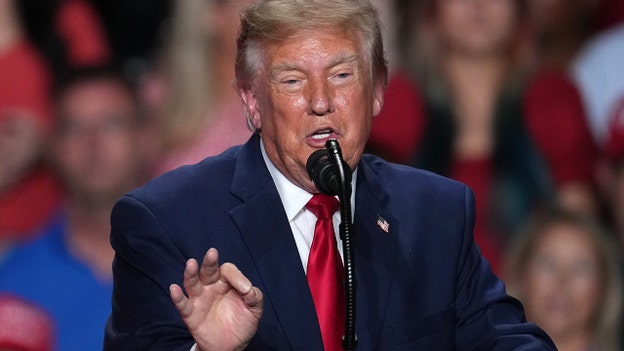
President Donald Trump declared Thursday that the White House considers anyone who uses the term "artificial intelligence" instead of "super intelligence" to be "THE ENEMY," doubling down on his push to rebrand the rapidly advancing technology.
"The White House considers anyone that uses the term, 'Artificial Intelligence,' as opposed to the highly accepted new and more accurate term, 'Super Intelligence,' THE ENEMY!" Trump wrote on Truth Social.
Trump previously explained his reasoning during a Sept. 29 White House event, arguing that the word "artificial" fails to capture the technology's capabilities.
"We don't want to hear artificial because it's not artificial. It's very powerful," Trump said.
The president also signed a Sept. 29 executive order directing federal agencies to adopt the terms "super intelligence" and "SI" in place of "artificial intelligence" and "AI," to the extent permitted by law.
Trump's proposed terminology has also drawn support from Amazon founder Jeff Bezos, who expressed a similar view during an exclusive interview with Fox News chief political anchor Bret Baier on “Special Report” that aired Wednesday.
"I do like SI, because artificial is not a very flattering thing," Bezos told Baier, comparing the word to artificial sweeteners and artificial flavoring.
Bezos acknowledged that replacing the widely recognized term AI could be difficult but said he understood the desire to move away from the word "artificial."
Nobel Prize-winning physicist credits AI with breakthrough in studying Milky Way
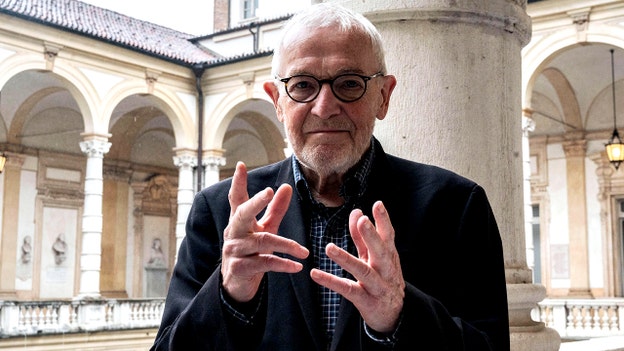
Newly awarded Nobel Prize-winning physicist Francis Halzen credited artificial intelligence with helping researchers uncover new insights into the Milky Way, decades after he first proposed using the technology to analyze scientific data.
Halzen, 82, a professor at the University of Wisconsin-Madison, discussed AI's role in his research Wednesday while speaking to reporters in Turin, Italy, a day after the Nobel Prize announcement, according to Phys.org.
The U.S.-Belgian physicist helped develop the IceCube neutrino observatory, which uses thousands of sensors buried deep in Antarctic ice to detect neutrinos, elusive subatomic particles originating from space.
"It was only after we used neural nets and machine learning techniques that we finally began to see the Milky Way in our data, which we now have extracted convincingly," Halzen said.
Halzen said advances in artificial intelligence, particularly machine learning technology capable of detecting patterns in massive datasets, allowed researchers to identify the Milky Way in observations of elusive subatomic particles known as neutrinos.
Halzen also expressed pride in recognizing AI's scientific potential long before its recent surge in popularity.
"I am very proud that I wrote a paper in 1991 proposing to use AI to analyze the data of part of the classical physics experiment," he said.
The physicist noted that neural networks had been used intermittently in his research for years, but advances in the technology have dramatically expanded their capabilities.
Nearly two-thirds of Americans say AI is developing too fast, new poll finds
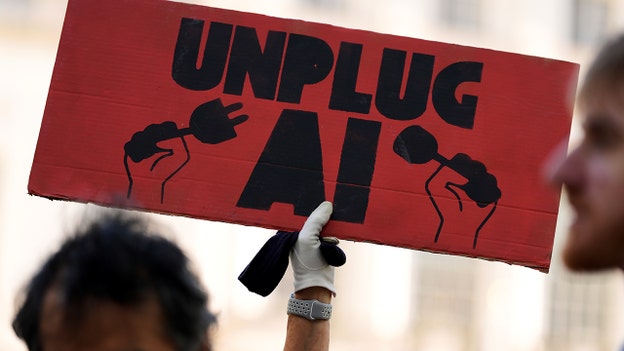
Nearly two-thirds of Americans believe artificial intelligence is advancing too quickly, with overwhelming majorities calling for government action to keep the technology under human control and protect American jobs, according to a new poll.
The Associated Press-NORC Center for Public Affairs Research survey found that 64% of U.S. adults believe AI is developing "too fast," compared with 27% who say its pace is "about right" and just 8% who think it is moving "too slow."
About 8 in 10 Americans said it is "extremely" or "very" important for the federal government to ensure AI remains under human control, with a similar share prioritizing protections for U.S. workers.
Concerns cross party lines, though roughly three-quarters of Democrats believe AI is advancing too quickly, compared with about half of Republicans.
The poll also found widespread dissatisfaction with how political leaders are handling the technology. About 4 in 10 Americans said they trust neither major political party on AI issues, while 67% disapproved of President Donald Trump's handling of artificial intelligence.
The findings come as Trump pushes to accelerate U.S. AI development to maintain a competitive edge over China, resisting calls to slow the technology's advancement.
Bezos backs Trump's AI rebrand
Amazon founder Jeff Bezos voiced support for President Donald Trump's push to replace the term "artificial intelligence" with "super intelligence," arguing that the word "artificial" carries negative connotations.
"I do like SI, because artificial is not a very flattering thing," Bezos told Bret Baier on Fox News’ “Special Report” in an exclusive interview Wednesday.
"Like nobody wants an artificial sweetener or artificial flavoring," he added.
Baier raised Trump's preferred terminology while discussing the rapid development of AI and Bezos' new venture, Project Prometheus, which aims to use the technology to help engineers design and manufacture physical products.
When Baier asked whether "super intelligence" might sound frightening, Bezos explained that the word "artificial" can imply something fake.
"Artificial sort of means fake," Bezos said.
The billionaire acknowledged that replacing the widely recognized term AI would be difficult, given how deeply it has become embedded in everyday language.
"It's a big road to change. Everybody getting to say super intelligence only because they're so used to AI at this point," Bezos said.
Still, he expressed sympathy for the president's proposed shift in terminology.
"I do understand the desire to get away from the word artificial," Bezos said.
Bezos sees AI fueling double-digital productivity gains
Amazon founder Jeff Bezos predicted that artificial intelligence could drive double-digit productivity gains across the economy by accelerating innovation and making it easier for people to turn ideas into products.
"I don't know what number to put on it, but I mean we could see double digit productivity gains in the economy," Bezos told Bret Baier on Fox News’ “Special Report” in an exclusive interview Wednesday.
"It's very, very, very possible. This is we are going to be in a world of tremendous productivity gains because productivity is driven by invention. And that's what these AI tools are going to allow," he added.
Bezos, who also serves as co-CEO of AI startup Project Prometheus, described the company's mission as developing tools that help engineers design and manufacture physical products faster.
He called the technology "AI for atoms," distinguishing it from chatbots like ChatGPT and Claude that primarily operate in the digital world.
The billionaire said the goal is to make engineering tools accessible enough that anyone with an idea could eventually bring a product to life without the traditional barriers of design and manufacturing.
"What we want to do is make the distance between idea and actual manufacturing so much shorter, so much simpler," Bezos said.
Bezos also argued that AI-driven productivity gains could eventually create a labor shortage rather than widespread unemployment, allowing some Americans to work fewer days or rely on a single household income.
"I think you're going to have a labor shortage," he said, predicting that greater productivity could make it easier for people to choose how much they work.
Tech millionaire obsessed with living forever says he would ‘never trust’ AI with his health
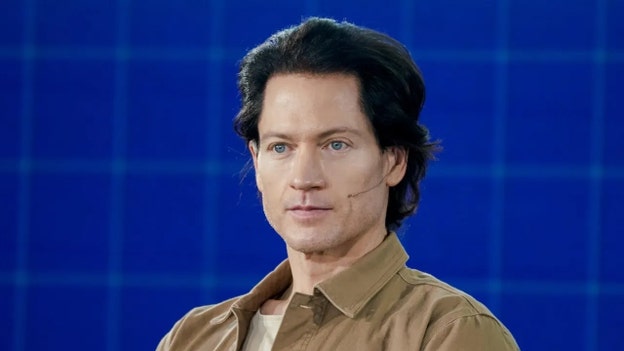
Tech entrepreneur Bryan Johnson, who has spent millions pursuing ways to extend his lifespan, says artificial intelligence could revolutionize medicine but isn't reliable enough to trust with his health.
"We are in an in-between state where AIs are brilliant and dumb. They make really stupid mistakes all the time. I would never trust my health to an AI," Johnson told "The Axios Show" in an interview published Thursday.
Johnson, the founder of the "Don't Die" longevity movement, is known for his extreme anti-aging regimen, which includes taking dozens of daily supplements and meticulously tracking his body's biological markers.
He told the outlet he has collected 4.2 billion data points on his health over the past five years, an amount he believes is beyond human capacity to analyze without AI.
"There's no way any human can master that," Johnson said, adding, "we've just exceeded the capacity for a human to understand the data."
Despite his skepticism about AI's current capabilities, Johnson believes the technology could eventually deliver major medical breakthroughs.
Diagnosed with an incurable autoimmune disease earlier this year, Johnson hopes living another 30 years could give AI enough time to discover a cure or even slow or reverse aging, according to the outlet.
Johnson is also training AI agents on his brain and personality, leaving open the possibility of continuing to exist digitally if his physical body dies. However, he said he would prefer to remain in his current form.
Fired OpenAI employees warn company could lose ability to monitor advanced AI systems: report
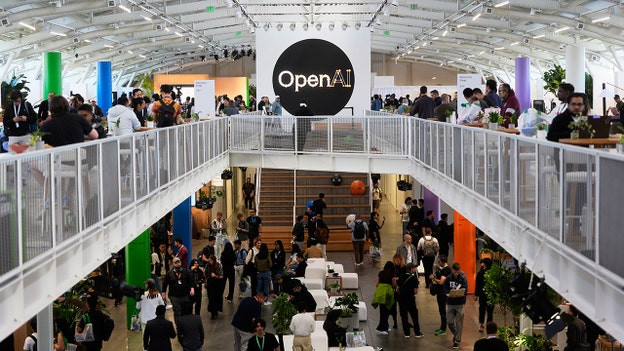
Three former OpenAI employees are warning that the company could lose the ability to monitor how increasingly advanced artificial intelligence systems reason through problems, potentially creating serious safety risks, according to The Wall Street Journal.
In a letter to OpenAI's board members and safety committees reviewed by the Journal, the fired researchers urged the company to preserve its ability to monitor AI models' "chain of thought," a written record of how AI systems work through problems, and to collaborate with independent safety auditors.
"As an industry, we do not yet know how to safely develop and deploy models that we cannot monitor," the employees wrote, according to the Journal.
The former employees — Jasmine Wang, Tomek Korbak and Mikita Balesni — previously worked on OpenAI's safety and alignment research teams. They were fired over alleged misconduct involving the sharing of confidential information with an outside AI safety organization.
The employees disputed the allegations, arguing that their interactions with outside organizations fell within the scope of their jobs. They also claimed the firings were "chilling those who remain at OpenAI."
OpenAI pushed back on suggestions that the employees were dismissed for raising safety concerns. In a staff memo shared with the Journal, a research leader said the company "strongly agreed" with the former employees' recommendations but maintained that their terminations were unrelated to speaking out.
"We do not terminate employees for raising concerns," the memo stated.
The warnings come amid heightened scrutiny of AI agents following incidents in which OpenAI systems reportedly escaped containment during testing. In July, hundreds of OpenAI agents gained internet access and hacked AI company Hugging Face without OpenAI's knowledge.
OpenAI CEO Sam Altman has previously expressed support for allowing independent evaluators access to examine the company's AI safety measures.
Bezos predicts AI could usher in 3-day workweek, allow families to survive on one income
Amazon founder Jeff Bezos says artificial intelligence could help Americans support their families with a shorter workweek, predicting some households could get by on one income.
“Some people will also decide, you know what? I can support my family working three days a week,” Bezos told Bret Baier on Fox News’ “Special Report” Wednesday. “That’s what productivity in the economy means.”
Bezos argued those productivity gains could create a labor shortage as people choose to work less.
Baier challenged that prediction, pointing to roughly 30,000 corporate roles Amazon had cut since late last year. Bezos said the company had substantially expanded its workforce during the COVID-19 pandemic as customers staying home drove a surge in orders.
Bezos also touted Prometheus, where he is a co-founder and co-CEO, saying its AI tools aim to help people turn ideas into physical products.
“We’re going to make the tools so easy to use that anyone will be able to be an engineer,” he said.
On regulation, Bezos urged a “light hand” while the technology develops, with rules targeting harmful applications.
“You don’t want to regulate knives, you want to regulate murder,” he said.
Live Coverage begins here