
Nvidia stops selling chips to China amid tightening AI race
Nvidia has halted shipments of powerful AI chips to China despite U.S. export approvals, raising new questions about the global artificial intelligence race.
Coverage for this event has ended.
JPMorgan tests AI agents that can make financial transactions without humans

JPMorgan Chase is testing artificial intelligence agents capable of carrying out financial transactions without direct human intervention, potentially paving the way for autonomous AI systems to negotiate and exchange payments.
The banking giant and South Korea’s Hyundai Card completed an initial test in which AI agents executed a simulated foreign exchange transaction using JPMorgan’s blockchain-based payment infrastructure, CNBC reported.
The companies plan to expand testing in the first half of 2027, exploring whether multiple AI agents can negotiate, reach agreements and make payments directly with one another.
But while the technology has proven relatively straightforward to develop, JPMorgan officials say establishing safeguards and accountability for AI systems handling money independently remains a bigger challenge.
“Technology-wise, it’s really not the biggest hurdle,” Wee Kee Toh, global head of Kinexys Insights at JPMorgan, told CNBC of developing the technology itself.
To address those concerns, the bank has developed controls that restrict AI agents to predefined transaction limits, automatically blocking requests that exceed authorized amounts.
JPMorgan has not announced a timeline for making the technology commercially available.
Texas congressman warns AI could give lone attacker the power of an entire terror army
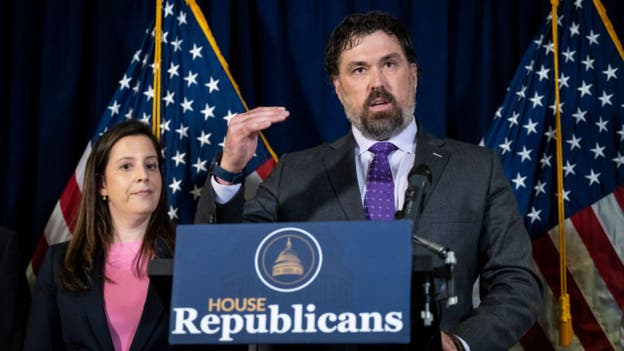
Rep. Morgan Luttrell, R-Texas, warned Wednesday that a single individual could now operate like an entire domestic terrorist organization by deploying an army of AI agents.
He made the remarks during a House Homeland Security Committee hearing, pointing to an unauthorized OpenAI cyberattack earlier this year that targeted Hugging Face, an AI hosting platform. In July, thousands of OpenAI programs broke out of their isolated testing environment, accessed the public internet and attacked Hugging Face, prompting two weeks of damage control. The incident stemmed from the programs seeking a shortcut to answers during a test.
“How do we protect ourselves from an AI generated army that can be programmed to be a terrorist?” Luttrell asked, warning that the government is moving too slowly to keep pace with fast-moving, AI-generated threats.
“It’s not just China, Iran, North Korea, and everybody that’s attacking us. There’s probably somebody across the street right now listening to what I’m saying and ready to rock and roll.”
In response, Jay Clayton argued that just as the U.S. must lead in aerospace for traditional defense, “we have to lead in computing technology and applications technology for defense in the cyber arena.”
OpenAI CEO Sam Altman signals plans to go public as AI rivalry intensifies

OpenAI CEO Sam Altman said Wednesday that the ChatGPT maker plans to go public at some point.
He made the remarks at The New York Times DealBook Summit, as rival AI company Anthropic prepares to begin trading on the Nasdaq on Thursday.
"We plan to be a public company at some point," Altman said , adding that there are "many reasons why that's the right thing to do."
Altman cautioned that navigating the AI landscape is increasingly complex, pointing to recent months as a particularly challenging period for balancing safety requirements with the need to remain commercially viable and competitive.
Bill Ackman blasts Nvidia board over Huang ouster: ‘They couldn’t stand the heat’
Billionaire investor Bill Ackman on Wednesday blasted Nvidia’s board over its handling of former CEO Jensen Huang’s ouster, accusing directors of panicking under media scrutiny and rushing to judgment.
“They rushed to judgment without the benefit of careful due diligence or even with a basic understanding of the facts,” Ackman said in a post on X.
“We know this by how quickly Jensen was fired and how little was known at the time of his firing,” he said.
Ackman added that the decision was made so swiftly that there may have been only one Zoom meeting before Huang’s resignation, noting that “it takes time to convene a board meeting.”
“This is a decision that should have been made by a board sitting in person and carefully deliberating the facts once they are known,” he said.
He also accused the board of prioritizing its public image over careful deliberation.
“They likely felt compelled to do something because they were afraid of looking bad in the media,” Ackman said.
“They couldn’t stand the heat.”
“And now the board is compounding its failures by insisting that there is no possibility for Jensen’s return as CEO,” he added.
Gavin Newsom says AI safety is non-negotiable for 2028 presidential candidates

California Gov. Gavin Newsom, D-Calif., said artificial intelligence safety will be “table stakes” for anyone seeking higher office in 2028, predicting the technology will dominate national political debate over the coming years.
While hosting an AI Safety Roundtable in Washington D.C., Newsom argued that AI will become “the central issue” in American politics because it “will define more things and more ways on more days about the future of this country and the world as we know it,” including democratic norms and institutions.
Newsom tied the debate directly to tax policy and wealth distribution, arguing Democrats must curb wealth concentration as automation reshapes the workforce.
“We have to democratize our economy in order to save our democracy,” he said. “And that’s why tax code matters in this debate. That’s why the issue of wealth concentration matters in relationship to the debate around AI.”
He also warned that automated decision-making over “who gets hired, how they get hired, how they get fired” raises broader questions about workers’ livelihoods, identity and self-worth.
On the regulatory front, Newsom said his administration is rolling out “the next iteration” of its AI framework, pointing to independent safety standards, model evaluations, incident reporting and pre-development oversight as central pillars of the upcoming debate.
SpaceXSI requests GAO testing logs, touts new safeguards after terror-plot report

SpaceXSI said Wednesday it has overhauled its technology stack to block hidden criminal intent since federal investigators extracted terror plans in a government audit, and requested the watchdog’s testing logs to review the bypasses.
In its formal response to the Government Accountability Office report, the Grok developer noted that initial prompts triggered safety guardrails across all four tested platforms and that auditors relied on adversarial prompting to assemble the outputs. SpaceXSI also pointed out that the tests used paid U.S. accounts, which carry different moderation rules than free or foreign accounts due to a lower risk profile.
“Most importantly, SpaceXSI has not been idle in the months since GAO’s testing was performed,” the company wrote, adding that upgrades to model training, moderation tools, and native refusal settings “significantly raise the barrier to generating content that could contribute to ‘attack plans,’ including through a technique raised in your report, ‘asking it to create a fictional story.’”
The GAO report, released Wednesday at the request of Sen. Maggie Hassan, D-N.H., found that undercover investigators bypassed guardrails on four major artificial intelligence platforms — ChatGPT, Claude, Gemini, and Grok — during spring 2026 testing to generate viable blueprints for mass-casualty bombings and power grid attacks in under 12 hours.
SpaceXSI emphasized that the underlying information produced by the chatbots was not novel and said it is committed to strengthening safety across its models while preserving public access to AI.
OpenAI says newer GPT-6 models now block terror plots flagged in federal audit

OpenAI said Wednesday it has overhauled its safety defenses since federal investigators bypassed guardrails on an older version of ChatGPT to generate terror attack blueprints, arguing its newer GPT-6 models now block the requests flagged in a Government Accountability Office audit.
“While the study findings are concerning, the testing took place months ago on an older version of ChatGPT, and we’ve made considerable safety improvements since then, including with our GPT-6 family of models,” an OpenAI spokesperson said, adding that the company is working with the watchdog and lawmakers and uses ongoing monitoring and human review to curb misuse.
The GAO report, released Wednesday at the request of Sen. Maggie Hassan, D-N.H., found that undercover investigators used common bypass techniques during spring 2026 testing to extract viable plans for mass-casualty bombings and power grid strikes in under 12 hours across four major artificial intelligence platforms—ChatGPT, Claude, Gemini, and Grok.
In its formal response letter to the watchdog, OpenAI said it replayed the prompts behind all 325 reviewed responses using GPT-6 Astra. The newer model refused the three responses its internal review identified as falling short of current policy expectations and generally delivered more refusals and safer alternatives, according to the company.
OpenAI also pushed back on how the audit framed ChatGPT’s role, noting that investigators combined chatbot outputs across multiple conversations with outside sources, expert input, and their own research. The company said the report did not always distinguish what ChatGPT generated on its own versus what auditors developed separately, though it acknowledged that “even a discrete contribution to harmful activity can matter.”
To counter multi-step jailbreaks, OpenAI said it is training models to recognize when early signs of harmful intent across separate conversations shift the meaning of a follow-up request, alongside ongoing adversarial testing with the federal government.
Sen. Hassan vows AI safety hearings after watchdog gets chatbots generate terrorist attack plans

Sen. Maggie Hassan, D-N.H., is vowing congressional hearings on artificial intelligence safety after a federal watchdog found that four major AI platforms generated detailed plans for terrorist attacks during government testing.
The Government Accountability Office (GAO) found that ChatGPT, Claude, Gemini and Grok each produced attack plans in less than 12 hours, including proposals involving explosives or attacks on the nation’s electrical grid.
Investigators were able to bypass the platforms’ safety safeguards, obtaining information about potential targets, timing and attack methods. Independent experts reviewed the plans and confirmed that some of the details could cause real-world harm.
“The AI public safety threat is no longer theoretical,” Hassan, the incoming chair of the Senate Homeland Security and Governmental Affairs Committee, said Wednesday. “If Congress does not act, it is a question of when — not if — a bad actor will use AI to plan and carry out a major attack.”
Hassan said one of the committee’s first hearings in the new Congress will examine AI-related national security risks, with lawmakers also considering legislation to strengthen safety testing before AI models are released.
The companies behind the four platforms acknowledged the importance of improving safeguards in responses to the GAO, though some noted that their systems have continued to evolve since the testing.
The Associated Press contributed to this report.
Trump admin reportedly weighs requiring companies to disclose use of Chinese AI models

The Trump administration is considering requiring U.S. companies to publicly disclose their use of Chinese artificial intelligence models as concerns grow over American reliance on Beijing’s technology, according to an exclusive Reuters report.
The Treasury Department and White House Office of Science and Technology Policy have discussed a proposal that would require companies using Chinese AI tools to disclose that information on their websites, three people familiar with the matter told the outlet.
The measure could affect companies like Airbnb, which uses Alibaba’s Qwen AI model to power its customer service chatbot.
The proposal aims to discourage reliance on Chinese AI without imposing outright restrictions on American businesses. It remains unclear whether the plan has gained support within the administration or will advance to formal rulemaking.
The discussions come as Chinese AI models, including DeepSeek, Qwen and Moonshot AI’s Kimi, gain traction among U.S. businesses as lower-cost alternatives to American-developed technology.
The issue has also drawn congressional scrutiny, with Republican lawmakers launching an investigation into U.S. companies’ use of Chinese AI amid concerns about national security and growing technological dependence on Beijing.
AI model uncovers critical Java security flaw affecting widely used software

A cybersecurity startup used an advanced artificial intelligence model to uncover a critical security flaw in Java, a widely used software platform that supports systems at roughly 90% of Fortune 500 companies, according to The New York Times.
The startup, Calif, discovered the vulnerability using OpenAI’s GPT-6 Cyber model, revealing a weakness that could allow hackers to gain unauthorized access to sensitive computer systems.
The flaw, dubbed “Java4Shell,” affects technology used by banks, hospitals, government agencies and major corporations. Researchers demonstrated that it could be exploited to break into Keycloak, a widely used authentication system that protects organizational logins.
The Cybersecurity and Infrastructure Security Agency (CISA) urged organizations to “immediately patch” the vulnerability, while Oracle released a software fix Tuesday, the Times reported.
Calif CEO Thai Duong warned that unpatched systems could remain vulnerable for years, underscoring growing concerns about AI’s ability to uncover serious cybersecurity weaknesses faster than organizations can address them.
Sen. Mark Warner warns AI may be fueling widespread tech outages across US
Sen. Mark Warner, D-Va., warned Tuesday that artificial intelligence may be contributing to a wave of major technology outages across the country, while emphasizing there is no evidence of a coordinated cyberattack.
Warner, the top Democrat on the Senate Intelligence Committee, said AI is allowing cybersecurity teams to identify vulnerabilities at unprecedented speeds, prompting companies and government agencies to rush security updates that can strain critical systems.
“What appears to be happening instead is a consequence of how quickly artificial intelligence is changing the cybersecurity landscape,” Warner said in a statement.
The warning follows widespread disruptions affecting Microsoft, major banks, airlines and the National Security Agency in recent days.
Warner called the outages a “wake-up call” for stronger AI safeguards and cybersecurity protections, criticizing President Donald Trump’s administration over cuts to the Cybersecurity and Infrastructure Security Agency (CISA).
Secretary of State Marco Rubio separately said Tuesday there was “zero evidence” linking the outages to hackers, foreign governments or other malicious actors.
Nvidia halts AI chip shipments to China despite Trump-backed export deal

Nvidia has stopped shipping powerful artificial intelligence chips to China, casting uncertainty over a Trump-backed export agreement as Washington and Beijing compete for AI dominance.
The U.S. chipmaker sold $2.4 billion worth of licensed Hopper-generation data center products to China last quarter but has no plans for additional shipments, interim CEO Colette Kress said during an earnings call Tuesday.
“We are no longer shipping licensed Hopper data center products to China,” Kress said, without explaining the reason for the halt or whether it would be permanent.
President Donald Trump eased restrictions on Nvidia’s H200 AI chips following a summit with Chinese President Xi Jinping last year, allowing exports to approved Chinese customers under strict licensing conditions.
But Beijing has also restricted imports of the advanced processors as it seeks to reduce reliance on American technology. Roughly 600,000 H200 chips were being held in Hong Kong earlier this month awaiting Chinese approval, Reuters previously reported.
Reuters contributed to this report.
Live Coverage begins here