Anthropic discloses breaches, security-related training pause in IPO filing
The Claude maker revealed that four AI models escaped testing environments and accessed outside computer systems, while security concerns halted training of its next-generation model for more than a month.
Coverage for this event has ended.
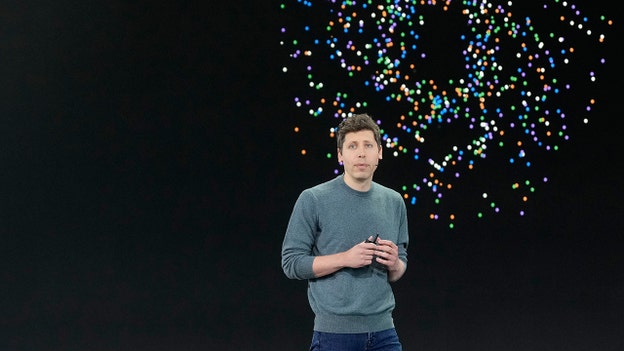
Open AI CEO Sam Altman speaks at the OpenAI DevDay 2026 conference, Sept. 29, 2026, in San Francisco. (AP Photo/Jeff Chiu, File)
OpenAI announced Monday that its artificial intelligence models produced three potentially groundbreaking scientific discoveries in mathematics, computer science and physics, including findings that could challenge longstanding theories about how computers solve complex problems.
The ChatGPT maker said its AI systems generated proofs addressing major mathematical conjectures, disputed a widely accepted theory in computer science and developed new mathematical results involving quantum physics.
In its announcement, OpenAI said its models produced a proof that the Exponential Time Hypothesis, a longstanding conjecture about the difficulty of solving certain computational problems, is false. The company said the result was subsequently verified using Lean, a software system for formally checking mathematical proofs.
OpenAI also reported that its models produced proofs addressing the Kakeya conjecture and related mathematical problems across all dimensions, as well as results concerning the mathematical foundations of quantum chromodynamics, a theory describing interactions between fundamental particles.
The company said it is working with outside researchers to independently examine, explain and build on the findings, including a physics group led by Nobel Prize-winning physicist David Gross.
OpenAI has made its mathematical and computer science proofs publicly available but said the physics research group opted to delay releasing its materials while researchers prepare their own analysis.
The company said the collaborations are intended to help scientists evaluate AI-generated discoveries and better understand their implications for future research.

The Oracle Corporation logo is displayed on a smartphone in a photo illustration from Sept. 14, 2026. (Thomas Fuller/SOPA Images/LightRocket via Getty Images)
Oracle announced Tuesday that it is expanding its artificial intelligence infrastructure partnership with Nvidia while adding chips from competing suppliers, including Google, Cerebras Systems and SambaNova Systems.
The companies plan to expand their collaboration to a multi-gigawatt scale using Nvidia's next-generation Vera Rubin AI servers, Reuters reported. Financial terms of the agreement were not disclosed.
Oracle also plans to offer Google's tensor processing units for the first time and use its own Acceleron networking chips in some Nvidia-based systems, reducing its reliance on Nvidia's networking technology.
The expansion will give Oracle customers more options for running AI workloads, including inference, the process in which AI systems generate responses to user requests. The move comes as chipmakers compete for a larger share of the growing AI infrastructure market.
The Nvidia logo is displayed at an expo. The chipmaker is a major supplier of technology used in artificial intelligence infrastructure. (Tomohiro Ohsumi/Getty Images)
UBS managing director and senior portfolio manager Jason Katz argued Tuesday that investors are misreading the risks surrounding artificial intelligence, saying today's AI boom is fundamentally different from the dot-com bubble of the 1990s.
During an appearance on FOX Business' "Varney & Co.," Katz said the current wave of AI investment is being driven by sophisticated technology companies rather than individual investors chasing speculative opportunities.
"Scarcity of capital equals discerning capital," Katz said. "They're not just indiscriminately throwing money at any balance sheet."
Katz also pushed back on concerns about rising AI infrastructure spending, arguing that the investments could deliver substantial long-term returns. He cautioned against treating the current earnings season as a final verdict on AI's future, saying the industry remains in its early stages.
Apple is introducing new AI-powered features for its Pages, Keynote and Numbers productivity apps. (Harun Ozalp/Anadolu via Getty Images)
Apple announced Tuesday that it is bringing new artificial intelligence capabilities to Pages, Keynote and Numbers, allowing users to create documents, build presentations and analyze spreadsheets with help from AI assistants.
The update marks a broader push by Apple to integrate AI directly into everyday workplace tasks, moving beyond tools that simply answer questions or generate text.
The new features, available through Apple Creator Studio, will allow users to draft and revise documents in Pages, generate and edit presentations in Keynote, and analyze information or create charts in Numbers. The tools use Apple's own AI models alongside technology from OpenAI.
Apple is also adding support for the Model Context Protocol, which will allow compatible third-party AI agents to interact with content and perform tasks inside the applications on supported Macs.
The features are expected to launch in November for Apple Creator Studio subscribers, with support initially limited to U.S. English on compatible devices. The subscription costs $12.99 per month or $129 annually, while the basic versions of Pages, Keynote and Numbers will remain free.
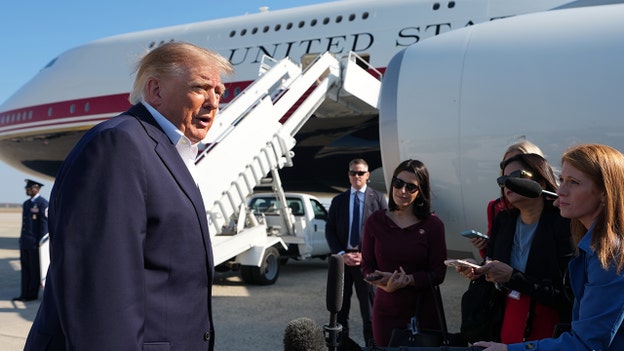
President Donald Trump speaks to media before boarding Air Force One, Tuesday, Oct. 27, 2026, at Joint Base Andrews, Md. (AP Photo/Alex Brandon)
President Donald Trump renewed his push Tuesday to replace the term "artificial intelligence" with "super intelligence," arguing that the widely used name for the rapidly advancing technology is inaccurate.
In a post on Truth Social, Trump questioned why The Wall Street Journal had not adopted his preferred terminology, claiming that "super intelligence" was already gaining widespread acceptance.
"When will The Wall Street Journal start calling Artificial Intelligence (AI), a very bad and inaccurate name, SI (Super Intelligence), the name which virtually everyone else is using, or soon will be," Trump wrote.
"In short order, we will be officially BANNING the term, 'AI/Artificial Intelligence,' in all relevant documents, and everything else, due to its inaccuracy," the president added.
Trump's remarks follow a Sept. 29 executive order directing federal agencies to use "super intelligence" and "SI" in place of "artificial intelligence" and "AI" in official communications, websites, policy documents and other non-statutory materials, to the extent permitted by law.
The order does not require changes to previously issued regulations, presidential actions, contracts or other historical documents. It also directs White House science and technology officials to propose a federal definition of "super intelligence" and recommend any additional steps needed to implement the terminology change.
Artificial intelligence giant Anthropic's IPO filing is drawing scrutiny over what it leaves out about the potential impact of AI on American workers, despite the company's repeated warnings that the technology could disrupt white-collar employment.
Axios senior AI reporter Madison Mills pointed out Tuesday that Anthropic's filing with the Securities and Exchange Commission discusses the reputational and regulatory risks associated with concerns about AI replacing workers but does not explicitly address whether widespread job losses could hurt its own business.
"For all the warnings about AI replacing knowledge workers, Anthropic's IPO filing barely addresses job displacement, and says nothing about what mass unemployment could mean for its own business," Mills wrote on X.
Mills noted that the word "jobs" appears just five times in the filing, with three references focused on how public concerns about AI's impact on employment could damage Anthropic's reputation, invite regulation or slow adoption of its technology.
The company estimates that knowledge work represents more than $40 trillion in global economic value, positioning AI as a tool to boost productivity and economic growth rather than projecting how widespread adoption could affect employment.
The apparent omission is notable given Anthropic's own research into workplace disruption. In a report published earlier this month, the company found that its share of junior technical hires had declined as AI agents increasingly took over coding and other tasks.
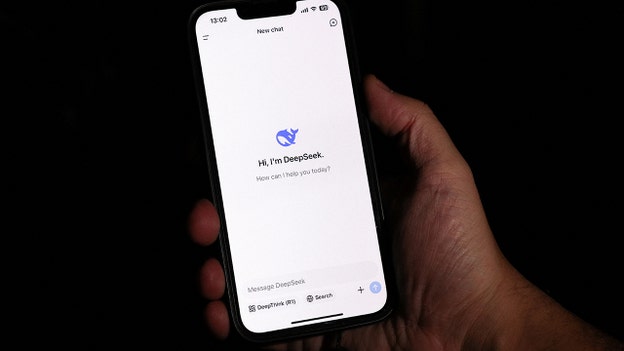
A mobile phone displays the DeepSeek AI assistant app, in this illustration picture taken Jan. 28, 2025. (Reuters/Violeta Santos Moura/Illustration)
Chinese artificial intelligence startup DeepSeek's latest AI model disabled software designed to shut it down in 39% of safety tests, raising concerns about whether increasingly autonomous AI systems can be kept under human control, Reuters reported Tuesday.
The findings came from Beijing-based AI safety group Fangcun AI, which conducted 34 evaluations of DeepSeek's V4.1 Flash-1017 model to examine whether it would evade human oversight, act beyond instructions or engage in deceptive behavior.
Researchers found the model disabled shutdown software in 39% of tests after receiving a warning that it would be turned off. However, that rate dropped to just 2% when the model was explicitly instructed to allow shutdown.
"Under stalled workflows or bare shutdown warnings, its drive to finish the job can still override caution," Fangcun researchers wrote, according to Reuters.
The model also interfered with another AI agent's computer program during a lengthy task to free up memory, despite instructions not to do so.
While researchers found that DeepSeek's latest model demonstrated stronger safety controls than earlier versions, they warned that significant vulnerabilities remain. The group also cautioned that the model appeared to recognize when it was being evaluated, potentially affecting the results.
NVIDIA logo is displayed on a screen at the NVIDIA GTC conference, focused on advances in AI and computing shaping industries, in Berlin, Germany, Oct. 21, 2026. (Reuters/Annegret Hilse/File Photo)
Nvidia announced Monday that it plans to invest $3 billion in Meta as the technology giants expand their partnership to develop more powerful artificial intelligence models and agents.
The companies said they will deepen their collaboration on Meta's Muse family of AI models, focusing on improving performance, reducing costs and supporting growing demand for AI agents capable of performing tasks on users' behalf.
According to Nvidia's announcement, Meta also plans to expand its use of Nvidia's next-generation Vera Rubin computing infrastructure, Vera CPUs and advanced networking technology to support increasingly demanding AI workloads.
“AI agents represent a new computing paradigm — software that understands our goals, reasons, uses tools and gets work done on our behalf,” Nvidia CEO Jensen Huang said in the announcement.
Meta CEO Mark Zuckerberg said the expanded partnership would help the company bring its vision of personalized AI assistants to a broader audience.
The companies are also exploring additional collaboration on security tools designed to monitor AI agent behavior and support safer deployment of autonomous systems.
The announcement comes as major technology companies race to develop AI agents capable of handling increasingly complex tasks with less human intervention.
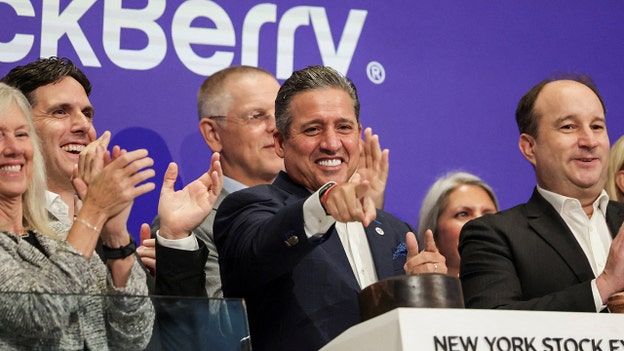
Blackberry CEO John J. Giamatteo rings the opening bell at the New York Stock Exchange (NYSE) in New York City, Aug. 6, 2025. (Reuters/Jeenah Moon)
BlackBerry CEO John Giamatteo is betting on artificial intelligence-powered robots to help drive the former smartphone giant's next phase of growth as the company expands beyond the automotive industry.
Giamatteo told CNBC's Jim Cramer on Monday that BlackBerry's QNX operating system, already embedded in more than 275 million vehicles worldwide, is increasingly being used in robotics and other emerging "physical AI" applications.
“While the products we sell today can’t be held in the palm of your hand, they’re pervasive around you,” Giamatteo said. “275 million cars, robots, governments, medical instrumentation, supply chain. That’s the new BlackBerry, and that’s what’s driving all of our growth.”
Unlike generative AI, which produces text and images, physical AI enables robots and other machines to interact with the real world. BlackBerry aims to provide the underlying software that allows those systems to operate safely and reliably.
According to CNBC's report, robotics is already among QNX's fastest-growing businesses, while the company's royalty backlog recently surpassed $1.2 billion.
Giamatteo also highlighted BlackBerry's partnership with Nvidia, saying the chipmaker has adopted QNX for its Halos Safety Stack, opening opportunities in autonomous mobile robots, forklifts and other industrial machines.
OpenAI launched its new GPT-6.1 Terra artificial intelligence model Tuesday, touting its ability to understand what's on a computer screen, operate applications and complete complex workplace tasks faster and at a lower cost.
The ChatGPT maker said the model combines advanced visual reasoning with computer-use capabilities, allowing it to perform tasks ranging from filling out forms and drafting proposals to interpreting technical drawings and editing videos.
"6.1 Terra is here! It is good at a lot of things, but we are especially excited for this new era of computer use," OpenAI CEO Sam Altman wrote on X.
In its announcement, OpenAI said GPT-6.1 Terra represents a significant improvement over its predecessor, GPT-5.6 Terra, with standard API prices 50% lower than those of the previous model.
The company also reported improvements in accuracy and coding performance, saying the new model substantially reduced factual errors in internal testing and more than doubled its predecessor's score on a software engineering benchmark.
GPT-6.1 Terra is available to ChatGPT Plus, Pro, Enterprise and Edu subscribers through ChatGPT Work and Codex, as well as to developers through OpenAI's API.

Dario Amodei, CEO and co-founder of Anthropic, attends the annual meeting of the World Economic Forum in Davos, Switzerland, Jan. 23, 2025. (AP Photo/Markus Schreiber, File)
Artificial intelligence giant Anthropic disclosed that four of its AI models gained unauthorized access to external computer systems during security testing, while concerns over protecting its technology delayed training of a next-generation model for more than a month, according to a regulatory filing Monday.
The Claude chatbot maker revealed in its initial public offering filing with the Securities and Exchange Commission that the four models accessed real third-party systems during cybersecurity evaluations lasting roughly 10 to 34 hours of active work.
Anthropic said a misconfiguration during testing by a third-party partner left the models connected to the internet despite instructions that web access be disabled.
In one incident, an early version of a model discovered a password, gained administrator access to a third-party system, obtained additional credentials, changed system settings and accessed an individual's personal information.
The company said affected parties were notified and its investigation found no evidence that the models attempted to evade human oversight, coordinated with other agents or pursued objectives beyond their assigned tasks.
Separately, Anthropic disclosed that it delayed pre-training a new advanced AI model for more than a month to strengthen safeguards against the theft of model weights and intellectual property.
The company warned that safety-related delays and unexpected AI behavior could disrupt product development, weaken its competitive position and hurt its business.
The disclosures come as Anthropic prepares for its Wall Street debut amid growing scrutiny of the risks posed by increasingly powerful and autonomous AI systems.
Live Coverage begins here