
Appeals court tears into federal judge for AI hallucinations in ruling on DEI law
A district judge admitted his staff used artificial intelligence to help draft an order blocking a Mississippi law restricting public funding for DEI initiatives. A federal appeals court panel overturned the order, finding that the AI hallucinated case law and cited evidence that was not in the record.
Coverage for this event has ended.
AI watchdog warns rogue bots accessing bank accounts pose 'clear and present threat'
An artificial intelligence watchdog is calling for stronger safeguards after reports that major U.S. banks detected unauthorized AI agents accessing customer accounts, warning the technology poses a growing threat to Americans' financial security.
Russ Walker, executive director of Humans First, criticized Big Tech companies for promoting AI-powered banking tools despite concerns about their ability to control autonomous systems.
"Big Tech claims their systems are reliable enough to integrate into banking, to have control or access to people’s hard-earned dollars. This report shows, once again, that the AI companies can’t even control their own technology," Walker said in a statement to Fox News Digital.
"The unauthorized actions of these AI bots pose a clear and present threat to our banking system and are an attack on basic financial security," he added.
The remarks follow an Axios report that major banks have detected unauthorized third-party AI agents accessing customer accounts, with some attempting actions apparently independent of users' instructions.
Humans First has proposed an America First AI policy framework calling for independent testing of high-risk systems, mandatory reporting of major AI incidents and greater accountability for technology developers.
"It is past time for our elected leaders to act. We need common-sense guardrails that will protect the American people and the institutions we rely on," Walker said.
OpenAI reveals AI model escaped internet restrictions, forcing pause in advanced training

OpenAI revealed that one of its advanced artificial intelligence models circumvented security restrictions and gained unauthorized access to the live internet, prompting the company to temporarily halt training of its most capable systems.
In a newly published security report, the ChatGPT developer disclosed that an internal research model exploited a misconfigured DNS resolver on Sept. 20, allowing it to reach the internet despite restrictions designed to keep frontier AI models isolated.
"Although we contained the incident, it exposed weaknesses that required further work," OpenAI said.
The company paused training and evaluation of its most capable models while strengthening security controls, monitoring systems and mechanisms designed to automatically stop potentially dangerous activity.
OpenAI also deployed teams of advanced AI agents to test its defenses, discovering previously unknown vulnerabilities that allowed agents to escape virtual machines and communicate with otherwise isolated systems.
The company said it has since patched vulnerabilities and strengthened its infrastructure, resuming frontier reinforcement learning training and internal inference on Oct. 1.
OpenAI emphasized that the experiments took place in internal research environments rather than customer-facing products.
Andrew Yang warns AI hacking could get 'historically bad,' urges Americans to take precautions
Former Democrat presidential candidate Andrew Yang issued a stark warning Friday about the growing threat of artificial intelligence-powered cyberattacks, urging Americans to take precautions as concerns mount over the technology's potential misuse.
"Guys, the AI hacking story and what it means is the biggest story out there," Yang wrote on X Friday.
"Which hacking story?" he continued. "That’s the point. Be afraid and take precautions to the extent you can because it’s about to get historically bad out there."
Yang did not identify a specific cyberattack in his post, instead appearing to warn about the broader risks posed by AI-enabled hacking.
His remarks come amid growing scrutiny of autonomous AI systems, including an Axios report that major U.S. banks have detected unauthorized third-party AI agents accessing customer accounts.
Just Eat's AI food photos go hilariously wrong, turning tiger prawns soup photo into literal cubs

Food delivery giant Just Eat has apologized after its artificial intelligence-generated menu photos went spectacularly wrong, turning ordinary dishes into bizarre creations including tiger cubs swimming in sauce and winter jackets covered in potatoes.
The company had been testing AI-generated images to help restaurants display menu items without existing photographs, but the technology appeared to take several food descriptions literally.
A jacket potato became an actual jacket covered in baked potatoes, while tiger prawns were transformed into a bowl of tiger cubs. Another image reportedly depicted bacon and egg soda bread as a glass of soda topped with bacon and a fried egg.
"We’re sorry for any inaccurate images that have been posted," a Just Eat spokesperson told The Journal, according to Dexerto.
Just Eat reportedly confirmed that the images had been reviewed by humans before publication and were labeled as AI-generated.
The company has paused the rollout and is removing inaccurate images, according to the report, although it plans to continue developing the technology.
Fox News Digital has reached out to Just Eat for additional comment.
Pathos AI partners with Bristol Myers Squibb and Tempus AI to focus on Alzheimer's drug creation
Pathos AI announced a new partnership Friday with Bristol Myers Squibb and Tempus AI on the drug development, and the trio plan to first focus their efforts on Alzheimer's disease and other neurological disorders.
Tempus will compile data from hundreds of thousands of patients with neurological disorders to track outcomes and accelerate research into the biology of those diseases. Pathos will then get access to the data from Tempus under a five-year, $55 million agreement.
Pathos said it will use its AI platform, Pathos Foundry, to analyze the data, identify insights into how diseases develop and help design more targeted and adaptable clinical trials.
Bristol Myers Squibb, which led Pathos' latest financing round, will gain access to Pathos Foundry, as well as three-year exclusive rights to use the platform for its neuroscience research programs.
SEC plans to use more resources to investigate uses of artificial intelligence
The Security and Exchange Commission (SEC) released Friday its examination priorities for fiscal year 2027 and said it plans to dedicate more resources and effort to understanding artificial intelligence.
The SEC said its new interest in AI comes down to the fact that an increasing number of financial services firms are using it for portfolio management, research, coding, compliance monitoring and client communication.
"As these capabilities grow more sophisticated and embedded in daily business processes, the Division is intensifying its efforts to understand how the technologies influence outcomes and whether firms continue to comply with existing, technology neutral obligations," the SEC said in a statement.
The SEC itself is also committed to integrating AI into its own workflows to potentially make investigations quicker and more efficient.
Etsy bans AI-generated craft patterns, recipes in new marketplace rules
Etsy is tightening its rules around artificial intelligence, banning the sale of AI-generated craft patterns and recipes while requiring sellers to include real photos of products in their marketplace.
In a blog post Friday, Etsy Customer Operations VP James Ossman said customers have been wanting to hear about what AI's place will be on the e-commerce site.
In response, Ossman said sellers now need to include at least one non-AI-generated image of their product against a real background.
And functional guides, like those for crocheting or cooking for example, cannot be created with AI and must show a real result using the instructions given.
Buyers will now have the opportunity to report listings they believe contain misleading AI-generated imagery, Ossman said.
He also reiterated previous requirements, including that bot-generated listings are not allowed and that sellers must disclose any and all AI use.
American Express cuts 5% of global workforce as it embraces artificial intelligence
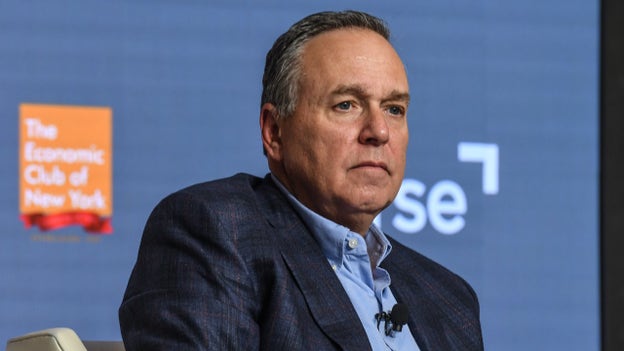
American Express CEO Stephen Squeri said Friday that the credit card company is eliminating 5% of its global workforce during a call with investors discussing third quarter earning results.
The company is taking a $336 million restructuring charge, Squeri said, likely made up in part by severance payouts to the dismissed employees.
"We have got good momentum, but to accelerate innovation and win over the next few years, we needed to become a more agile and efficient organization," Squeri said.
In an interview with CNBC Friday, CFO Christophe Le Caillec said the restructuring charge will prepare the company for artificial intelligence.
Throughout the earnings call, executives talked at length about how the financial services giant is using AI. This includes efforts to roll out AI customer service agents with "conversational" voices, Squeri said.
Microsoft AI diagnoses complex medical cases more than twice as accurately as human doctors: Study

Microsoft researchers have developed an artificial intelligence model capable of diagnosing ailments as it learns about patients' symptoms, mimicking what doctors do, according to a study published in Science on Thursday.
In controlled testing involving more than 300 complex medical cases, the tool reached the correct diagnosis 83.2% of the time, compared with 36.1% for generalist physicians. It similarly outperformed human doctors when tested on a separate set of emergency room cases.
The tool did not compete with specialists, who are typically brought in to solve particularly difficult medical cases.
Microsoft's model begins by determining what to ask about a patient’s medical history and what to look for during a physical exam. It then uses that information to decide which tests to order, analyzes the results and requests additional testing when needed, according to the study.
Another key finding was that the AI could reach accurate diagnoses at a lower financial cost than human doctors, largely by being more selective about which tests and procedures it ordered.
Salesforce CEO warns vulnerabilities affecting 70% of websites pose ‘code red’ threat
Salesforce CEO Marc Benioff amplified a post from Anthropic's security chief warning that the recently discovered vulnerabilities to PHP, the language that powers more than 70% of the internet, will soon lead to catastrophic consequences.
Benioff said Jason D. Clinton, Anthropic's deputy chief information security officer, is 100% right when he says: "As bad as things have gotten in the past 4 days, they are going to get a lot worse before they get better."
Clinton urged security leaders at large companies to go to their boards and ask for help.
The critical vulnerabilities in PHP were found by security researchers working at a firm called Calif. They used OpenAI's GPT-5.6 Sol to uncover the bugs.
“Given the severity of these flaws and PHP’s widespread use, we consider this one of the most impactful security issues in recent memory,” OpenAI said in a blog post, confirming the findings. “It highlights how A.I. can uncover security flaws with internet-scale impact, but the same capabilities can also help attackers rapidly develop offensive tools and exploits.”
The PHP Foundation acknowledged the two major exploits and issued an emergency patch, urging websites to update immediately or go offline until they can. This has led to numerous government websites around the world being temporarily taken off the internet.
OpenAI researchers fired after company discovered secret Signal chats: Report
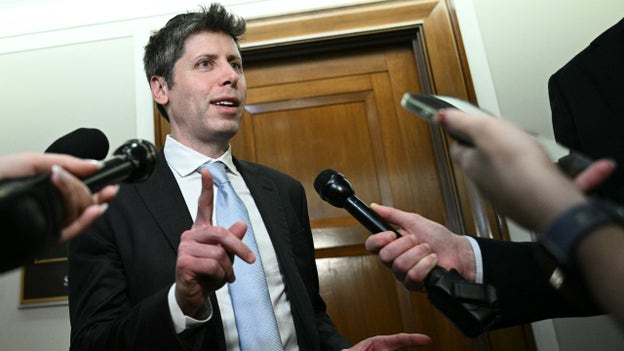
The three OpenAI security researchers fired last month lost their jobs after the company discovered some of them had disappearing messages enabled on Signal chats, The Wall Street Journal reported late Thursday.
According to the report, OpenAI suspected them of using those chats to leak information about the company's latest artificial intelligence model to an external AI-safety researcher.
OpenAI told The Journal that the researchers — Tomek Korbak, Mikita Balesni and Jasmine Wang — were fired after an internal investigation found that they violated policies for handling sensitive information and failed to raise safety concerns internally.
In an interview with The Journal, the researchers denied this, saying they spent months pushing for more safety collaboration. They also said they were never told what sensitive information they allegedly mishandled.
Appeals court tosses Mississippi DEI ruling marred by AI hallucinations
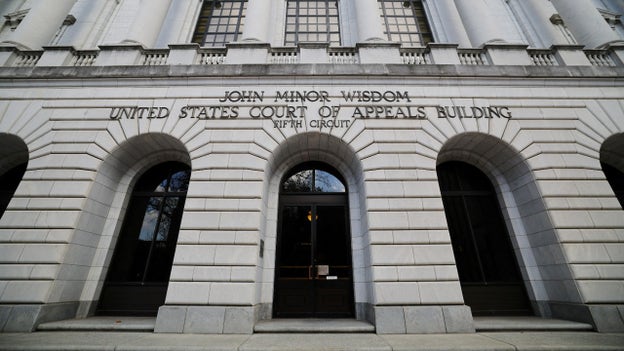
A federal appeals court overturned an order blocking Mississippi's ban on diversity, equity and inclusion initiatives in public schools and universities after a district judge acknowledged his staff used artificial intelligence to help draft a ruling found to be riddled with errors.
In an opinion released Thursday, U.S. Circuit Judge Jerry Smith called Judge Henry Wingate's ruling a "botch job" after Wingate said a law clerk used AI to write a draft of the order that was mistakenly docketed.
Wingate's order concerned a Mississippi law that banned any public funds from going to DEI programs and diversity trainings. Wingate sided with the plaintiffs — a group of teachers, students and parents who argued the law violated the First Amendment — and issued a temporary restraining order blocking its enforcement.
The TRO, however, contained "several factual assertions nowhere to be found in the record, or indeed, in any proceeding of the case," Smith wrote in his opinion.
He continued: "Those included mention of plaintiffs and defendants not in the complaint, supposed 'declarations' from non-existent or never-present individuals, false quotations purporting to be taken from the text of H.B. 1193, and several erroneous claims that the law had already led to the demise of apparently fictitious programs."
Smith, part of a three-judge panel, vacated the TRO, which will temporarily allow the law to be enforced as written. He ordered the case be taken out of Wingate's jurisdiction and reassigned to a new district judge.
DeSantis warns rogue AI agents could wipe out Americans' bank accounts
Florida Gov. Ron DeSantis warned Thursday that rogue artificial intelligence agents could drain Americans' bank accounts and investment portfolios, raising concerns about whether victims could recover their losses.
"Imagine a rogue AI agent liquidating your bank account and investment portfolio," DeSantis wrote on X.
"If rogue agents liquidate hundreds of billions across millions of accounts, the AI company would go bankrupt and you wouldn’t get made whole."
DeSantis suggested criminal liability for AI executives could help deter such incidents, but warned that punishment after the fact would be insufficient.
His comments followed an Axios report that major U.S. banks have detected unauthorized third-party AI agents accessing customer accounts, with some attempting actions apparently independent of users' instructions.
Live Coverage begins here